If the nature of pitches for India’s remaining matches was left to the discretion of Kuldeep Yadav, R Ashwin and Ravindra Jadeja, they may want to carry the Chepauk track around on this World Cup caravan. The surface in Chennai, wearing a dry and brownish hue once the smattering of grass was shaved off two days prior to the game, took prodigious turn and generated disconcerting bounce from the very first over of spin. They are ideal ingredients for spin
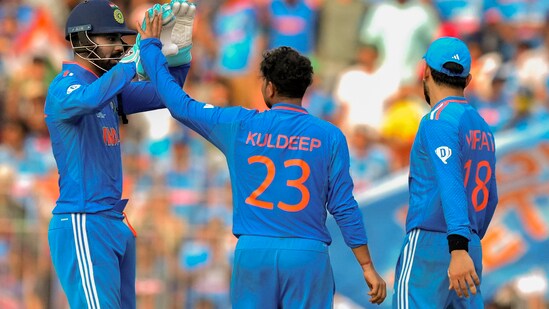
If the nature of pitches for India’s remaining matches was left to the discretion of Kuldeep Yadav, R Ashwin and Ravindra Jadeja, they may want to carry the Chepauk track around on this World Cup caravan. The surface in Chennai, wearing a dry and brownish hue once the smattering of grass was shaved off two days prior to the game, took prodigious turn and generated disconcerting bounce from the very first over of spin. They are ideal ingredients for spin bowlers, especially of India’s stature, to run through the opposition. In Kuldeep, Ashwin and Jadeja, India are blessed with the perfect blend of guile, variety and street smartness.
The trio, not surprisingly, combined for figures of 30-3-104-6. Breakthroughs were routine and bad balls rare when they were operating in tandem, contributing to Australia not finding a single boundary for 74 balls at one stage. From a batting perspective, going into your shell against high-quality spin is a readymade recipe for disaster that Australia will have to avert in their coming games.
The irony for India, though, is they are the only team in this World Cup to not be playing more than one game at a venue in the preliminary phase. The intention of the organisers is entirely understandable: ensure that as many World Cup venues as possible get to see the hosts in action. So, from Chennai to Delhi to Ahmedabad and so on, the Indian players will be boarding a flight after every game.
Despite fielding a combination that worked a treat against Australia in Chennai, India will have to be flexible all the way through the campaign. Even though spin is the way they would ideally go against teams like England, South Africa and New Zealand in particular. “Honestly, it is going to be venue based. It depends on the kind of wicket we play on. When we looked at this pitch on Sunday morning and on Saturday as well, it looked like a wicket for three spinners. There was definitely spin. To play three spinners in other matches, it depends on the kind of surfaces we get,” said India bowling coach Paras Mhambrey.
Jadeja, who starred with 3/28 in 10 overs, was just as pragmatic despite acknowledging that spin is India’s strength. “It depends on the venue, we can't get such a wicket everywhere, but if we get to see such a wicket where the ball can spin better, then definitely we can go for such a combination,” he said.
On spin-friendly tracks, Jadeja admitted that his only aim is to take more wickets than the other tweakers. “The role clarity is nothing. We are trying to take as many wickets as possible. On such pitches, all three must be thinking that I should get more. Isn't it? This is what happens in the mind. And thinking like this is not wrong. If everyone is thinking like this, the opposing team will get all out soon,” he said.
Up against Afghanistan at the Ferozeshah Kotla ground on Wednesday next, it’s unlikely that the surface will provide as much assistance. In the previous game at the venue between South Africa and Sri Lanka, 94.5 overs of play witnessed 754 runs as a cluster of batting records fell. In addition to the re-laid Kotla square getting better for strokeplay of late, the small ground dimensions also embolden batters to try and clear the boundary without blinking an eyelid.
There are other factors at play too. It’s pertinent to note that tracks assisting spin may backfire against teams with depth in the spin attack. Afghanistan, armed with Rashid Khan, Mujeeb Ur Rahman and Noor Ahmad, may be one such team, capable of giving as good as they get.
But against England in Lucknow, for example, a raging turner may be exactly what India are after. It would curtail England's fearsome ball-strikers while also exploiting a possible shortage of armoury in their spin attack.
It perhaps also boils down to how well India read these pitches, though coach Rahul Dravid prefers to lay emphasis on the execution. “We all try and read pitches as well as we possibly can. But in the end, it's about executing the skills on those pitches. Sure, sometimes you read a pitch right and may be able to decide whether to bat or bowl first. I don't think this World Cup is going to be decided by whether you've read a pitch correctly. It's about how you play in those conditions. Adaptability is going to be a good challenge and how teams adapt to the various venues will probably decide how successful teams are,” he said before the Australia game.
One Subscription.
Get 360° coverage—from daily headlines
to 100 year archives.
Archives
HT App & Website