By landing in Australia more than two weeks before their opening T20 World Cup game—they face Pakistan at the Melbourne Cricket Ground (MCG) on October 23—the Indian players have given themselves a fair chance of acclimatising to Australian conditions.
Considering the relentless international schedule these days, extensive preparation time is a luxury though much-needed. This is the first time that the T20 World Cup is being held in Australia, where the nature of the pitches and the larger boundary dimensions
By landing in Australia more than two weeks before their opening T20 World Cup game—they face Pakistan at the Melbourne Cricket Ground (MCG) on October 23—the Indian players have given themselves a fair chance of acclimatising to Australian conditions.
Considering the relentless international schedule these days, extensive preparation time is a luxury though much-needed. This is the first time that the T20 World Cup is being held in Australia, where the nature of the pitches and the larger boundary dimensions will present a different challenge to what the Indian players are used to.
Although many Australian grounds now have drop-in pitches—the homogeneity chips away at the unique character each venue previously had—there’s still enough pace and bounce to let visiting teams know they are in Australia. The Indian batters will also have to be mindful of the bigger boundaries. They may have to think twice before going for a big hit because a mishit or a thick outside edge is unlikely to go the distance. In Guwahati and Indore, where India played their most recent T20Is, batters did not have to be consumed by such concerns.
ON NEW TURF
Five of India’s players—Suryakumar Yadav, Axar Patel, Deepak Hooda, Harshal Patel and Arshdeep Singh—haven’t played a T20 in Australia. There isn’t a wealth of experience among those who have played there previously either when it comes to the shortest format. Virat Kohli and Rohit Sharma have played 11 and nine T20s respectively while the rest have played between three to six matches. Barring Kohli, who has an average of 64.42 and a strike rate of 144.55 in Australia, none has excelled there. Other teams too may not have played many T20Is in Australia, but the awareness that comes from playing in the Big Bash League (BBL) is likely to help. Pakistan pacer Haris Rauf, for instance, has already said he is banking on his knowledge of the MCG—his “home ground because I play for Melbourne Stars” in the T20 league – to gain an edge over India.
India coach Rahul Dravid highlighted his players’ limited or lack of T20 experience in Australian conditions before the team’s departure.
“Australia is quite unique in terms of the pace and bounce. A lot of our players haven’t actually played a lot of T20s there,” Dravid said. “The idea (of reaching Australia early) is to give ourselves a chance to practice a little bit more, acclimatise and get some game time in. Having been to Australia before, I know that it takes a little bit of time to get used to that pace and bounce. Once we train there, we will hopefully be able to have discussions around the strategies and tactics of how we need to play. Hopefully, that should help us.”
'SOME BUTTERFLIES'
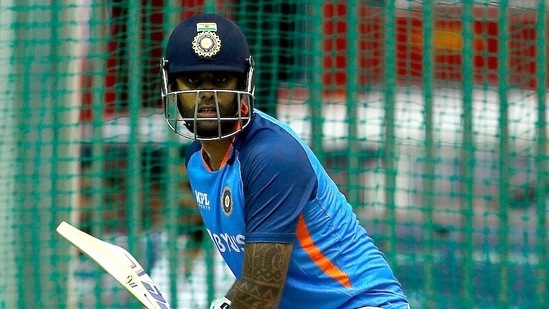
Among the players in uncharted territory is Suryakumar. He is clearly India’s best T20 batter and the team’s chances hinge heavily on the kind of tournament he has. But he has never played an international game in Australia, which isn’t ideal for someone around whom the rest of the batting unit will revolve. Whether he’s able to immediately settle in and exert his influence remains to be seen.
The 32-year-old though seems excited about the challenge. After his first training session in Australia on Saturday, he told bcci.tv: “I was really looking forward to come here and attend the first practice session, go on the field, have a run, get a feel of how it’s like here. The first net session was also really amazing. I just wanted to see how the pace of the wicket is, how the bounce is.”
Like most cricketers, Suryakumar too must have grown up wanting to play and thrive in those conditions – the pace and bounce of the pitches, the hard-nosed, uncompromising approach of the Australian players and the cussedness of the crowds make Australia an intimidating place for cricket. In his 34 T20Is and 13 ODIs till date, Suryakumar hasn’t been daunted by any challenge. But he admitted to some nervousness going into his first training session in Australia.
“I started a little slow. There were some butterflies, and a lot of excitement as well. At the same time, you need to look for ways to blend with the atmosphere and peak at the right time. I am just assessing that right now. You need to follow your process and routine as well. As people say, the grounds here are big. So, you need to be ready with your game, how you plan to make runs here, all these things are very important,” he said.
Aside from the training sessions and intra-squad games, India will play two official warm-up matches, against Australia and New Zealand in Brisbane on October 17 and 19. Suryakumar and the other Indian players will hope it helps them acquire sufficient knowledge about the nuances of playing T20s in Australia before that high-profile opener.
One Subscription.
Get 360° coverage—from daily headlines
to 100 year archives.
Archives
HT App & Website