


 Live Score
 Cricket Teams
 Cricket Players
IPL rights: A mega deal in the battle for larger cricket revenue pie
BCCI bosses are working for a longer IPL window than pushing for a greater of ICC revenue as that’s what market forces want.


The Committee of Administrators (COA) which ran BCCI before Sourav Ganguly and his colleagues took over was primarily criticised for its inability to earn the cricket board its rightful revenue share from the International Cricket Council (ICC).
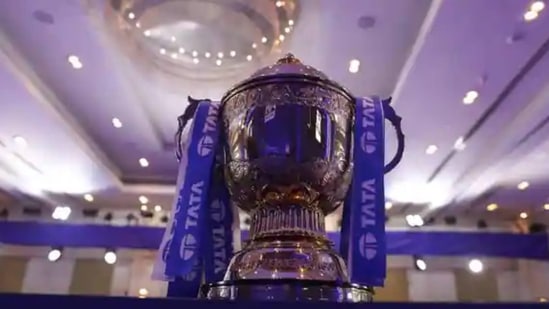
Nearly three years on, BCCI’s share from ICC is constant at $405 million for eight years— ₹390 crore per year. Hence, BCCI president Ganguly and Co began to focus on strengthening its cash cow—Indian Premier League (IPL).
For the rich BCCI, revenue share from the world governing body that has 106 members, including 12 Test teams, is small pie. IPL is the engine that drives its finances. Currently, almost 60% of BCCI’s media rights income ( ₹3,270 crore per year) comes from the T20 league. Then comes bilateral cricket, which at present contributes about 25% ( ₹1,228 crore per year). If the new IPL media rights sale fetches the projected value, the gap between BCCI’s income from IPL and other sources will widen significantly. It is estimated that the 2023-27 IPL cycle rights sale will help BCCI earn around ₹9,000 crore annually—assuming the league’s per-match value goes up to ₹120 crore. It is unlikely that the right sale for bilateral cricket will get a similar robust response from the market, when those it comes up for renewal next year.
INFLATED BILATERAL RIGHTS
Currently BCCI earns a whopping ₹60.1 crore for every bilateral T20I, ODI or Test at home. It is ₹54.5 crore per IPL match. “What Star agreed to pay for the BCCI rights was a highly inflated figure ( ₹6,138 crore for five years). It was to add to their cricket portfolio (ICC + IPL) and to keep their only competitors at the time, Sony, out of Indian cricket business. There was never a way they were going to recover costs,” said a media planner. With India-Pakistan bilateral cricket off the menu for now, BCCI’s bilateral offerings have become less attractive. Key foreign T20 players have turned freelance cricketers and with short-format leagues having mushroomed around the world, limited-over bilateral cricket is now seen more as an avenue to build squads for ICC events. Rohit Sharma, Virat Kohli, Jasprit Bumrah will all sit out the home T20I series against South Africa. To build buzz for the series, Star Sports is using Bollywood star Aamir Khan in their promos to remind viewers of India’s unbeaten T20I run. Conversely, during IPL the movie stars look to use the cricket platform to promote their films.
Even IPL sponsorship revenues have steadily risen; they touched ₹1,000 crore in 2022. BCCI’s annual income from jersey and title rights for bilateral cricket is only an approximate ₹300 crore.
ICC EVENT EVERY YEAR
According to a paper prepared by former IPL COO Sundar Raman, Indian cricket contributed as much as 45% of the total cricket revenue in 2019 (this went up to almost 60% in a non-ICC event year).
“What non-India cricket boards wanted to do at the ICC forum was to counter-balance BCCI’s financial clout through ICC events,” said a former ICC executive. That explains ICC’s push for a world event every year, which is now a reality and raises the stakes of their 2024-31 media rights offering.
Before current ICC chairman Greg Barclay took over in late 2020, its boardroom saw several stormy meetings and sharp email exchanges between ICC and BCCI. ICC said it wanted to offer more revenue to member boards through its events. The influential BCCI argued that more ICC events would disrupt the bilateral plans of member boards. “The BCCI, apart from wanting to protect its second-best revenue stream, wanted to clear the decks for its IPL expansion plans,” the official said.
Once Barclay was appointed with BCCI’s backing, ICC’s plan for a world event every year went through. A window for a 10-team IPL too was found. When ready, BCCI wants to extend IPL into a 94-match league. It was 74 this year.
That would further boost IPL’s media rights income—an estimated ₹2,400 crore annually at ₹120 crore per match. With windfall gains in the offing for franchises, state associations and players, BCCI would much rather negotiate for an extended IPL window than push for a greater ICC share.
ICC is also expected to double its income ($1.9bn for 8 years) through a new media rights deal. While IPL’s reach is second to none, the prestige surrounding ICC events—T20 World Cup, ODI World Cup and Champions trophy—ensures they occupy a sizeable market space.
“With increased ICC events, more leagues being introduced, the IPL stretched out, something has to give. The squeeze is going to be on bilateral arrangements, unfortunately.” That’s Greg Barclay himself saying. “Practically, it’s a reality that the members need to accept,” he said recently.
 ABOUT THE AUTHORRasesh Mandani
Rasesh Mandani loves a straight drive. He has been covering cricket, the governance and business side of sport for close to two decades. He writes and video blogs for HT.


