Jimmy Anderson’s rise to becoming the most successful fast bowler in Tests - with an incredible haul of 600 wickets - has had a lot to do with his success against India.
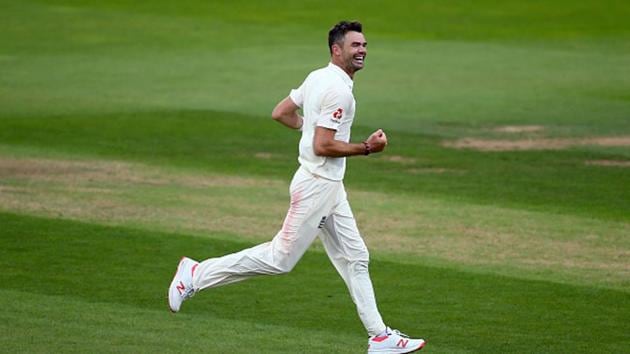
England’s Ashes battles with Australia may get more attention, but it’s against India that Anderson has had the most success - 110 wickets in 27 Tests at an average of 25.98, better than his overall 26.79 and far better than his record versus Australia, 104 wickets at 34.56 in 32 Tests.
Anderson has helped England win four of the five Test series against India since he transformed himself into one of the world’s best proponents of swing with a masterful performance in the 2010 Ashes in Australia, which England won.
When Dhoni landed in the United Kingdom in 2011, he was a captain who could do no wrong. India had just won the World Cup. Tendulkar was one century away from a 100 hundreds. Then Anderson happened. By the end of the summer, Dhoni’s touch had gone. India had lost all four Tests and Tendulkar was still stuck on 99 hundreds. Anderson started the rout with a five-wicket haul on the final day of the first Test at Lord’s, finishing the series with 21 wickets. He wasn’t just taking wickets. He was trapping some of the world’s finest batsmen with guile. He would commit them to play, anticipating an outswinger, but the ball would jag back and trap them leg before. Tendulkar being unable to read a bowler is rare; against Anderson, that’s just what happened. His dismissal in the second innings in the Trent Bridge Test back in 2011, trapped leg-before shouldering arms after being well settled on 56, was proof of that.
REVERSE OUTSWINGER
{{/usCountry}}REVERSE OUTSWINGER
{{/usCountry}}In a discussion with Brian Lara on his ‘100MB’, Tendulkar explained why Anderson’s deliveries were so difficult to read. Anderson, he said, is the only one who could bowl a “reverse outswinger” with a wrist position for a conventional inswinger.
“Anderson was possibly the first who bowled reverse swing also reverse,” Tendulkar said. By changing the wrist position quickly, he forced the batsman to commit to a shot. “What I experienced, over a period of time, was that he would hold the ball as if bowling outswinger but at the release point would try and bring the ball back in… he’s shown you he’s bowling inswing but the imbalance between the two sides of the ball would take it away from you.
“He’s got you to commit to play for an inswinger and the ball, after covering almost three-fourths of the length of the pitch, starts leaving you… That was something which was new to me. Nobody had done that.”
Anderson had great success against Tendulkar, dismissing him nine times in 27 innings, or in every third instance. Anderson has dismissed Pakistan’s Azhar Ali and Australia’s David Warner and Michael Clarke as many times, but in more innings.
When the Indian Test era transitioned from Tendulkar to Kohli, Anderson remained England’s constant threat.
He has dismissed Kohli five times in 32 innings. Anderson dominated Kohli in the 2014 home series, removing him four times as the batsman averaged 13.4, not managing a fifty in 10 innings.
Kohli made a fighting cameback. At home in 2016-17 and in England in 2018, he redeemed himself with two centuries and three fifties, though India lost the away series 1-4.
On the 2011 tour, only Rahul Dravid negotiated Anderson well, scoring three centuries in a 0-4 series defeat. From that point, pressure started mounting on the great Indian middle-order of Tendulkar, VVS Laxman and Dravid.
In the return series in 2012, Dhoni’s team was confident of avenging the previous year’s defeat. Anderson proved the surprise package as England rallied to a 2-1 win after losing the first Test.
He complemented spinners Graeme Swann and Monty Panesar by taking 12 wickets. In the third Test at Eden Gardens, he gave a fine exhibition of reverse swing to be the standout performer with three wickets in each innings. Dhoni said he was ‘the difference between the two sides’.
Two years later, Dhoni led a young batting line-up to England. Anderson had an iffy start and England struggled in the first two Tests, trailing 0-1. When India recorded a memorable win at Lord’s to take the lead, the champion pacer’s pride was pricked. The famed rhythm was back in the third Test at Southampton.
The game was played against the backdrop of an ICC hearing of the Anderson-Ravindra Jadeja row at Trent Bridge, the first Test venue. But the pacer shut off all distractions and his control over the ball was exceptional in that Test. With 25 wickets in the series, Anderson knocked out India’s challenge in the last three Tests.
In this decade, the five-Test 2016 series is the only time India have had the measure of Anderson. To be fair, he was returning after an injury (shoulder) lay-off of two-and-half months. He was not in the original squad and was included only after proving his fitness. He had lost some of the pace from 2012 and Kohli dominated him.
After Kohli’s double hundred at the Wankhede, Anderson could not contain the champions’ ego. He stoked a fire when he said, “I’m not sure he’s changed (from 2014). I just think any technical deficiencies he’s got aren’t in play out here. The wickets just take that out of the equation. We had success against him in England, but the pace of the pitches over here just takes any flaws he has out of the equation. There’s not that pace in the wicket to get the nicks like we did against him in England with a bit more movement.”
In 2018, Kohli blunted Anderson with discipline and a watchful approach in the first Test at Edgbaston, though a catch dropped early allowed the batsman to hit a century. The India captain proved himself in English conditions, aggregating 593 runs, but Anderson took 25 wickets to again play a big part in India’s 1-4 rout.
England’s reciprocal tour is due early next year and the veteran pacer has signalled his intent loud and clear—he wants to have a go right through the 2021 season, culminating with the Ashes in Australia in January 2022.
“I will be doing everything I can to be on that plane to Australia. I’m still hungry to take wickets, I still love playing the game, so I will keep trying to improve and stay fit,” he told ‘BBC Breakfast’.
Australian pace legend Glenn McGrath, whose record as the most successful Test fast bowler (563 wickets) Anderson surpassed in 2018, compared him to Tendulkar, whose records for most Tests (200) and aggregate (15,921 runs) will be tough to break.
“He’s set the bar a bit like Sachin has. No one is ever going to catch Sachin in Test cricket for the amount of runs he’s scored and the matches he’s played. Jimmy’s done the same for fast bowling.”