


 Live Score
 Cricket Teams
 Cricket Players
Australia appoint Pat Cummins captain ahead of the Ashes
The pacer is the first bowler since Richie Benaud in 1964 to captain Australia. Why is it rare for specialist bowlers to become leaders in cricket?

 Prefer HTon Google


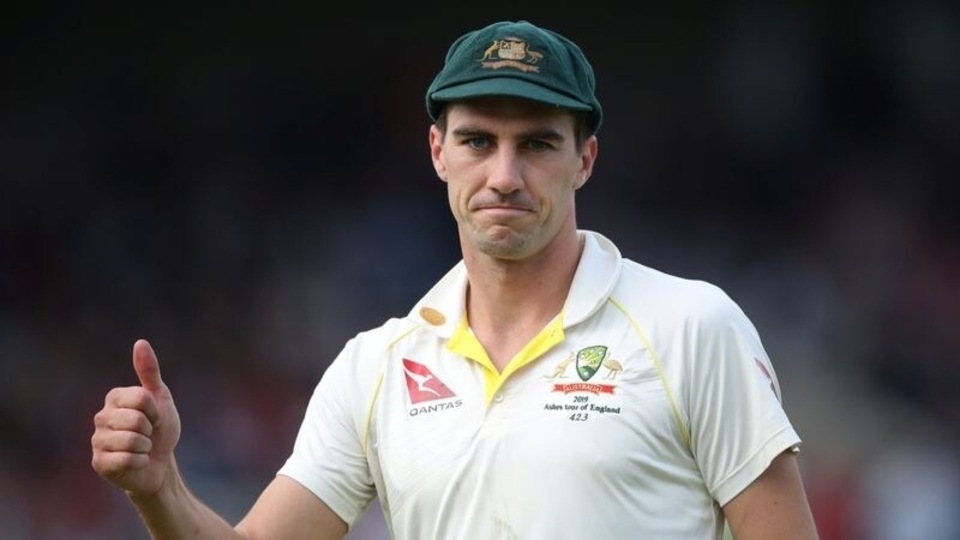
Pat Cummins has been confirmed as Australia’s 47th Test captain, with Steve Smith his deputy ahead of the home Ashes series. Cummins is the first fast bowler to become a full-time skipper of the Australia men’s Test team, and the first bowler of any kind to captain the team since Richie Benaud in 1964. Ray Lindwall, one of the finest fast bowlers of all time, led Australia in Mumbai in 1956 but it was a one-off arrangement after regular captain Ian Johnson had been ruled out due to injury. Considering Cummins was deputy to outgoing captain Tim Paine, you could say he was in line for the job anyway. But by formalising it, Australia have essentially done something almost unheard of. A look at the other Test-playing nations will tell you why. In Asia, India are led by Virat Kohli, Pakistan by Babar Azam, Bangladesh by Mominul Haque and Sri Lanka by Dimuth Karunaratne, all top-order batters. England (Joe Root), New Zealand (Kane Williamson), South Africa (Dean Elgar) and West Indies (Kraigg Braithwaite) have stayed on beaten tracks as well. It's a rare thing in cricket—a bowler as captain.
The appointment of Cummins could further open up the debate on why so few bowlers have led their countries. Barring Anil Kumble and Bishan Singh Bedi, India haven’t had many specialist bowlers as captains over considerable periods. Among the several fast bowling luminaries produced by the West Indies till the 90s, only Courtney Walsh went on to become captain (Daren Sammy led longer but he has a better batting average and a hundred as well). From South Africa, it was Shaun Pollock. Zimbabwe had Heath Streak. New Zealand had Daniel Vettori. Pakistan had Wasim Akram, Waqar Younis and even Initikhab Alam though Imran Khan can’t be put in the same bracket because he could make it to the team as a pure batter as well. Ditto for Ian Botham, Kapil Dev and Sir Garfield Sobers—all exemplary allrounders. The gap is particularly glaring in England’s case. Only four years ago did James Anderson speak out on not being considered for the England captaincy (it ultimately went to Root) that hasn’t gone to a bowler since Bob Willis in 1984.
There have been other bowlers filling in on a temporary basis. In 2016, Zimbabwe and Sri Lanka were led by Rangana Herath and Graeme Cremer as stand-in captains. Dion Nash led New Zealand in 1998-99. Dwayne Bravo too has skippered West Indies, who till earlier this year were led by fast bowler Jason Holder but the selectors’ faith has clearly shifted (to current opener Brathwaite). There was a definite spike in bowlers becoming captains till at least the turn of the century before it went south. In fact, we have had more wicketkeepers as captains since then. From Alec Stewart to Mark Boucher, Brendon McCullum to MS Dhoni and Quinton de Kock to Mushfiqur Rahim, it has become all too common. Why are batters, even wicketkeepers considered better captaincy material?
A general school of thought is that a batter’s fielding position—generally in the slips or close-in—makes him a good candidate since he has the best view of the proceedings. That way, the prospect of a wicketkeeper (who can bat) increases manifold because nothing beats his vantage point. And both specialist positions are more or less sacrosanct irrespective of the venue. Wicketkeepers at this level are rarely changed unless there is a serious lack of runs. A good batter can be dropped only because of form, rarely on the pretext of selection combinations—something a spinner or a fast bowler has to face regularly. Ravichandran Ashwin may have the best brains in the business but he may not make the eleven on a lush Headingley pitch. Fast bowlers, on the other hand, are almost always considered so physically burdened that captaincy is a strict no-no. It’s here that Cummins, who has missed just two out of 35 Tests since his comeback in 2017, will need to change the narrative.
With Tim Paine taking a leave of absence from all cricket, the first step Cummins took as captain was to get a strong lieutenant in the form of Steve Smith. “It might look a little bit different from the outside potentially to other captains in the past,” Cummins was quoted as saying of his captaincy. "There's going to be times where I'm out in the middle, it's a hot day, I'm in the middle of a (bowling) spell and I need to turn to people for advice for tactics, for experience, and that's one of the big reasons I wanted Steve to be vice-captain. That's what I've asked for, and I'm really glad Steve is happy with that as well.” Workload management will be here to stay, given the strenuous bio-bubbles, so Cummins will have to be careful about preserving himself as well. “I think that’s going to be one of the main things that I have to be aware of. There’s a lot of experience in the side. Sometimes I might need to listen to what they've got to say more than what I've got to say myself.”


