


 Live Score
 Cricket Teams
 Cricket Players
Sameer Rizvi, GT's biggest threat: How can Shubman Gill and Co stop DC's crisis man
Gujarat Titans must adopt a disciplined bowling strategy to counter Sameer Rizvi, focusing on good-length deliveries and avoiding short balls.

 Prefer HTon Google


Gujarat Titans cannot afford to treat Sameer Rizvi as just another in-form middle-order batter. He has become one of the key reasons Delhi Capitals have looked more stable than their batting structure actually suggests. Rizvi is not only scoring runs. He is changing the shape of innings. He has shown he can walk into pressure, absorb it, and then turn the tempo sharply in Delhi’s favour. That is what makes him such an important wicket in this contest.
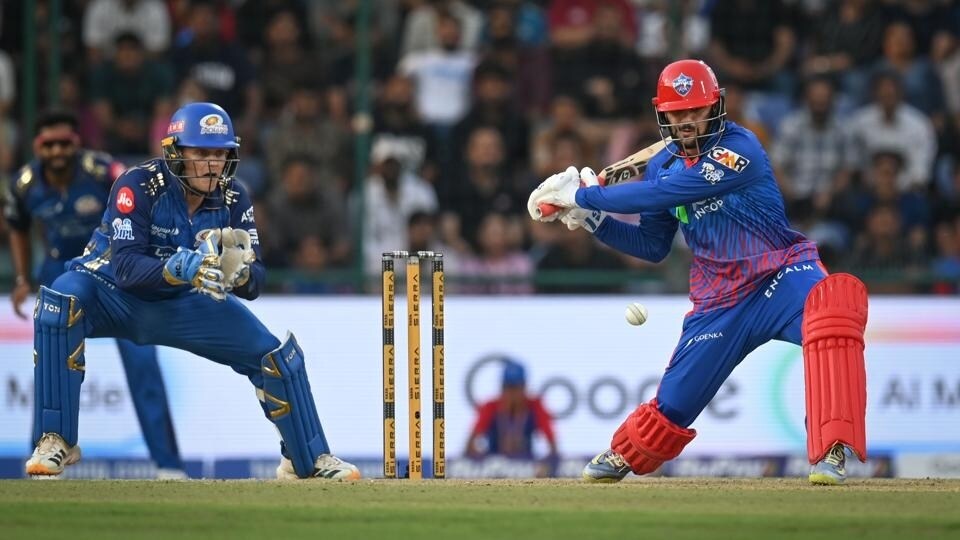
For GT, the challenge is not simply to get him out. It is to stop him from reaching the phase where he usually takes control.
The available data makes that pattern clear. Rizvi has built his returns around acceleration through the middle overs and sharp finishing once he settles. Across the available sample, he has scored 320 runs off 212 balls at a strike rate of 150.94. In 2026, that rate rises further to 163.27. The bigger warning for GT lies in how those runs are distributed.
Sameer Rizvi is far less comfortable at the start of an innings than he is after getting set. In the powerplay phase of the available sample, he has scored only 17 runs off 32 balls. But once the innings move into the middle overs, the scoring rate rises dramatically. He has 259 runs off 160 balls in that phase at a strike rate of 161.88. At the death, he becomes even more dangerous, striking at 220.
That split should shape GT’s entire approach. They cannot allow Rizvi to enter quietly and then own overs seven to fifteen. That is the zone where his innings start changing matches.
The biggest mistake GT can make
The easiest way to let Rizvi settle is to bowl at his strengths.
The available data shows that he is especially dangerous against anything short or slightly back of a hittable length. He has scored 100 runs off 52 balls against short-of-good-length bowling. Against full balls, he has 83 off 45. Against short balls, he has 23 off 11, and against bouncers, 18 off 7.
That is the danger zone for GT. If they miss on either side of the ideal test length, Rizvi can cash in quickly. Bowl too short, and he can pull or pick up off the back foot. Bowl too full, and he can drive cleanly and release pressure.
His scoring pattern underlines this further. Nearly 72 per cent of his runs in the available sample have come in boundaries. That is not the profile of a batter slowly working into rhythm through nudges and singles. It is the profile of a batter who can grab an over and change the field immediately.
GT, therefore, cannot bowl lazy hard lengths into his arc or overcorrect with full deliveries after one boundary. That is exactly how his kind of innings grow.

The length that keeps him quiet
If there is one clear control method against Rizvi, it is disciplined, good-length bowling.
Against good length in the available sample, he has scored only 69 runs off 78 balls at a strike rate of 88.46. Even in 2026, when his overall scoring has improved significantly, good length has still kept him down to 27 off 29 at a strike rate of 93.10.
That is the length GT have to live on.
Not the kind of back-of-a-length ball that sits up. Not the half-volley that lets him free his hands. The ball has to be heavy enough to deny extension and full enough to prevent him from simply rocking back and pulling. Just as important is the line. GT should look to attack that channel around off stump and just outside it, forcing Rizvi to reach rather than letting him access his stronger leg-side scoring options too easily.
This is why GT’s seamers hold the key. If Mohammed Siraj and Kagiso Rabada are available as part of the attack, the early job is simple in theory and difficult in execution: make Rizvi start against seam-up good length before he can inherit softer conditions and a spread field.

Why spin alone is not the answer
There will always be a temptation to see a young Indian middle-order batter and assume quality spin will solve the problem. But Rizvi’s recent scoring does not support that lazy shortcut.
His 2026 numbers against spin are particularly strong. He has scored 60 runs off 29 balls against spin at a strike rate of 206.90. That is a batter using spin as a scoring route.
So, GT should not view Rashid Khan as a magic-button answer. Rashid can still be crucial, but only if he is brought into a plan that has already created pressure. If Rizvi arrives at the crease having been allowed to settle, then even elite spin becomes a riskier proposition because he is batting on his terms.
The smarter route is sequence-based bowling. Pace should create the squeeze. Dot-ball pressure should create indecision. Only then should GT use spin with protection in place.
That means if Rashid or another spinner comes on, the field should reflect denial rather than ambition. The offside boundary riders become important. Deep point, sweeper cover and long-off should all be in play. The aim is not to invite a contest. The aim is to reduce his clean scoring zones and force him to manufacture.
The real objective for GT
GT do not just need Rizvi’s wicket. They need to stop him from becoming Delhi’s stabiliser and accelerator.
That distinction matters. A 24 off 26 from Rizvi can be nearly as valuable to GT as dismissing him for 12, because it breaks the rhythm he usually provides and forces someone else to take on the innings-building responsibility. Delhi have relied on him to bridge pressure and momentum. If GT can deny that bridge, they push the burden back onto the rest of the batting order.
That is why this is such an important tactical battle. Rizvi’s weakness is at the start. His strength comes after survival. The longer GT let him remain in that transition zone without pressure, the greater the chance that the innings flips in Delhi’s favour.
The plan, then, is clear.
Attack him early. Bowl hard, good length. Stay outside off. Refuse to feed the pull. Do not turn to spin too early out of habit. Build two overs of pressure, not one ball of hope.
Because once Rizvi settles, GT are no longer bowling at a developing batter. They are bowling at the phase where Delhi’s innings begins to breathe.


