


 Live Score
 Cricket Teams
 Cricket Players
Sarfaraz Khan exposed the INR 1.98 crore hole in CSK's Kartik Sharma and Prashant Veer investment
CSK spent ₹28.4 crore on Kartik Sharma and Prashant Veer, but their performance is underwhelming compared to Sarfaraz Khan, who cost only ₹75 lakh.

 Prefer HTon Google


Chennai Super Kings paid ₹28.4 crore for Kartik Sharma and Prashant Veer. In the latest game against Royal Challengers Bengaluru, that expensive two-man package produced a combined final impact score of 48.17 by our method. In the same match, Sarfaraz Khan, bought for just ₹75 lakh, produced 56.87 on his own.
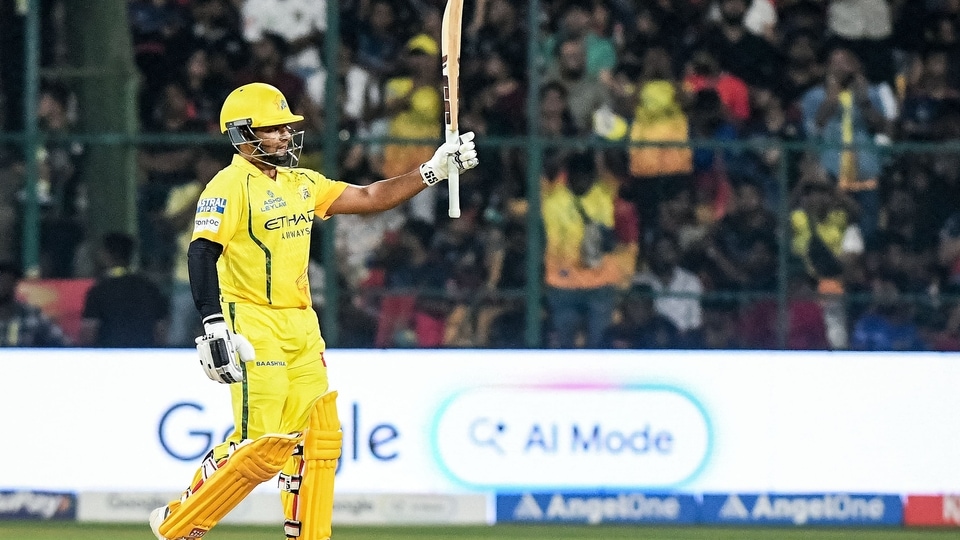
That is the part CSK should worry about most. This is no longer just a bargain story about Sarfaraz. It is now a value story that throws a harsh light on how little return CSK are getting from some of their costlier bets.
Sarfaraz’s one innings made CSK’s expensive pair look like a bad investment
Spread across a 14-match league phase, Kartik Sharma and Prashant Veer together cost CSK roughly ₹2.03 crore per match. In Bengaluru, when their output is measured against the value benchmark set by Sarfaraz’s innings, that combined return comes to only around ₹4.54 lakh.
Which means the shortfall from that one match alone sits at roughly ₹1.98 crore.
That is not a small cricketing miss. That is the kind of money that can fund a lavish Indian wedding, or cover rent of ₹1 lakh a month for more than 16 years, or pay a ₹50,000 monthly salary for around 33 years. CSK put that kind of value on the field in one game and got back less than what their ₹75 lakh batter delivered alone.
The uglier bit is how that number was built. Prashant Veer at least contributed with a final score of 48.17. Kartik Sharma gave zero. So this was not one of those nights where two costly players both had modest returns and together stayed afloat. One high-ticket player did nothing, and the other still could not drag the combined investment anywhere near respectability.
Sarfaraz Khan, meanwhile, cost only about ₹5.36 lakh per match on the same season split. His 50 off 25 balls did not just bring urgency to a broken chase. It also produced better value than a pair that cost almost 38 times more in total auction terms.
The tournament numbers make it even harder for CSK to hide
This is not a one-night anomaly.
Across the tournament so far, Kartik Sharma and Prashant Veer together have a combined final impact of 78.77. Sarfaraz alone is already at 147.92. So the ₹75 lakh signing has delivered nearly double the total impact of a ₹28.4 crore pair.
That is where the money framing becomes brutal.
If the combined tournament return of Kartik and Prashant is priced at Sarfaraz’s efficiency, it amounts to only around ₹39.94 lakh in value. Against a real auction outlay of ₹28.4 crore, that leaves a shortfall of roughly ₹28 crore already.
That scale of under-return is the kind of money franchises use to build a core, not decorate a squad list. It is the kind of outlay that should bring match control, rescue acts, phase-winning contributions and repeated influence. Instead, CSK have a budget signing outperforming an expensive package by such a margin that the comparison itself becomes uncomfortable.
And that is the real story here. Sarfaraz is not merely overachieving. He is showing how little value CSK’s expensive bets have delivered relative to their prices.
For a team already looking disjointed, that should sting more than one defeat. Because losing a match is one problem. Spending premium money and getting bargain-bin returns is a much bigger one.


