Imagine this: you have batted for hours, passed 250, and are now approaching a First-Class triple hundred. Gradually, you reach 299 and need just one run to reach the landmark. The No. 11 batter at the other end has faced and dealt with everything thrown at him, stitching together a 102- run partnership with you. But then, at the worst possible moment, the wicket falls at the other end, leaving you stranded on 299.
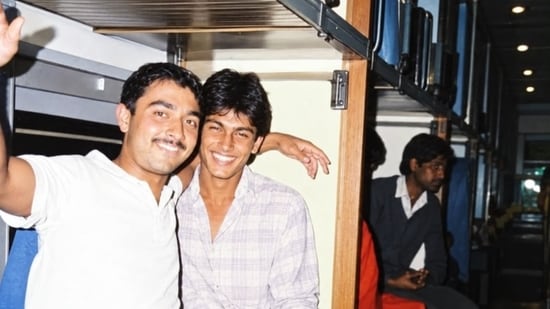
Who do you think would be more disheartened in such a situation? Apparently, it was the No. 11 batter, Anil Walhekar, who broke down in tears after his resistance finally ended. The batter, stranded on 299, consoled him before walking back to the dressing room.
This was a Ranji Trophy 1988-89 match between Maharashtra and Madhya Pradesh, and the batter was Shantanu Sugwekar. If you thought missing out on a first-class triple century was cruel for Sugwekar, consider this: it was probably not even the biggest miss of his cricketing career. For nearly the next ten years, he would amass thousands of runs in domestic cricket, remain on the fringe of the national team and yet never play a single match for India.
Sugwekar finally ended his first-class career with 6,653 runs in 85 matches at an average of 63.10. His career tally included 19 centuries and 26 half-centuries, while that particular 299 remained his highest score. These were not the numbers of a player who had enjoyed a freak domestic season or peaked for just a couple of years. They were the numbers of a genuinely consistent domestic giant with the bat.
{{/usCountry}}Sugwekar finally ended his first-class career with 6,653 runs in 85 matches at an average of 63.10. His career tally included 19 centuries and 26 half-centuries, while that particular 299 remained his highest score. These were not the numbers of a player who had enjoyed a freak domestic season or peaked for just a couple of years. They were the numbers of a genuinely consistent domestic giant with the bat.
{{/usCountry}}The biggest irony of Sugwekar’s career was that he did not score these runs far away from the eyes of the national selectors. He represented Maharashtra, West Zone and the Rest of India, with his career overlapping with some of the biggest names in Indian cricket of the era. Sugwekar played alongside Sachin Tendulkar, Sourav Ganguly and Vinod Kambli at different stages. His battle for recognition came during a period when Mohammad Azharuddin and Sanjay Manjrekar–sized names were regulars in the Indian side, while the next generation of Rahul Dravid and VVS Laxman was developing.
The 299 against Madhya Pradesh came when Sugwekar was only 22. Maharashtra eventually piled up 700 in that match and won by an innings and 262 runs. However, it was just the beginning of a career in which such huge scores became the norm. He later made 211 against Saurashtra, 225 against Orissa and, even in the final stages of his career, an unbeaten 210 against Gujarat.
Sugwekar’s 1993-94 Ranji Trophy season is a perfect example of how consistently he dominated domestic attacks. During the campaign, he scored four hundreds, including 225 against Orissa, 142 against Bombay and hundreds in each innings against Vidarbha. When a player finishes his career with such dramatic numbers, the question becomes how many of those runs came on friendly pitches against weak attacks. Sugwekar’s stats put such doubts to rest very easily. He scored more than 800 first-class runs against Bombay at an average above 57, and that team was considered the strongest in the domestic circuit during the period.
Sugwekar was only 22 when he produced the 299-run marathon. Maharashtra eventually piled up 700 in that match and won by an innings and 262 runs. However, it was just the beginning of a career in which such huge scores became the norm. He later made 211 against Saurashtra, 225 against Orissa and, even in the final stages of his career, an unbeaten 210 against Gujarat.
Sugwekar’s 1993-94 Ranji Trophy season is a perfect example of how consistently he dominated domestic attacks. During the campaign, he scored four hundreds, including 225 against Orissa, 142 against Bombay and a hundred in each innings against Vidarbha. When a player finishes his career with such striking numbers, the question naturally arises: how many of those runs came on friendly pitches against weak attacks? Sugwekar’s stats put those doubts to rest very easily. He scored more than 800 first-class runs against Bombay at an average above 57, with the team regarded as the strongest in the domestic circuit.
Sugwekar also delivered when the level of competition went up in tournaments such as the Duleep Trophy. Playing for West Zone in 1992, he scored 158, while Vinod Kambli made 208 against South Zone. The duo added 210 runs for the fourth wicket. A year later, Sugwekar hit 143 in Maharashtra’s second innings against Uttar Pradesh in the Ranji Trophy semifinal, helping his team reach the final.
And then there was Tendulkar
This is where Sugwekar’s career becomes even more curious. Before Tendulkar made his debut in 1989 against Pakistan, Sugwekar played with him for Rest of India in the Irani Cup against North Zone. Ganguly was also part of that team. Historical records and reporting around India’s 1989 Pakistan tour suggest that Sugwekar was one of the players on standby.
Looking at the two careers at that stage makes us realise just how ironic their final destinations were. Sachin was only 16 then, dazzling the cricketing fraternity with his raw talent, while Sugwekar was 22, had already scored an unbeaten 299 and was part of India’s extended selection plans. One career moved into a different orbit from that point, while the other was eventually forgotten amid the millions of names that populate the domestic arena.
The two crossed paths again at Sungrace Mafatlal, where Sugwekar played for years under Sandip Patil and alongside Tendulkar. He later recalled a match in the 1994 Times Shield in which the two put together a 400-run partnership. Sachin was an established name in international cricket by then, while Sugwekar was still waiting for his call.
However, the strange part is that Sugwekar’s biggest opportunity to don the Indian jersey was still ahead of him. During the 1996-97 Ranji season, aged 30, he scored 928 runs at an average of 71.38. He struck three hundreds and four fifties that season, including 193 against Madhya Pradesh and 169 against Punjab. Only three batters scored more runs than Sugwekar that year. India were preparing for a tour of the West Indies, with Tendulkar as captain. Sugwekar later said that this was the period when he felt closest to finally receiving an India call-up. However, with Tendulkar already a household name, Azharuddin still around, Dravid and Ganguly moving up the ranks, and Laxman emerging on the scene, the competition was simply too brutal.
That remained the biggest tragedy of Sugwekar’s career. He kept piling on the runs in the domestic arena, kept doing enough to be noticed, but was never able to get past the final line. In the end, his career finished with more than 6,000 first-class runs at an average above 63. The batter who once missed a triple hundred by a single run had another tragic number attached to his career by the end: zero international matches. Even now, it remains difficult to comprehend.