In his more than three-decade long association with cricket, Amrit Mathur has worn many administrative hats. He was manager of the Indian team on the historic 1992 tour of South Africa, was part of PILCOM, the organising committee for the 1996 Cricket World Cup, and COO of the Delhi Daredevils IPL team and BCCI general manager. He was Secretary, Sports Authority of India, and as advisor to the union sports ministry, instrumental in drawing up TOPS (Target Olympic Podium Scheme), the flagship programme for supporting elite athletes. Mathur brings his rich perspective of the game, its personalities and events in his book, Pitchside, My Life in Indian Cricket.
An excerpt:
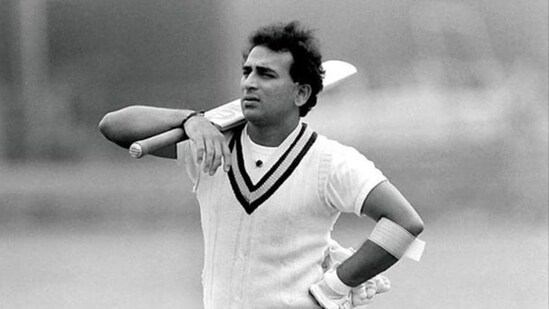
Among the many mysteries of Indian cricket, Sunny Gavaskar features prominently in two.
One: Was he actually out caught bat-pad in his last Test innings, batting at 96 in the 1986 Test against Pakistan in Bangalore? Two: Why did he announce his retirement in London — at Lord’s — in 1987?
Gavaskar has gagged himself; he is not telling. He wants the suspense to continue, but I have background masala to share. That time in Bangalore, we knew he wouldn’t play anymore and this was sort of confirmed when he sent handwritten invitations on the last day, asking friends to dinner at the Taj West End hotel. This, we thought, was a significant moment in cricket history, a giant walking away after an extraordinary career.
Sunny said nothing that evening in Bangalore and instead of hitting the exit button, he merely pushed pause. Till the next summer when, after 188 at Lord’s in the MCC bicentennial game, having scored a century that had eluded him on four previous visits to England, he decided to put away his bat.
{{/usCountry}}Sunny said nothing that evening in Bangalore and instead of hitting the exit button, he merely pushed pause. Till the next summer when, after 188 at Lord’s in the MCC bicentennial game, having scored a century that had eluded him on four previous visits to England, he decided to put away his bat.
{{/usCountry}}When Gavaskar came to the Feroz Shah Kotla stadium for a benefit game after his triumphant West Indies tour of 1971, I stood in a long queue to get his autograph. Years later, I met him in Chennai in 1982 during the Sri Lanka Test when my friend Arun Lal made his Test debut. He was sitting in the players’ area outside the Indian dressing room reading a book while play was on. Arun introduced me to him and, on an impulse, I asked him whether he would answer some questions for an article I was writing. To my surprise, he said yes and put the book down. I got an exclusive.
When I sent him an invitation for my wedding, he wrote me a letter in which he pointed out that ‘from now on you will look at other girls and feel bad’. A few years later, when he was editing Indian Cricketer, Aajkal’s English monthly magazine, I became his Delhi correspondent.
Gavaskar is as prolific with the pen as he was with the bat, and much more aggressive in this field. He wrote his columns himself, occasionally from a noisy dressing room, and had the remarkable ability to block all distractions and focus on the job at hand. Exactly the way he batted in the middle, shutting out the chatter of chirping fielders and the deafening stadium noise. But, mindful of maintaining his 6/6 eyesight, he never wrote or read anything in a moving car.
Gavaskar made the forward defensive look cool and, like Bishan Bedi’s silky-smooth action, it was sheer perfection. His technique, a cocktail of art, science, geometry and physics, enabled him to make what Dravid calls ‘tough runs’ against bowling that was scarily fast. He earned respect from opposing batsmen and bowlers, including Viv Richards and Imran Khan, as well as his teammates. At a social function, Kapil Dev introduced his teenaged daughter Amiya to him. Meet my captain, he said, in a manner that conveyed respect and admiration.
Gavaskar was the first cricket superstar after Tiger Pataudi, the Rajesh Khanna of his time. He became a pioneer who unlocked business opportunities, opened commercial doors and monetised celebrity cricket. He understood numbers and read the direction and swing of commercial trends better than the rest.
Sunny’s business venture, the Professional Management Group (PMG) was cricket’s one-stop platform that supplied everything—television content, newspaper columns, celebrity management, events and sponsorships. When the Railways organised the national hockey championship at the newly installed Astro Turf in Gwalior at Mr Scindia’s insistence, he found a commercial partner and despatched a young executive, Harsha Bhogle, to make sure it went well.
His astonishing gifts of concentration and relentless desire to excel are well documented. But what isn’t well known is that his memory is sharper than that of an elephant. When he was introduced to Shashi Tharoor at a function, he waited till the introductory handshakes and pleasantries were done before casually slipping in an arm ball with a reminder to Shashi about a cover story he had written many years ago in the Illustrated Weekly, in which he called Gavaskar the worst captain to have led India. Soon after that article was published, Sunny led the Indian team to a memorable win at the World Championship of cricket in Australia. Tharoor, caught and bowled Gavaskar!