Australia’s women’s cricket team are now undefeated in their last 21 ODIs, spanning two and a half years, across five countries, four continents, against six opposing nations, three of whom are ranked in the top five. Seven series sweeps, four of those away from home.
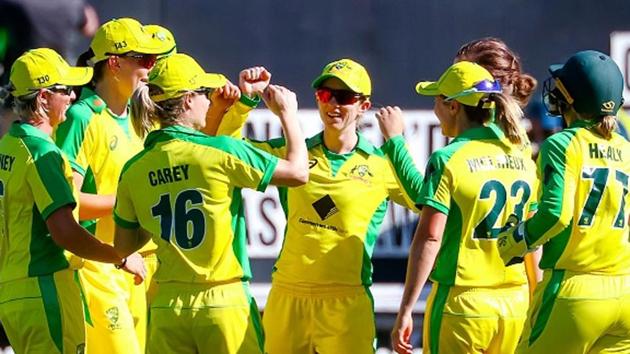
This isn’t a dominant sports team. It’s an all-conquering empire on the march.
Only two games in that streak could be counted as close: one against England, a win by two wickets, and another by five runs against New Zealand. The rest are canters, with regular demolitions: six wins by 150 runs or more, and five chases in which they never lost more than three wickets. A lot of people are comparing it to the 21-match streak that Ricky Ponting’s Australia achieved in 2003. Let me provide some context: The men’s team did it over four months: 133 days. Meg Lanning’s Australia have sustained their excellence more than seven times longer.
This tells me two things: First, you can’t be this good for this long by being a good team, you need to be a good system.
Australia’s good system is their domestic cricket, and their flagship Women’s Big Bash League. Eight professional franchises, aligned to the men’s set up, feeding off the infrastructure and adding to the fan base. Investment in WBBL teams (by Cricket Australia, who owns the BBL) creates incentive: a WBBL contract, a paid chance to be on TV. Competition for that WBBL contract drives up quality, which brings in fans. And this provides the national team with an embarrassment of riches, and more than 86,000 fans who will pay to watch them show those riches off.
{{/usCountry}}Australia’s good system is their domestic cricket, and their flagship Women’s Big Bash League. Eight professional franchises, aligned to the men’s set up, feeding off the infrastructure and adding to the fan base. Investment in WBBL teams (by Cricket Australia, who owns the BBL) creates incentive: a WBBL contract, a paid chance to be on TV. Competition for that WBBL contract drives up quality, which brings in fans. And this provides the national team with an embarrassment of riches, and more than 86,000 fans who will pay to watch them show those riches off.
{{/usCountry}}The Australian system nurtures talent and retains it. Let’s focus on two players in the Australian side to understand this. When I spent two months in Australia over the 2016-17 season covering the WBBL, I first heard the name Annabel Sutherland, a 15-year old who had been offered a WBBL contract. At the time she was known for being the daughter of James Sutherland, the Australian cricket’s Chief Executive. Now she’s an 18-year- old T20 World Cup winner, earmarked as the next great all-round talent, and given the responsibility to bat at No. 3 in the record-equalling game. And she could do it, because, at 15, she was in a professional system, fast tracking her cricketing development.
Let’s look at the other end of the spectrum: In 2017, Rachel Haynes considered quitting cricket. She had a home loan to pay and couldn’t balance training for her state team with a full time job in marketing. She was 29 and had last played for Australia in 2013. Then, her state team went professional, allowing all women players to earn a minimum wage. They were the first state in Australia to do so. With a WBBL contract topping that up, Haynes quit her job, focused on cricket, and a lucky break saw her get a chance to play for Australia again. Since then she’s averaged 42 in ODIs, captained the side to an Ashes win, and at 33, is one of the team’s most valued players, a left-handed batter whose real-world experience has helped inform the national team’s culture. She could do that because of a professional system that retained her. I quit cricket at roughly the same age, so that I had enough time to build a career outside the uncertainties of the sport.
Which brings me to the second thing: Australia’s results also show that no other country’s system is anywhere nearly as good. And we have to ask, why not? We’ve seen the blueprint: put in enough money into grass roots and domestic cricket over ten years, back it with administrative consistency, and your team will succeed. New Zealand don’t have the money. England do, but didn’t channel it into domestic women’s cricket fast enough. Cricket South Africa’s board rooms are in disarray.
What’s our excuse?
In a first-of-its-kind report on women’s cricket I recently helped co-author, we identified long-term financial investment in women’s cricket as one of the key recommendations needed for international success. “While ad hoc investment is happening in women’s cricket, the stakeholders, led by the BCCI, and backed by the government, state associations, broadcasters and sponsors, should make a public commitment of a time-bound, future-focused investment. This will send the strongest message about intent, and will be the base from which any further plans are built, and later evaluated,” we wrote.
Leading into the 2017 World Cup, even before women’s cricket burst into the public consciousness, India women won 16 matches in a row. We got to the final of the T20 World Cup this year. But we still don’t have a national Under-16 tournament or a coordinated school cricket program. We have the talent. We just don’t have the system.
So, I look at Australia’s winning streak, and can’t stop thinking:
This could have been us.
This should have been us.
This can be us.
How can we make sure that this is us?
(Snehal Pradhan is a former India cricketer, commentator and writer.)