


 Live Score
 Cricket Teams
 Cricket Players
Under Virat Kohli’s giant shadow, Ajinkya Rahane’s international journey delivered a lot less than it promised
Ajinkya Rahane's international career ends with fewer runs than his talent deserved, but his legacy will forever be built on impact over statistics.

 Prefer HTon Google


A little over three years since he played the last of his 85 Tests, Ajinkya Rahane called time on his international career in typical Rahane fashion – without pomp or fanfare, with an almost wraith-like anonymity that characterised most of his time in the Indian side.
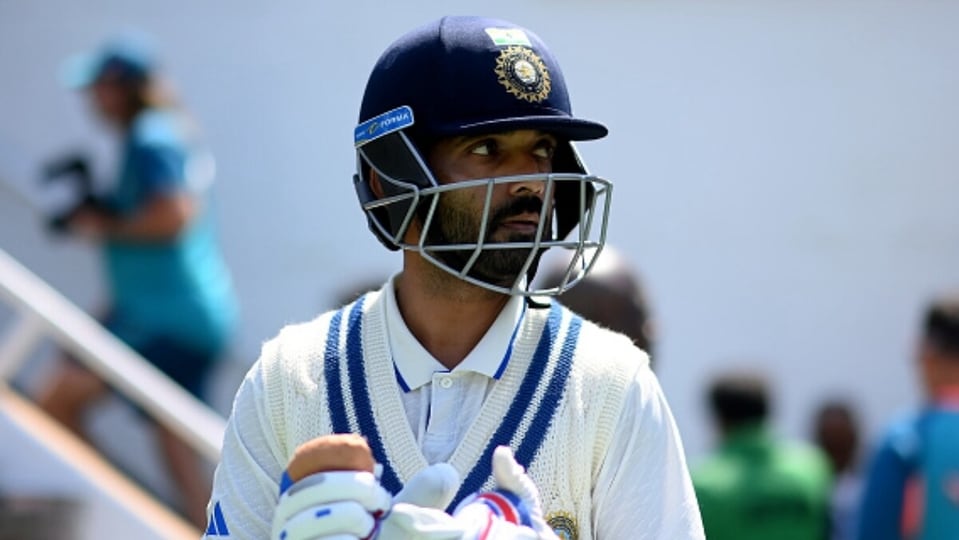
Rahane was a fantastic stroke-maker in his own right and a fabulous student of the game whose man-management skills came bursting to the surface during the dramatic tour of Australia in 2020-21. But for most of his career, Rahane performed under the giant shadows of Virat Kohli and to a lesser extent Cheteshwar Pujara even though in terms of sheer impact if not presence, he was in no way inferior to either of his right-handed peers.
Some might wonder about the timing of Rahane’s retirement – ‘Did he really think he stood a genuine chance of a Test recall?’ is one of the more charitable observations – but retirement is a call for the protagonist to make, not for the rest of the world to thrust upon an individual. Rahane exits with his head held high, but with an average (38.46) that certainly doesn’t do justice to the skill and gumption he possessed and with just 12 centuries – approximately one in seven matches. Rahane’s was a career less fulfilled, but like VVS Laxman before him (not to say that Rahane was in the same league as the Hyderabadi artist), it will be remembered for impact, not necessarily for impressive numbers that don’t always manifest in the desired result.
Impact beyond numbers
By the time Rahane cut his teeth in Test cricket in March 2013 – shockingly, in hindsight, he had made his international debut in both white-ball formats nearly a year and a half previously – the guys with whom he would share a dressing room for the next decade had already stolen a march. Pujara had established himself as a dependable No. 3, as the ideal successor to Rahul Dravid, from the time of his Test debut in October 2010 while Kohli boasted four hundreds despite an iffy start when Rahane squared off against Australia at the Arun Jaitley Stadium in a maiden outing that yielded scores of just 7 and 1.
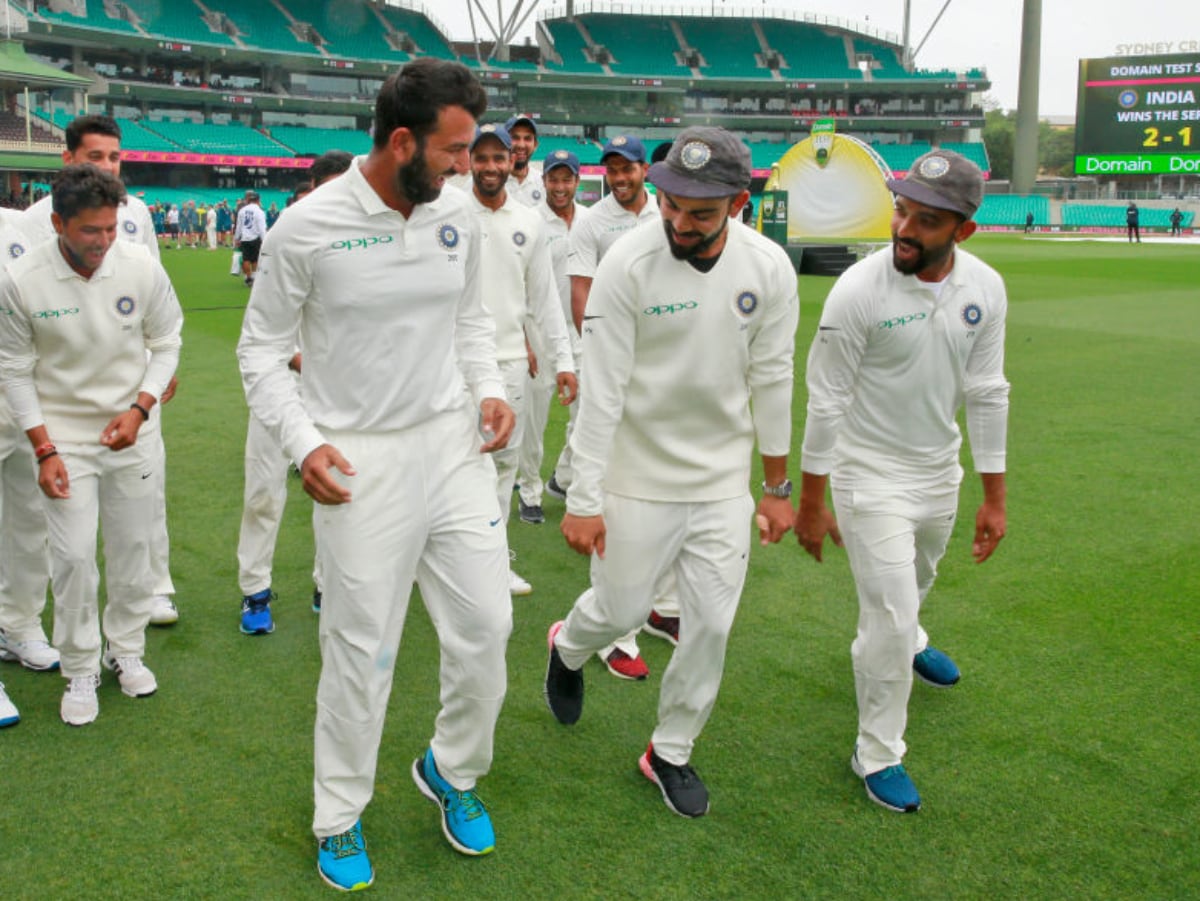
At his best when there is pace to work with, and unfazed by bounce or movement, Rahane was a river in spate away from home. But his struggles against the turning ball are not imaginary. Despite his reputation as an excellent player of spin, only three of the 38-year-old’s 12 Test tons came on home soil, where he often flattered to deceive. Indeed, at one point, he was the catalyst for suggestions that just as some bowlers are left out when the team travels overseas because they don’t exactly fit the bill, there should be a case for a batter like Rahane, say, to be dropped from home Tests, a suggestion that found little favour.
But away from home, and especially with his team in a spot, Rahane produced spectacular masterpieces, not least a flowing 103 at Lord’s in 2014 and a mesmeric, counter-punching 112 at the MCG in December 2020. The latter was particularly telling; India had been rolled over for an unprecedented low of 36 in the second innings in Adelaide, and skipper Kohli went home after the day-night drubbing in the first Test of four. Rahane took over with Mohammed Shami also ruled out of the series through injury, and fashioned one of the most remarkable Test comebacks as less-than-half-strength India bounced back to score an epochal 2-1 triumph.
Streets will never forget 2020-21 BGT
That the inspiration for the reversal of fortunes stemmed from the willow of the stand-in skipper merely added meat and romance to the glorious subtext. Rahane was unstoppable as a batter at the MCG and proved himself to be an astute tactician, alongside masterminding head coach Ravi Shastri, over the three matches remaining once Kohli left on paternity leave. He will feel, with justification, that he should have led the country more often; his legacy-defining 2-1 victory in Australia looms as another case-study of ‘what could have been’, a Rahane specialty, it would seem.
Despite his more than occasional dalliances with 50-over cricket – he figured in 90 ODIs – code-cracking remained steadfastly elusive. An average of 35.26 was passable, possibly slightly better than that, but a strike-rate of 78.63 was a definite red flag and spoke to a constant uphill climb to rotate the strike on the sluggish pitches of the subcontinent in the middle overs against a softening ball. The odd mouthwatering compilation merely added to the all-round frustration – ‘If you can do it once, Jinks, why don’t you try more often?’.
Rahane will still turn out for Kolkata Knight Riders in the IPL and possibly for Mumbai in domestic cricket, but as he walks away into international sunset, he leaves you with the lingering feeling of a career less fulfilled, of a frustratingly stop-start sojourn, but also with visions of dizzying peaks, however sporadic and far removed they might have been.


