The results and the approach don't quite match up. Over the last decade, women's cricket in India has scaled new highs. The team reached the final of the 2017 ODI World Cup in England and the final of the 2020 T20 World Cup — ending runners-up in both but it can be argued that these achievements haven't come due to a systematic structure and evidence of that haphazard approach can be seen even now.
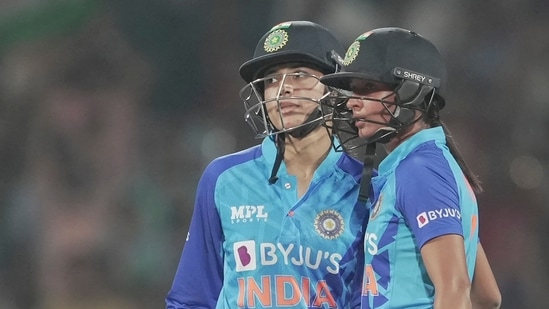
The 2023 ICC Women's T20 World Cup is scheduled to begin on February 10 — just over a month from now. And the Indian team finds itself without a head coach or a bowling coach. There is the consolation of a batting coach in Hrishikesh Kanitkar, who was appointed to the post when the previous head coach Ramesh Powar was shunted to the National Cricket Academy on December 6, 2022.
In the month that has gone by since the appointment of Kanitkar, the Board of Control for Cricket in India has not invited applications for the post of the head coach or the bowling coach and neither have they named proper replacements. The Cricket Advisory Committee, which would under ordinary circumstances look at new applicants for these positions, isn't aware of the hiring process either.
So, the Indian team, despite being one of the favourites for the T20 World Cup, finds itself in the unenviable position of going into a big tournament without a head coach. A big name might be parachuted into the position at the last moment but is this how the BCCI should be dealing with the situation? Is this how champions prepare?
{{/usCountry}}So, the Indian team, despite being one of the favourites for the T20 World Cup, finds itself in the unenviable position of going into a big tournament without a head coach. A big name might be parachuted into the position at the last moment but is this how the BCCI should be dealing with the situation? Is this how champions prepare?
{{/usCountry}}The Harmanpreet Kaur-led team, which is a week away from going on a tour of South Africa for a tri-series involving the hosts, India and the West Indies and in the middle of a preparatory camp at the NCA, literally has to figure things out on its own. It could even manage that but it shouldn't have to. Not in this day and age.
Australia (Shelley Nitschke), England (Jon Lewis), New Zealand (Ben Sawyer) and even Pakistan (Arshad Khan) have had regular coaches attached with them for a considerable time to prepare for the mega-event but India despite its aspirations has lagged behind in this aspect.
Ironically, the BCCI has managed to have a very structured approach for the inaugural U-19 women’s World Cup. For the past 10 months, the U-19 probables were exposed to the same set of coaches and support staff. Coaches from the same set were appointed to go with the team to South Africa with Nooshin-Al-Khadeer as head coach.
Why the BCCI has failed to replicate a similar approach for the senior team is a question worth asking over and over again. This is a team that handed Australia (who had a record of 24 wins, 1 draw and 1 loss in 26 completed matches across formats in 2022) their only defeat of the year. Surely, they deserve greater attention from the powers that be.
In the last decade or so, the Indian women’s cricket team has struggled to find a stable and successful head coach. Anju Jain (whose stint ran from 2011-2013), Purnima Rau (2014-2017), Tushar Arothe (2013-2014 and 2017-2018), WV Raman (2018-2021) and Powar (2018-2019 and 2021-2022), haven't stayed long enough on the job to have any real impact. And it really doesn't help the team.
It's all well and great to be launching the Women's Indian Premier League this season but for that to succeed, India will want a national team that will be doing well, and cutting corners won't help.
India, runners-up to Australia at the previous T20 World Cup in 2020, are still searching for their first world title. They are placed alongside England, West Indies, Pakistan and Ireland in Group B and will open their campaign against Pakistan on February 12 in Cape Town.