Earlier this month, 43 girls from a school in outer Delhi wrote to their principal alleging that their teacher would engage in ‘dirty conversations’ and look at them in a way that made them ‘uncomfortable’. As the girls threatened to boycott classes, authorities transferred the teacher.
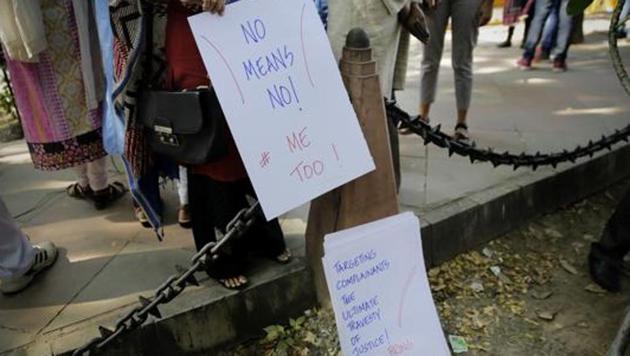
The Me-Too movement may have uncovered the ‘worst kept secret’ of sexual violence in workplaces, but the everyday harassment faced by teenage girls, although rampant in schools, streets and public places and transport, is still rarely talked about.
Last month, a survey conducted in 22 cities across the world by NGO Plan International rated Delhi as the third most ‘risky’ city for young girls where they could face harassment in a public place. The researchers spoke to 392 experts in these cities and defined sexual harassment as hassling, stalking, touching, flashing and staring. Almost 60% of these experts said sexual harassment in their city was hardly ever reported.
Afraid to talk about it to adults fearing social stigma, restriction of movements or that they may not even be believed, girls have for long internalised such instances of harassment. On occasions, some even get pushed over the edge. Two months ago, a 15-year-old girl from outer Delhi committed suicide because she was allegedly stalked and harassed by her neighbour. It was only after her death, the police said, that the girl’s brother told their parents about the harassment. In March, a 17-year-old living in the same police district hanged herself, leaving behind a note that indicated harassment by men in her neighbourhood.
“Everyday violence leaves a permanent effect on a girl’s psyche,” said Kalpana Viswanath, a gender expert who has conducted safety audits of public places in Delhi. “While she may try to put it away and get on with her life, she is always watchful, perhaps even fearful,” she said. It is strange what this fear can do. A senior colleague who grew up in Delhi told me how even now while walking on the streets, she never makes eye contact with a stranger. “What if he made a lewd gesture?” Having grown up in Delhi myself, I can tell this is not paranoia.
{{/usCountry}}“Everyday violence leaves a permanent effect on a girl’s psyche,” said Kalpana Viswanath, a gender expert who has conducted safety audits of public places in Delhi. “While she may try to put it away and get on with her life, she is always watchful, perhaps even fearful,” she said. It is strange what this fear can do. A senior colleague who grew up in Delhi told me how even now while walking on the streets, she never makes eye contact with a stranger. “What if he made a lewd gesture?” Having grown up in Delhi myself, I can tell this is not paranoia.
{{/usCountry}}Experts say that a support system helps detect such crime. Under the Protection of Children from Sexual Offences Act, teachers are required by law to report child abuse if they get to know about one. But in most schools, teachers have little time and sensitisation to engage with students individually. Cases of harassment are anyway brushed aside as minor irritants.
Implemented seriously, such models do work. For instance, the girls’ clubs in Ghana, Mozambique and Kenya run by trained female mentors have been disseminating knowledge and confidence among schoolgirls to speak out against sexual violence and inequalities, a report by ActionAid stated.
In 2014, Modesta Joseph, a 15-year-old student from Tanzania’s Dar es Salaam, designed ‘Our Cries’ — a smartphone app to report abuse on public buses. Students without access to the internet can send text messages or drop their complaints, anonymously if they prefer to, in wooden boxes placed around secondary schools. Soon after its launch, the transportation authority picked up the app and started working with the police to address the complaints, the BBC reported this April.
Three years ago, Delhi Police too launched an initiative to seek out victims of sexual harassment and violence. Under Operation Nirbheek, complaints boxes were placed in schools and workshops were conducted to encourage girls to talk about their concerns. “In the existing system, if a child wanted to report violence, she had to come through an adult — a parent or a guardian — who would always take the decision. We sought to bridge the gap by empowering children to make complaints directly to us,” said an officer, who worked on the project. Police said they developed a graded system of response for each complaint. “In some cases, we informed the teachers or called the parents. In certain cases, we even registered formal police complaints,” said the officer.
Following the project’s initial success, the National Commission for Protection of Child Rights in 2016 replicated the model, launching its online version called the ‘e-box’ and states such as Chhattisgarh, Maharashtra and Jharkhand have started their own pilot schemes. It is time Delhi police scaled up its pioneering project in the capital to ensure that coming generations of young women do not grow up in fear.
Stay updated with all top Cities including, Bengaluru, Delhi, Mumbai and more across India. Stay informed on the latest happenings in World News along with Delhi Election 2025 and Delhi Election Result 2025 Live, New Delhi Election Result Live, Kalkaji Election Result Live at Hindustan Times.
Stay updated with all top Cities including, Bengaluru, Delhi, Mumbai and more across India. Stay informed on the latest happenings in World News along with Delhi Election 2025 and Delhi Election Result 2025 Live, New Delhi Election Result Live, Kalkaji Election Result Live at Hindustan Times.