
 E-Paper



Office-goers relieved as Delhi govt lifts restrictions on number of passengers in vehicles
However, following the central government’s guidelines, the Delhi government has decided not to reopen the Delhi Metro services.


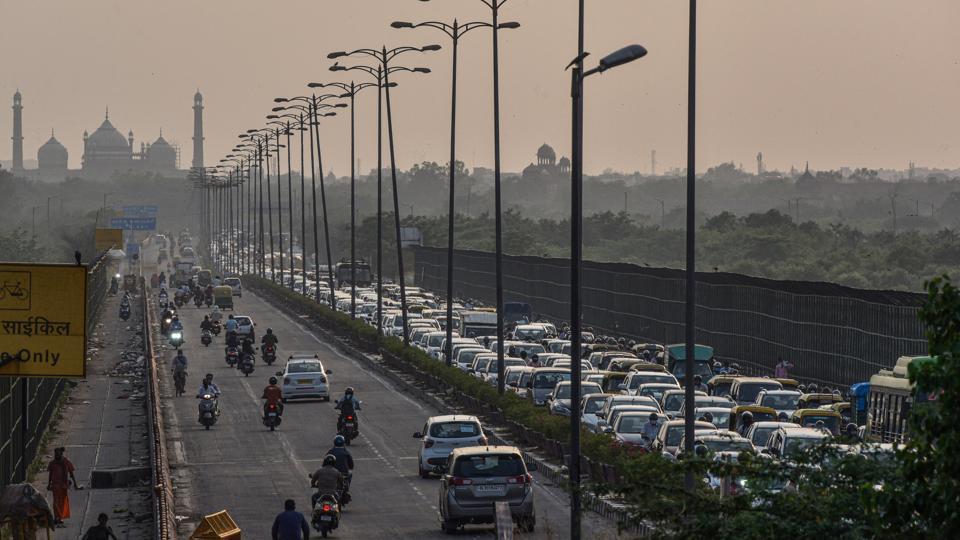
Delhi chief minister Arvind Kejriwal lifted restrictions on the number of passengers in auto rickshaws, cabs and private cars, as the government moved towards “unlocking” the city on Monday. These relaxations come as a major relief to office-goers across the city who now have more options to commute to and from their workplaces.
However, following the central government’s guidelines, the Delhi government has decided not to reopen the Delhi Metro services.
“In light of the guidelines issued by the government, Metro services will remain closed for commuters until further notice. Our helpline services 155370 shall also not be available. You may reach us at helpline@dmrc.org,” read a Delhi Metro Rail Corporation (DMRC) statement, following the government’s order on Monday.
A senior Metro official, requesting anonymity, said that even though the DMRC is ready to restart operations while adhering to the norms of social distancing, they will abide by the government order.
“This is a call that both the governments will have to take. If they ask us to restart services, we are in a position to do that on short notice too,” the official said.
Meanwhile, commuters in the city heaved a sigh of relief at the government’s announcement on lifting passenger restrictions in auto-rickshaws, cabs, private cars, e-rickshaws and gramin sewas. Public buses will continue to operate with a passenger limit of 20 in each bus. However, with other modes of transport allowed to operate at full capacity, the load on public buses will probably be eased.
“We were told that people from the same family wanting to travel in an auto-rickshaw were facing difficulties because of the one-passenger limit. Since the central government has not limited the number of passengers now, we are also removing these restrictions,” Kejriwal said, while lifting the restrictions.
During the fourth round of the lockdown, the Delhi government had capped the passenger limit to one in auto-rickshaws, e-rickshaws and cycle rickshaws. On two-wheelers, no pillion rider was allowed, and in private cars and cabs, only two passengers and the driver were allowed.
Rajender Soni, the general secretary of Delhi Autorickshaw Sangh, said that the removal of the single passenger limit from auto-rickshaws has come as a breather to drivers.
“There were barely any passengers, and we were forced to deny a ride to more than one person. Many drivers will benefit from this relaxation. Thousands of drivers were facing a major financial crisis during the lockdown,” Soni said.
He also said that even though these relaxations have been issued, drivers are being instructed by unions to take all requisite precautions, such as wearing masks all the time, washing hands whenever possible and keeping a bottle of hand sanitiser in the vehicle, for their and the passengers’ safety.
Cab aggregators such as Ola and Uber are also preparing a safety plan to normalise services. The Delhi government order did not specifically state if shared rides in cabs/taxis will be prohibited as was the case in the last four phases of the lockdown.
A spokesperson of cab aggregator Ola said they will continue to restrict the number of passengers in their cabs to two and that they won’t restart shared rides in the Capital till there is clarity on the issue from the government.
“Only two passengers per ride will be allowed in the cab. They will also be urged to sit by the windows in the rear of the car,” the company said.
“All driver-partners have been asked to wear masks at all times. Before the start of each ride, they will have to upload a picture of themselves wearing their masks to authenticate the ride. They will also be provided with a hygiene kit with masks, sanitiser and disinfectants. Air conditioning will be switched off to avoid cross ventilation,” Ola cabs said in a statement on Monday.
Many officer-goers said on Monday that travelling around the city had become tedious with the restrictions on transport.
Tripti Yadav, who works in a private firm in Nehru Place, said she travels with a colleague, and because of the passenger limit in autos, they were being forced to take cabs to work, which was costing them a lot.
“One or two days is fine, but if you have to take the cab everyday, then it starts to pinch your pocket. Even though the Metro is not operational, we will now be able to take the auto at a much lesser cost than the cabs,” Yadav said.


