
 E-Paper



Why secondary particles led to big jump in PM2.5
While “primary particles” like particulate matter, sulphur dioxide and nitrogen dioxide are directly emitted by stubble burning and vehicles, “secondary particles” form from the complex reaction.


Delhi’s air quality turned more toxic on Sunday, primarily because of the formation of “secondary particles”, which are much more potent in terms of toxicity than particulate matter that has already gone through the roof.
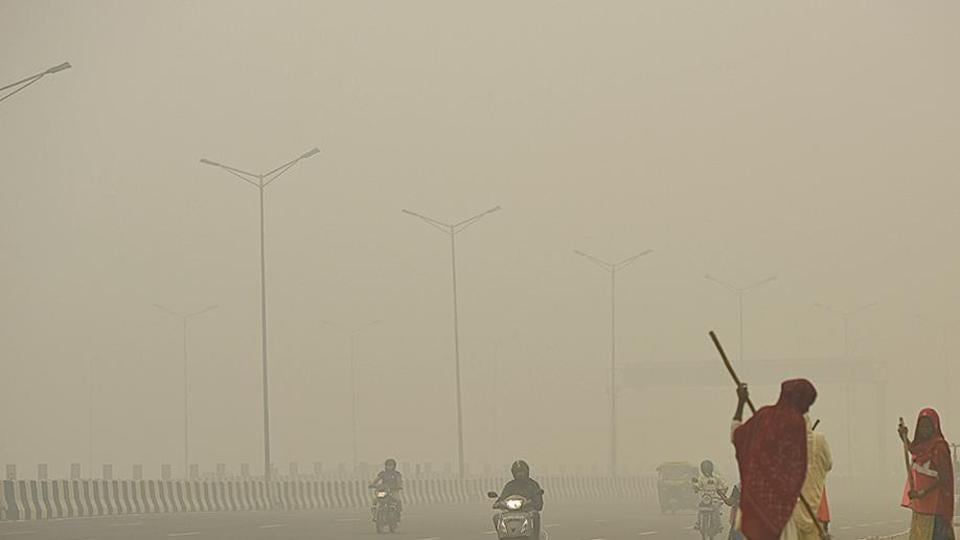
While “primary particles” like particulate matter, sulphur dioxide and nitrogen dioxide are directly emitted by stubble burning and vehicles, “secondary particles” form from the complex reaction between primary particles in the presence of other factors such as sunlight and moisture.
Examples of secondary particles include sulphates, nitrates, ozone and organic aerosols, and they form in the atmosphere.
Secondary particle pollution amplified the pollution levels in the capital.
The only way to avoid it is to bring down sources of primary particle pollution.
“The ratio of PM2.5 (ultrafine particles of size 2.5 microns or less) and PM10 usually remains 50:50 in the air. On Sunday, however, the share of PM2.5 shot up to 75%. This is primarily because of the formation of secondary particles which are finer,” said G Beig, a scientist heading Safar, the union government’s pollution forecasting agency.
Data provided by the Central Pollution Control Board (CPCB) showed that between 5.30pm on Saturday and 2.30pm on Sunday the 24-hour average concentration of PM2.5 in Delhi and the NCR shot up from 259ug/m3 to 540ug/m3 — a rise of more than 100%.
Compared to this the level of PM10 shot up from 421ug/m3 to 650ug/m3, which is around 50%.
“The scanty rain proved to be a triggering agent setting off a chain reaction. The rain pushed up relative humidity in the air. With more moisture, the primary pollutants started undergoing chemical reactions and formed secondary particles, which are not just finer but more toxic than the primary ones,” said MP George, head of the Delhi Pollution Control Committee’s (DPCC’s) air quality laboratory.
That secondary particles pose a threat to Delhi was earlier pointed out in 2016 by IIT Kanpur.
The institute had said that secondary particles form 13% – 17% of the particulate matter in Delhi’s air. Later the Environment Pollution Control Authority (Epca) also mentioned about the threat in the comprehensive action plan.
“We usually speak about particulate matter, SO2 and NO2, which are primary pollutants. But secondary particles form in the air and add to the pollution and toxicity. They amplify the pollution to a great extent,” said D Saha, former
head of the CPCB’s air quality laboratory.


