As part of the emergency measures to combat the apocalyptic pollution levels in the city, Delhi Chief Minister Arvind Kejriwal on Sunday announced that all construction and demolition in the city will be banned for next five days in order to check dust pollution.
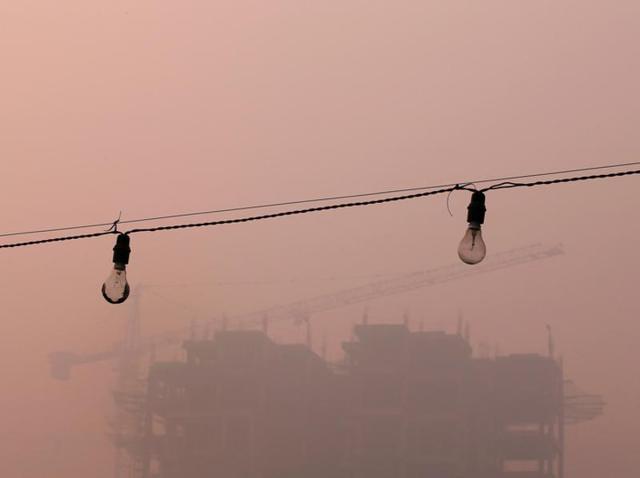
But what makes this dust so dangerous? In 2015, in an affidavit submitted by Ministry of Environment and Forest (MoEF) to the Supreme Court, it was noted that dust was the highest source of pollution in Delhi. It contributed to 52% of the particulate matter in the air as compared to 6.6% by vehicular emissions. Construction waste alone constitutes around 40% of the total waste generated in the city.
The government claims to be doing its bit. Delhi Pollution Control Committee officials have penalised 342 construction sites for violating dust pollution norms since September, a Delhi government release said on Friday.
Read: Environmentalists unimpressed with Delhi govt’s measures to tackle pollution
However, this might not be enough. To control construction dust, experts suggest step-by-step demolition, covering construction site during demolition, using sprinklers and other dust-reduction technologies.
{{/usCountry}}However, this might not be enough. To control construction dust, experts suggest step-by-step demolition, covering construction site during demolition, using sprinklers and other dust-reduction technologies.
{{/usCountry}}In a research released by the Johns Hopkins Bloomberg School of Public Health in November last year, it was found that higher levels of coarse particles in the air was leading to an increase in cardiovascular-related hospitalisations such as for heart attacks in people aged 65 years or older in the United States.
The researchers said this was so far the strongest evidence to show that coarse particulate matter (sized 2.5 to 10 microns in diameter) released into the air from construction projects were extremely harmful for humans.
Read: Here’s all you need to know about cloud seeding
Pulmonary experts and doctors say that constant exposure to dust particles can lead to the person inhaling both visible as well as suspended particulate matter. Over the years, if a person is constantly exposed to dust and construction waste they run the risk of inhaling silica which escapes the filter mechanism of the nose and the throat. This makes the person vulnerable to diseases like tuberculosis.
If the particles enters the airway and reach the end, it tends to collect in the lung tissues, causing injury and tear. The amount of dust and the kinds of particles involved influence how serious the lung injury will be. Silica particles, for instance, give off toxic substances which scar the lungs.
Stay updated with all top Cities including, Bengaluru, Delhi, Mumbai and more across India. Stay informed on the latest happenings in World News along with Delhi Election 2025 and Delhi Election Result 2025 Live, New Delhi Election Result Live, Kalkaji Election Result Live at Hindustan Times.
Stay updated with all top Cities including, Bengaluru, Delhi, Mumbai and more across India. Stay informed on the latest happenings in World News along with Delhi Election 2025 and Delhi Election Result 2025 Live, New Delhi Election Result Live, Kalkaji Election Result Live at Hindustan Times.