If congestion levels in the Capital are not controlled within the next five years, Delhi could face the fate of Bangladesh’s capital Dhaka, where the average speed of vehicles on to road is the same as that of humans walking, says a leading urban transport expert.
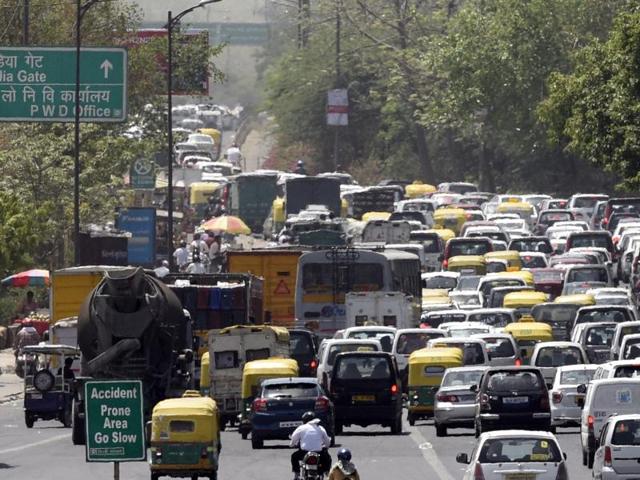
“Congestion can’t be reduced by building more roads. You can’t cure obesity with bigger pants,” says Shreya Gadepalli, the South Asia Regional Director at the Institute for Transportation and Development Policy (ITDP), a global non-profit institute that helps cities worldwide in creating sustainable and equitable transport systems and people-friendly environment.
Commending Delhi Government’s odd-even scheme, Gadepalli said the government should leverage this opportunity to dramatically improve public transport in the city.
“Road rationing works well as an emergency short term measure. But you can’t cure a cancer with pain killers. Effective long term solutions are required. First, dramatically augment public transport. Second, stop building more roads for cars and use tools for efficient use of available road space,” she said.
“During the first stint of the odd-even rule in Delhi, streets saw more than a third of the traffic drop, leaving at least a lane in each direction free. It showed that there is sufficient space for a high quality bus rapid transit system at street level on almost all arterial roads. The key is to make BRT high-quality like a metro, not inflexible like a metro,” she said. “Why build elevated BRT when a street level BRT is not only cheaper but better,” she asked.
{{/usCountry}}“During the first stint of the odd-even rule in Delhi, streets saw more than a third of the traffic drop, leaving at least a lane in each direction free. It showed that there is sufficient space for a high quality bus rapid transit system at street level on almost all arterial roads. The key is to make BRT high-quality like a metro, not inflexible like a metro,” she said. “Why build elevated BRT when a street level BRT is not only cheaper but better,” she asked.
{{/usCountry}}Negotiations are on between Delhi Government and Delhi Development Authority for depot land for additional buses. “2000 crore rupees, the money that DDA wants, is a pittance compared to the proposed investment into elevated roads in and around the city. This money will serve the mobility needs of millions of people compared to only a few lakh car users that will benefit from elevated roads,” said Gadepalli.
But where would the money come from. “Rarely, if ever, do urban toll roads earn money for the government. They only add more space for cars at the cost of public funds. Demand-based parking fee and congestion pricing are much better tools to not only ensure efficient use of limited road space but also generate enough funds good bus service,” said Gadepalli. “For every kilometre of street with market-based parking fees, enough money can be generated for not just better footpaths on that stretch; 10 additional buses can be brought into service,” she added.
Stay updated with all top Cities including, Bengaluru, Delhi, Mumbai and more across India. Stay informed on the latest happenings in World News along with Delhi Election 2025 and Delhi Election Result 2025 Live, New Delhi Election Result Live, Kalkaji Election Result Live at Hindustan Times.
Stay updated with all top Cities including, Bengaluru, Delhi, Mumbai and more across India. Stay informed on the latest happenings in World News along with Delhi Election 2025 and Delhi Election Result 2025 Live, New Delhi Election Result Live, Kalkaji Election Result Live at Hindustan Times.