
 E-Paper



An Opposition mukt House
If MPs are not allowed to speak up, what purpose does the House hold for democracy?

 Prefer HTon Google


This is a record India should not be proud of: A record 141 Opposition lawmakers have been suspended from Parliament this session; 14 of them face privilege notices, which means they may be suspended from the House for longer. The depleted Opposition may be comforting to the Treasury benches, but it is a poor advertisement for India’s parliamentary democracy. The government even pushed through a handful of bills in the melee, without the necessary debate in the House, a disquieting trend that seems to define the current dispensation’s parliamentary strategy. At the heart of parliamentary democracy is the culture of debate. An electoral majority is not an end in itself when it comes to the democratic process. In other words, winning an election, especially one in a first-past-the-post system, does not translate into a licence for unilateralism. It should not escape anyone’s attention that as of this writing, approximately 240 million people (represented by 95 Lok Sabha MPs) will not be represented in the House of the People for the remainder of this session.
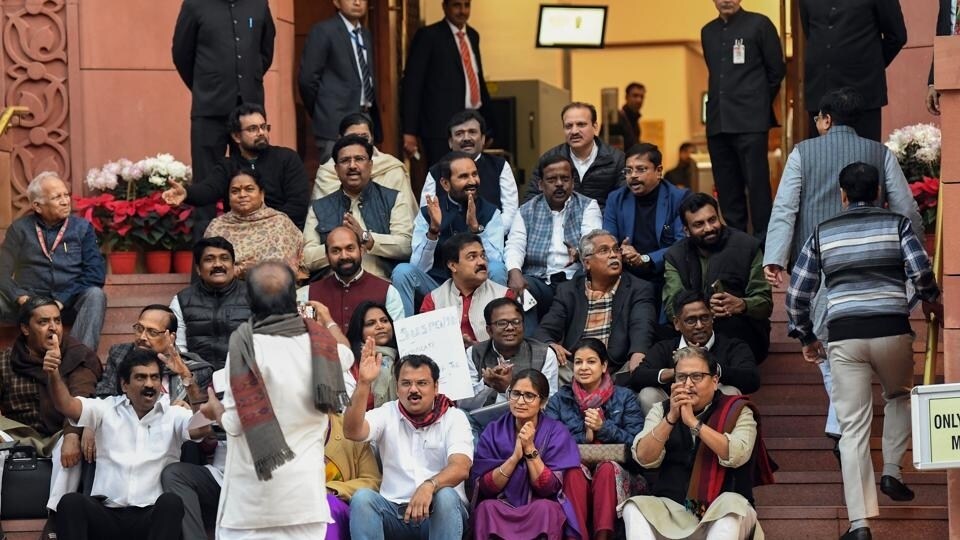
Law-making calls for the participation of the entire House, across the aisles. Bills need to be debated in the House, anomalies removed, ambiguities addressed, and gaps bridged before they become the law of the land. The Opposition, as critical insiders in the parliamentary process, has a major role to play here. They are to act as a filter and provide checks and balances so that a dominant House majority does not sleepwalk through the process of making policies and laws. To be sure, the Opposition sometimes appears to forget this responsibility. And, to be sure, their behaviour in the House is sometimes needlessly provocative.
Parliament is the country’s most elevated platform where the government is meant to explain not just its stance on policies but also on major events. The security breach in Parliament was a grave moment and, surely, called for a statement from the highest authorities in the government, especially since both the Prime Minister and the home minister have thought it fit to comment on the issue outside the House, one in an interview and the other at an event. It is not a sign of weakness to have either of them inform the House on what went wrong and what has been done to plug any further breaches. Parliament has seen such crises in the past and managed the outcomes well. The Rajya Sabha Chair and the Speaker of the Lok Sabha, both seasoned politicians, should weigh in and reason with both government and Opposition to return to House business in the proper manner expected of them by the citizens of this country. They should also advise the government against the convenient option of expelling all Opposition voices. It robs Parliament of its purpose and erodes the credibility of the law-making process.


