
 E-Paper



Clearing the air on right to bail
Supreme Court has done well to remind everyone that bail is the rule and jail the exception, including in UAPA cases

 Prefer HTon Google


The Supreme Court’s unusual criticism of its own judgment denying bail to former Jawaharlal Nehru University (JNU) student Umar Khalid and activist Sharjeel Imam in the 2020 Delhi riots case offers a narrow opportunity for freedom in the otherwise stringent provisions of the Unlawful Activities Prevention Act (UAPA), which make bail virtually impossible.
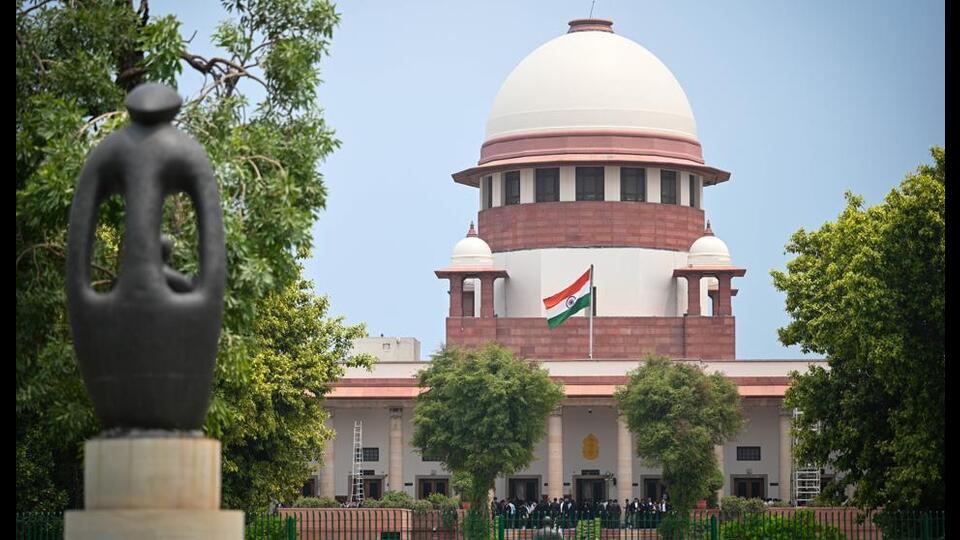
On Monday, a bench of justices BV Nagarathna and Ujjal Bhuyan, while granting bail to Jammu & Kashmir resident Syed Iftikhar Andrabi in a narco-terror case, expressed “serious reservations” about the reasoning adopted earlier this year by another two-judge bench comprising justices Aravind Kumar and NV Anjaria in the Delhi riots case. The court found that the January 5 verdict failed to correctly apply the binding principles laid down by a larger three-judge bench in Union of India Vs KA Najeeb (2021), which recognised that prolonged incarceration and delay in trial can override the statutory restrictions on bail in UAPA. More importantly, the top court explicitly said that even under UAPA, bail is the rule and jail the exception, and that benches of lower strength cannot dilute the expansive and liberal definition of personal liberty in KA Najeeb.
There are two clear implications: One for Khalid and Imam, and another for the larger jurisprudence of anti-terror cases. The January 5 verdict had rejected the argument that prolonged incarceration alone can justify bail under UAPA, making a distinction between the two student leaders and other accused in the case. This week’s decision by justices Nagarathna and Bhuyan indicates that more leverage should have been given to individual liberty. A larger bench of the top court should take a call as soon as possible.
Second, the judgment can help move the needle on bail in UAPA cases — especially against the backdrop of a recent pattern where grave charges are levelled against activists, only for the trial to hang fire, creating the perception that a politicised process is using stringent provisions to keep people jailed. This newspaper has repeatedly noted that a crackdown on violence and upholding national security — both of paramount importance — cannot become synonymous with the legal process becoming the punishment. The top court’s thrust on the importance of bail even under anti-terror laws has the potential to effect a structural shift in judicial doctrine that privileges the right to a fair trial over prolonged pretrial detention. The apex court should consider catalysing this shift.


