Cyclone Remal carries a warning about the future. Remal, after its landfall over the West Bengal-Bangladesh coast on Sunday, turned into a cyclonic storm and battered large parts of India’s Northeast killing at least 32 persons. The northeastern states are accustomed to heavy rains and floods, but cyclonic storms are rare in the region. However, at a time of major shifts in weather patterns, inevitable in the time of climate crisis, such unexpected events may become more the norm than
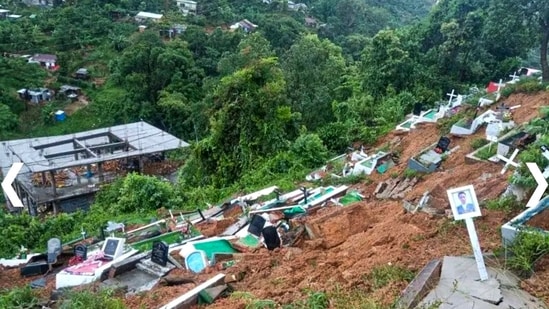
Cyclone Remal carries a warning about the future. Remal, after its landfall over the West Bengal-Bangladesh coast on Sunday, turned into a cyclonic storm and battered large parts of India’s Northeast killing at least 32 persons. The northeastern states are accustomed to heavy rains and floods, but cyclonic storms are rare in the region. However, at a time of major shifts in weather patterns, inevitable in the time of climate crisis, such unexpected events may become more the norm than the exception.
Remal’s impact was severe in the Northeast because of its unusual trajectory. It developed over the east central Bay of Bengal on Saturday (May 25) evening and intensified into a severe cyclonic storm on Sunday morning over the north Bay of Bengal, with wind speeds clocking over 100 kmph. The bay was unusually warm with some parts recording a temperature of 32 degrees Celsius (warm for water) which contributed to the intensity of the cyclone. A severe cyclone will rapidly weaken after it interacts with land, but Remal maintained its intensity as it moved to the northeast, causing unprecedented heavy rainfall, landslides, mudslides and flooding in that region.
The northeastern states are experiencing long dry spells interspersed by extreme rainfall events. Rainfall over northeast is on a decline while the relatively arid western India is recording higher rainfall due to a shift in monsoon behaviour — all six northeastern states reported 30% to 60% rain deficiency between March 1 and May 28. These states have also lost significant forest cover. Clearly, there is an urgent need to rehaul policies and staunch human interventions that disturb the region’s ecology. Improved land-use plans, mapping of landslide-prone regions, and regulating logging and mining can help the region prepare for exceptional weather events.
One Subscription.
Get 360° coverage—from daily headlines
to 100 year archives.
Archives
HT App & Website