Rain and favourable wind might have delayed the onset of winter pollution in Delhi, but air quality forecasts for the coming days suggest that the Capital is headed towards an air emergency, this newspaper reported on Wednesday. This expected change in the air quality has been attributed to two reasons: A spike in stubble fires and Diwali (November 4). The Indian Institute of Tropical Meteorology’s forecast said the contribution of stubble smoke in Delhi’s PM 2.5 (particulate matter with diameter
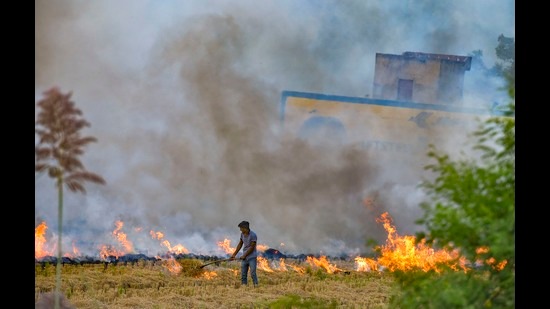
Rain and favourable wind might have delayed the onset of winter pollution in Delhi, but air quality forecasts for the coming days suggest that the Capital is headed towards an air emergency, this newspaper reported on Wednesday. This expected change in the air quality has been attributed to two reasons: A spike in stubble fires and Diwali (November 4). The Indian Institute of Tropical Meteorology’s forecast said the contribution of stubble smoke in Delhi’s PM 2.5 (particulate matter with diameter less than 2.5 micrometres) levels is expected to reach around 65% by the first week of November. The current contribution of farm fires to Delhi’s PM is about 40%. The delayed withdrawal of monsoon from north India and the heavy post-monsoon showers in October resulted in the slow start to the stubble burning season this year. However, this does not indicate that there will be a drop in the cumulative numbers of fires in Punjab and Haryana, where farmers carry out the practice to clear their fields quickly for the next cropping season.
The warning about the beginning of another round of this annual crisis shows that there has been no concerted and united effort by the Centre (to bring all airshed states together to find a solution to the stubble burning problem) and the Delhi government, which has been promoting the Pusa bio decomposer, to tackle the issue. The ongoing farmers’ protests have added to the challenge. On Wednesday, the Delhi government launched the ‘Patake Nahi, Diye Jalao’ (Light diyas, not crackers) campaign to implement the Supreme Court ban on the use of conventional firecrackers.
As in every year, this winter will demonstrate whether the city government has done anything at all to tackle the other sources of pollution (industrial pollution, garbage burning, leaf burning, and dust control), and the effectiveness of its pollution surveillance system. Only deeper and timely emission cuts across sectors can keep pollution levels under check in the Delhi-National Capital Region.
One Subscription.
Get 360° coverage—from daily headlines
to 100 year archives.
Archives
HT App & Website