The Swachh Bharat Mission (SBM), which has just completed 10 years, is one of the big successes of the NDA-II government: The campaign to make India open defecation free (ODF) has been largely achieved, though the challenge lies in sustaining it that way. Many international studies have documented the health benefits of SBM — one such, by US and India-based researchers that was published in Nature Scientific Reports last month, estimated that 60,000-70,000 additional infant deaths were avoided yearly because of the sanitation programmes. That said, though often talked about as a mass action programme, it has more or less remained a government scheme — with consequent limits on its reach and outcome. The challenge now is to shift gears and make sanitation part of our public culture.
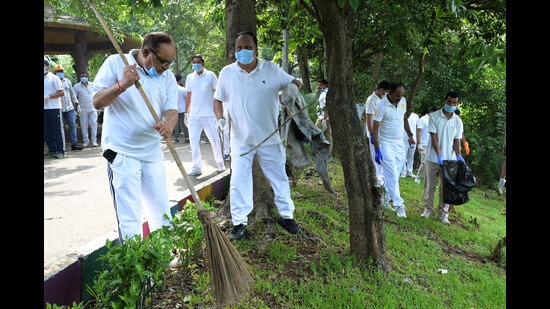
This is important as SBM enters the next phase, the goal for which is being described as sampoorna swachhata (complete cleanliness). On solid waste management, and clean water and air, much work needs to be done. In the absence of scientific waste and garbage collection and disposal, India’s cities are acquiring small hills of waste and rotting garbage, a health hazard in multiple ways. Streams and rivers have turned into drains, carrying untreated or undertreated wastewater. There are many technological solutions to handle these problems if the administration, political leadership and civil society show the intent, engage the necessary expertise, and put in the required funds. A start can be made by training sanitation workers in modern technology and driving awareness about categories of waste and segregation at source among both households and those who work with waste. This can lead to efficient waste management, without it being hazardous for the workers. In fact, this has to be the primary responsibility of local bodies.
Clean air is slowly becoming a part of civic conversation. The same has to happen with water and urban waste disposal. The judiciary has intervened multiple times in the past to push the administration to act. The lack of intent in the local bodies is clear. On the rural front, states like Maharashtra devised schemes to reward the cleanest village, helping making cleanliness a public movement. Such models could be replicated elsewhere by adapting them to local cultural conditions.
{{/usCountry}}Clean air is slowly becoming a part of civic conversation. The same has to happen with water and urban waste disposal. The judiciary has intervened multiple times in the past to push the administration to act. The lack of intent in the local bodies is clear. On the rural front, states like Maharashtra devised schemes to reward the cleanest village, helping making cleanliness a public movement. Such models could be replicated elsewhere by adapting them to local cultural conditions.
{{/usCountry}}The benefits of clean air and water, and better garbage management are too many to list — from health to tourism. It can boost the economy, in fact, create new spheres of economic activity, and save precious resources, especially water. SBM should take this as its goal for its next phase.