Pakistan’s tightrope walk between Iran and Saudi Arabia has suddenly become a lot tougher. Tehran, perhaps taking a leaf out of New Delhi’s book, has warned it was prepared to carry out cross-border military strikes against Pakistan-based terrorists following the deaths of 10 Iranian border guards at the hands of Sunni militants. Islamabad has agreed to strengthen its military presence along the Iran-Pakistan border, but this is little more than a diplomatic band-aid on a much larger geopolitical wound.
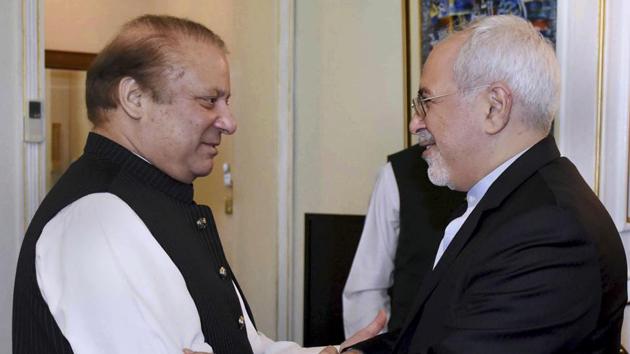
Pakistan has traditionally had close security ties with Saudi Arabia but has sought to maintain cordial relations with Iran, despite the open hostility between the two Gulf countries. However, partly out of concern at deepening relations between Riyadh and New Delhi, Pakistan has been tilting closer to Saudi Arabia. The former Pakistan chief of army staff, General Raheel Sharif, was recently appointed the head of the Saudi-backed Islamic Military Alliance to Fight Terrorism. While the alliance remains amorphous, it is notable in lacking the Shia-dominated regimes of Iraq and Iran. Pakistan also seems to turn a blind eye to Saudi financing of extremist Sunni groups who carry out attacks into Iranian Balochistan, one of which, Jaish al Adl, is believed to be responsible for the killing of Iranian guards. Most of these anti-Iranian terrorist groups are the scions of the Sipajh e Sahaba, a virulent anti-Shia terrorist group created years ago by the Pakistani military.
As Saudi-Iranian rivalry deepens, Pakistan’s attempts to play both sides become increasingly difficult. Islamabad declined an earlier request by Riyadh to send Pakistani troops to fight a Sunni-Shia civil war in Yemen, much to the fury of the Saudis. India benefited as it helped persuade the Gulf Sunni monarchies, led by the United Arab Emirates that Pakistan was undependable and they should build bridges with India. Similarly, Iran’s anger with Pakistan will make it more amenable to helping India in Afghanistan and building the North-South Transport Corridor, an important project for India’s security interests. India and Iran have been squabbling over their oil and gas relationship, but these are commercial rather than strategic problems.
{{/usCountry}}As Saudi-Iranian rivalry deepens, Pakistan’s attempts to play both sides become increasingly difficult. Islamabad declined an earlier request by Riyadh to send Pakistani troops to fight a Sunni-Shia civil war in Yemen, much to the fury of the Saudis. India benefited as it helped persuade the Gulf Sunni monarchies, led by the United Arab Emirates that Pakistan was undependable and they should build bridges with India. Similarly, Iran’s anger with Pakistan will make it more amenable to helping India in Afghanistan and building the North-South Transport Corridor, an important project for India’s security interests. India and Iran have been squabbling over their oil and gas relationship, but these are commercial rather than strategic problems.
{{/usCountry}}However, even while India may gloat a bit at Pakistan’s dilemma it must also be wary of treading on the waters of the Persian Gulf. The government’s “Link West” policy has now led India to become much more engaged with the major Gulf states, including both Saudi Arabia and Iran. Of course, these contradictions are much easier to handle for India because New Delhi is not in the business of supporting terrorists based on its soil, a lesson that Pakistan should learn.