A day before Thursday’s crucial trust vote in Karnataka, the Supreme Court said that the Speaker is empowered to decide on the resignations of the 15 Members of Legislative Assembly (MLAs), within the time frame that he deems appropriate. At the same time, the Court has also said that the 15 MLAs cannot be compelled to attend the proceedings of the house. The order has immediate political implications and could affect the prospects of the Congress-Janata Dal (Secular) government.
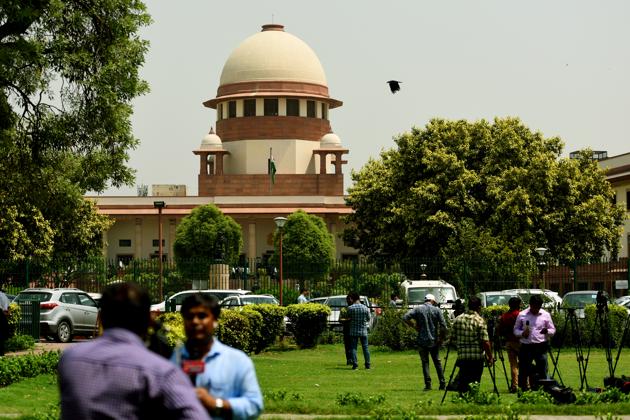
But it is important to not look at the verdict only in the context of immediate politics. Distilled to the core, the question before the court was the following: is the Speaker supreme and the legislature autonomous; or do legislators, when they feel aggrieved, have a right to approach the court if they feel rules are not being followed? India’s constitutional democracy rests on a separation of powers. The legislature is indeed autonomous, subject to the Constitution, and it is not the business of the judiciary to enter into its realm. By recognising the Speaker’s authority to determine the fate of the resignations, the court has abided by this principle. At the same time, there is little doubt that the court has eroded, indirectly, this autonomy. Its order indicates that the Speaker cannot have a carte blanche when his decision — or the timing of it — can have an impact on something as crucial as the fate of the government.
Critics have pointed out that by doing so, the court has undermined the principles which govern the anti-defection law (for an MLA, even while being a member, is not bound by the whip in this case) and reflect overreach. But one cannot ignore that the failure of the political class as a whole has caused this crisis. The court should never have been asked to intervene in the matter. But as legal scholar, Gautam Bhatia, has pointed out, because other institutions are compromised, and no longer carry the same credibility, the judiciary has to step in, often reluctantly. Take Karnataka itself. Last year, the Governor, a former Bharatiya Janata Party (BJP) politician, rushed to invite the BJP to form a government, even when it was clear that the Congress-JD(S) had higher numbers, and gave it a fortnight to prove its majority. The court stepped in, did not question the decision, but reduced the time to a period of 48 hours. In the ongoing instance in the Assembly, the Speaker, a former Congress politician, delayed a decision on the resignations, perhaps to provide room to the ruling alliance. The court stepped in, did not question his authority, but provided space to the MLAs. The more partisan our supposedly independent political institutions act, the more active the judiciary will become. This is not healthy for democracy.
{{/usCountry}}Critics have pointed out that by doing so, the court has undermined the principles which govern the anti-defection law (for an MLA, even while being a member, is not bound by the whip in this case) and reflect overreach. But one cannot ignore that the failure of the political class as a whole has caused this crisis. The court should never have been asked to intervene in the matter. But as legal scholar, Gautam Bhatia, has pointed out, because other institutions are compromised, and no longer carry the same credibility, the judiciary has to step in, often reluctantly. Take Karnataka itself. Last year, the Governor, a former Bharatiya Janata Party (BJP) politician, rushed to invite the BJP to form a government, even when it was clear that the Congress-JD(S) had higher numbers, and gave it a fortnight to prove its majority. The court stepped in, did not question the decision, but reduced the time to a period of 48 hours. In the ongoing instance in the Assembly, the Speaker, a former Congress politician, delayed a decision on the resignations, perhaps to provide room to the ruling alliance. The court stepped in, did not question his authority, but provided space to the MLAs. The more partisan our supposedly independent political institutions act, the more active the judiciary will become. This is not healthy for democracy.
{{/usCountry}}