Last week, the Supreme Court expressed dissatisfaction with the rescue efforts made by the state government to trace the 15 miners trapped in rat-hole mine in Meghalaya. Along with expressing displeasure, the apex court should also have asked two related questions. One, how is rat-hole mining continuing in the state despite the 2014 ban on it by the National Green Tribunal? Two, did the state’s top politicians lie in court in December when they denied that rat-hole mining was continuing in the state despite the ban?
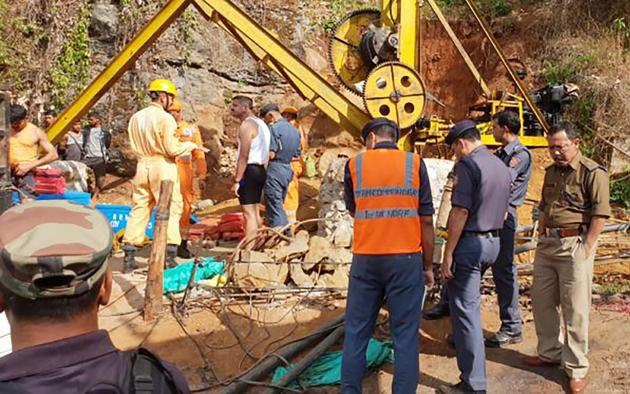
There are several reasons why this primitive and dangerous form of coal extraction is still practised across Meghalaya, especially in the East Jaintia Hills where the men are trapped. It is cheap (no technology is used and rescue equipment and safety protocols are not in place); it has the blessings of the state’s politicians; it also has local community support since there are very few employment opportunities in the area and there is an abundant supply of migrant labour from the neighbouring states. These mines are privately owned and it is not clear how many exist.
As things stand now, only a miracle can save the miners. If they don’t come out alive, the state’s politicians will have blood on their hands. They must accept responsibility for the tragedy because their administrative oversight and hunger for personal profit are responsible for this disaster. There have been enough warnings for them to stop this. In 1992, 30 mine labourers in South Garo Hills were caught in a similar flood, killing at least 15 miners. Many other cases, say activists, have gone unreported in the media because the places are so remote and inaccessible. Last month, two prominent social activists were attacked and almost left for dead when they tried to document the socioeconomic loss due to rat-hole mining. A few weeks prior to that incident, civil society groups submitted a ‘Citizens’ Report’ to the Supreme Court that talked about how mining violates Section 39(b) of the Constitution, which provides the ownership and control of material resources of the community. It also said that the boom has had a major impact on land, livelihoods, and wealth inequalities.
This problem of administrative oversight (willingly or otherwise) cannot be tackled unless mining-affected communities themselves have enough financial incentives to keep an eye on such illegal mining because the mining bureaucracy is underequipped and too corrupt to do so. But unfortunately even the 2018 draft national mineral policy does not talk about community rights over mineral resources, even though it speaks about “sustainable mining”. Many would call that an oxymoron.
{{/usCountry}}This problem of administrative oversight (willingly or otherwise) cannot be tackled unless mining-affected communities themselves have enough financial incentives to keep an eye on such illegal mining because the mining bureaucracy is underequipped and too corrupt to do so. But unfortunately even the 2018 draft national mineral policy does not talk about community rights over mineral resources, even though it speaks about “sustainable mining”. Many would call that an oxymoron.
{{/usCountry}}