The Allahabad high court’s decision last week to green-light a survey of the Shahi Eidgah in Mathura, acquiescing to demands by Hindu petitioners, marks a potential tipping point in the decades-old dispute. This is not only because Mathura has been part of the ideological trinity of the Sangh Parivar – the other two causes being Varanasi and Ayodhya – but also because it represents a fresh strand of the so-called new temple movement, where Hindu groups are pushing to change
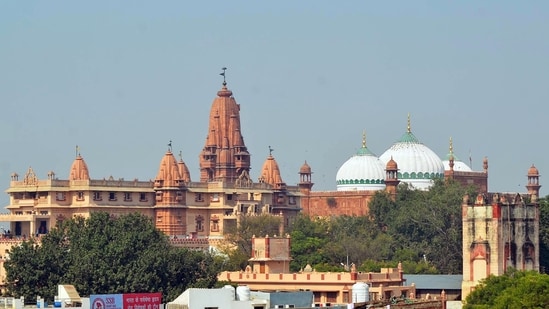
The Allahabad high court’s decision last week to green-light a survey of the Shahi Eidgah in Mathura, acquiescing to demands by Hindu petitioners, marks a potential tipping point in the decades-old dispute. This is not only because Mathura has been part of the ideological trinity of the Sangh Parivar – the other two causes being Varanasi and Ayodhya – but also because it represents a fresh strand of the so-called new temple movement, where Hindu groups are pushing to change the religious status of Islamic holy sites not with street mobilisation but through the courts. The case in Mathura – where Hindu groups say the Shahi Eidgah was constructed on part of a 13.37-acre plot belonging to the Sri Krishna Janmabhoomi Trust, and demand the mosque be removed and the land returned to the trust — appears to be proceeding on the lines of a similar dispute in Varanasi. There too, a survey ordered by a lower court turned controversial after Hindu groups claimed it unearthed a Shivling (Muslim petitioners say it is part of a ritual ablution fountain). The results of a second survey conducted by the Archaeological Survey of India are awaited.
Both in the Gyanvapi case and in Mathura, Muslim petitioners have sought to invoke the 1991 Places of Worship Act, which locks the religious character of shrines as they existed at the time of Independence with the exception of the Ayodhya dispute. Drafted at the peak of the Ram Janmabhoomi movement, the law was envisioned to forestall similar fractious litigation, protect the social fabric, and prevent future disputes that could ratchet up social discord. It was endorsed by the Supreme Court in its landmark 2019 verdict that paved the way for a Ram temple, but its status today appears under a fog as one dispute after another mushrooms. Proceedings before the top court are pending on this question, and the Union government is yet to tell the court whether it will review, scrap or defend the law. In the meantime, a maze of cases and petitions are proceeding in various lower courts, creating confusion.
This is an undesirable situation. The government should consider making its stand clearer and the top court should take a call on its validity. Unless this is done expeditiously, expect more such disputes to be dredged up, and for the communal pot to keep simmering.
One Subscription.
Get 360° coverage—from daily headlines
to 100 year archives.
Archives
HT App & Website