Apart from creating legendary traffic snarls, the yearly United Nations General Assembly (UNGA) in New York rarely generates anything historic, owing to the growing irrelevance of old, idealistic multilateral frameworks. This year, however, the ongoing US-Iran war has produced a symbolically significant moment at the UNGA: Iranian president Masoud Pezeshkian’s speech in response to one by US President Donald Trump. It is not every day that a president travels to the enemy nation in the middle of an ongoing war
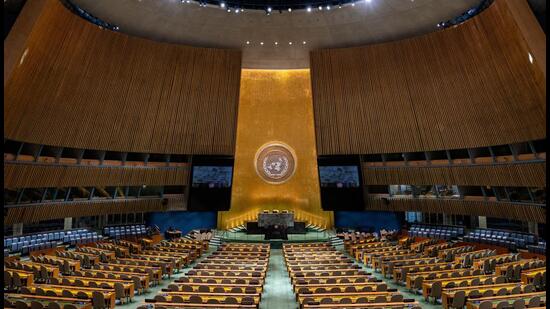
Apart from creating legendary traffic snarls, the yearly United Nations General Assembly (UNGA) in New York rarely generates anything historic, owing to the growing irrelevance of old, idealistic multilateral frameworks. This year, however, the ongoing US-Iran war has produced a symbolically significant moment at the UNGA: Iranian president Masoud Pezeshkian’s speech in response to one by US President Donald Trump. It is not every day that a president travels to the enemy nation in the middle of an ongoing war to call out the hosts for unleashing “terrorism” upon his country. Yes, leaders have delivered anti-West and anti-America speeches from this podium. Hugo Chavez of Venezuela famously labelled George W Bush a devil in 2006; Libyan leader Muammar Gaddafi branded the permanent members of the UNSC bullies in 2009; and Fidel Castro’s marathon speech decried western imperialism in 1960. Yet, none did so during an active war.
Pezeshkian was responding to Trump’s threat to “annihilate” Iran, but, between these two speeches, at least two hours of surprise deliberations took place between Iranian foreign minister Abbas Araghchi and Steve Witkoff, representing the Americans. Tehran’s message seems clear: It’s ready for diplomacy but won’t bow down to Washington’s pressure. Earlier mediation efforts, including by Qatar and Pakistan, failed to broker peace. Given the volatility of tempers both in the Pentagon and the White House, as well as in Tehran, no clear road map has emerged to resolve the Strait of Hormuz blockade. The surge in oil prices, pushing the cost of living even higher, is emerging as an electoral issue in the US for the November mid-term polls.
While the war is existential for Iran, it is proving to be expensive for the US and its regional allies. The US refusal to help Saudi Arabia against the Houthis, the surprise bilateral meeting between the leaders of Iran and the UAE during the Brics summit in New Delhi, the US-Israel disagreements over Lebanon, the revelation of military shortfalls in US naval power, and the divisions within the Trump administration over the war are all signals that Iran, though under heavy stress, has managed to expose chinks in the hitherto impregnable security umbrella of the US. The off-ramp emerging in New York is narrow and slippery, yet Washington must use it to end this ill-conceived war. India should press both sides to seize this opportunity. New Delhi’s own interests must guide its truce efforts.
One Subscription.
Get 360° coverage—from daily headlines
to 100 year archives.
Archives
HT App & Website