Will the earthquake (6.7 on the Richter scale) that gave the Northeast and eastern India a strong jolt in the wee hours of Monday wake up the Centre and states and push them to focus more on following a sustainable and resilient pattern of development in the region? Unlikely. To understand why we are not too hopeful, visit the state capitals in the Northeast. Like most cities in ‘mainland’ India, each one of them — the honourable exception is probably Agartala — has pressed the self-destruct button, exemplified by the build-build-build syndrome. The bureaucratic and popular mindset has become so focused on the need to build big pieces of infrastructure (housing, dams, roads etc) that it has destroyed and overburdened these old, once-beautiful cities.
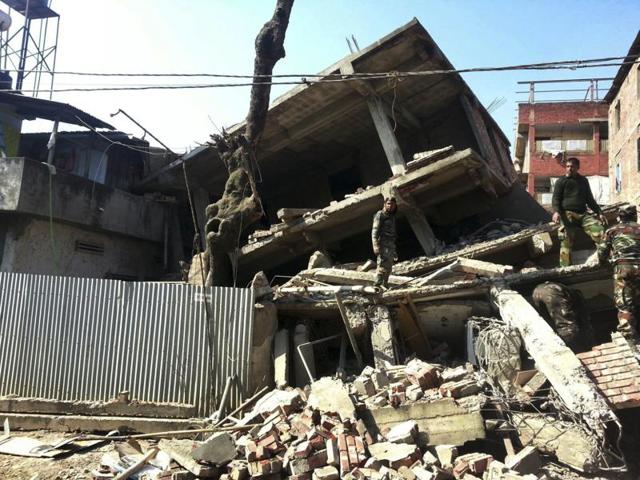
According to analysts from Manipur, the damaged concrete structures in Imphal were government offices and institutions and not private houses owned by government employees, exposing the difference in the execution of construction work by officials and the way they look after their private needs. Across India, infrastructure development is a money-making venture for the bureaucrat-contractor-politician lobby and the Northeast, away from the public glare, is no different. This is increasing the region’s vulnerability to earthquakes because tremors don’t kill people, buildings do. This is not to say developing infrastructure is not important. However, policymakers cannot ignore the natural risks and have to focus on sustainability and pursue resilient urban development. Take for example, Imphal’s famous monument, the Kangla Fort. It was unscathed after the quake, whereas the famous Mother’s Market, which was ‘rebuilt’ by the state government, suffered severe damage. The government needs to explore the reasons why this happened and learn from the traditional techniques that ensured the Fort’s survival.
The experts of the National Institute of Disaster Management , who have warning of a bigger catastrophe in the unstable Himalayan region, correctly says that the DNA of disaster management has to change, the states need to develop a sound building code and policymakers need to understand the threat of a “natural time bomb” and dovetail it into every plan because earthquakes can have huge effects on the local or regional economy. Politicians also need to be aware of the political ramifications of a disaster. Many leaders have lost their reputation and government to such natural phenomena. The time has come for the Northeast to develop a well-drawn up disaster preparedness plan and a mitigation policy.
{{/usCountry}}The experts of the National Institute of Disaster Management , who have warning of a bigger catastrophe in the unstable Himalayan region, correctly says that the DNA of disaster management has to change, the states need to develop a sound building code and policymakers need to understand the threat of a “natural time bomb” and dovetail it into every plan because earthquakes can have huge effects on the local or regional economy. Politicians also need to be aware of the political ramifications of a disaster. Many leaders have lost their reputation and government to such natural phenomena. The time has come for the Northeast to develop a well-drawn up disaster preparedness plan and a mitigation policy.
{{/usCountry}}