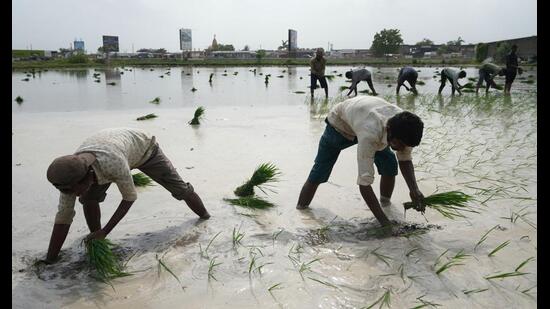
India is now in the last three weeks of its four-month-long monsoon season. A weak monsoon was expected this year, and so far, rainfall is 14% below its Long Period Average (LPA), confirming these expectations. It is unlikely that the overall rainfall performance will improve significantly in the rest of the month. The IMD, in fact, expects rainfall to be weak.
What does all this mean? India will have a deficit of more than 10% in monsoon rainfall for the
India is now in the last three weeks of its four-month-long monsoon season. A weak monsoon was expected this year, and so far, rainfall is 14% below its Long Period Average (LPA), confirming these expectations. It is unlikely that the overall rainfall performance will improve significantly in the rest of the month. The IMD, in fact, expects rainfall to be weak.
What does all this mean? India will have a deficit of more than 10% in monsoon rainfall for the first time since 2015, to be precise. This will have consequences for agricultural production, reservoir levels, and, in some cases, even drinking water availability. Because the El Niño conditions have only strengthened — scientists expect it to be one of the strongest in a long time — the monsoon rainfall deficiency will hurt more going forward and last until at least the March-May season next year. The spring and summer of 2027 will likely be hotter than 2024. Mitigation efforts, both for the food and non-food fallout of low rainfall, must begin in earnest. This will require collaboration between central and state governments.
To be sure, headline monsoon numbers only tell us a part of the rainfall story in India. The recent situation in Bihar, which officially has a 35% monsoon rainfall deficit this season, is a good example. Large parts of the state, including the landmass south of the Ganga, are facing a severe flood situation. Traditionally, the flooding problem in the state is confined to its northern half, where rivers originating in Nepal and higher Himalayan regions create the problem. This time it’s the rainfed rivers originating in central India that have led to large-scale destruction of crops and loss of property.
This is a point HT has highlighted repeatedly in its data analysis of monsoon rainfall in India. Even when headline numbers suggest normal rainfall, its temporal, geographical and intensity variation can be very different. These variations can have a large role in making rains a useful or harmful prospect for dependent activities. Such variation, data shows again, has been increasing over time. This is exactly why India’s mitigation efforts vis-à-vis rainfall need to evolve in a multiverse rather than tracking just the cumulative monsoon rainfall. This will require scientific, holistic and vanguardist planning. It will also require long-term investment. Unfortunately, politics is becoming a prisoner of short-term relief. It’s a vicious cycle which needs to be stopped.
One Subscription.
Get 360° coverage—from daily headlines
to 100 year archives.
Archives
HT App & Website