India is in the middle of its most serious public health emergency — more serious and severe than last year, when the coronavirus pandemic first struck. Each day brings in a new record of the number of cases (on Sunday, daily cases crossed 170,000). Each day brings in a new set of alarming figures from some of India’s largest, politically sensitive, and economically crucial states. Each day brings in more reports of the impact of the new variants of Sars-Cov-2. And each day brings in tragic stories of human suffering, isolation, even fatalities, devastating for those who have lost their loved ones to Covid-19.
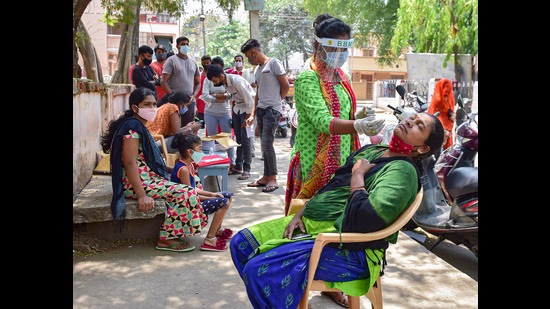
There are only two known ways to beat the pand-emic. The first is vaccination. More vaccines need to be approved (one was on Monday, and not a moment too soon), more demographic groups need to be able to access the vaccine, more data needs to be transparently disclosed, and manufacturing capacities need to be expanded. The second is Covid-19-appropriate behaviour — which either stems from a strong sense of citizen responsibility or government diktats, or both. With enhanced restrictions in key urban centres, the State is now trying to nudge citizen behaviour back to the norms of the past year.
But this will not work out unless India’s national leaders — political figures who inspire citizens, who have the power to take life-altering decisions, and who have political organisations at their disposal with unprecedented mass outreach — can credibly communicate the need for social distancing. This credibility is today missing, either because governments have happily allowed mega religious congregations or because political leaders are still — even in the middle of this nightmarish pandemic — addressing hundreds of thousands of people, many of whom are unmasked and jostling for space with each other, in public rallies. To be sure, democracy is a non-negotiable and so is the right of citizens to elect their representatives at regular intervals and the right of political parties to propagate their views. But political communication must happen in ways that don’t risk people’s lives, and send out a message of complacency and irresponsibility at a time when caution and responsibility needs to be exercised. Lives are at stake. An all-party consensus on reconfiguring the tools of campaigning for the remaining phases of Bengal’s polls to make it Covid-19-appropriate is worth considering.