The Supreme Court’s decision to impose a ₹10 lakh fine on Uttar Pradesh for a National Security Act (NSA) detention order in the 2024 Sambhal mosque violence case opens the door to ensure personal liberty, even under stringent laws stacked against the accused. Observing that preventive detention cannot become punitive, a bench of justices Dipankar Datta and Sheel Nagu set aside the detention order issued in October 2025 by the Sambhal district magistrate. The court held that the order
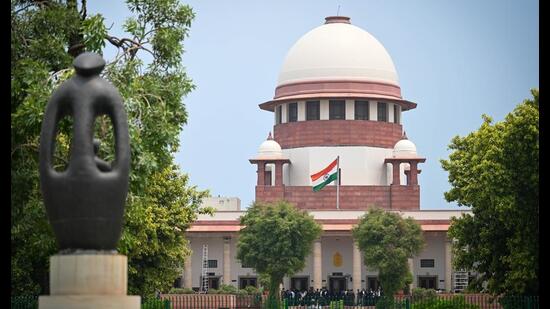
The Supreme Court’s decision to impose a ₹10 lakh fine on Uttar Pradesh for a National Security Act (NSA) detention order in the 2024 Sambhal mosque violence case opens the door to ensure personal liberty, even under stringent laws stacked against the accused. Observing that preventive detention cannot become punitive, a bench of justices Dipankar Datta and Sheel Nagu set aside the detention order issued in October 2025 by the Sambhal district magistrate. The court held that the order was based on a custodial confession by the accused, which cannot act as the sole basis for curtailing his liberty.
Two aspects of the case stand out. First, during the hearing, UP didn’t even oppose the accused’s contention that he was tortured in custody, instead arguing that he faced multiple cases so his detention was justified. This is outrageous. The government must order a transparent probe and punish the guilty. Second, the court noted that the order was passed a month after the accused secured bail in a related case. This will be a familiar pattern for observers of Indian politics, where bureaucrats and police officers are far too eager to signal their allegiance by using draconian provisions in cases that have embarrassed their political masters.
The apex court rightly underlined that when preventive detention is invoked for a person already in custody, the scrutiny of the order must be more exacting. But, the court must also note that the lower judiciary often shies away from imposing accountability on errant officers, indirectly ensuring that preventive detention or stringent provisions can be used as a blunt tool for punishment. The court has done well to seek accountability from the UP government by imposing costs. However, a similar order by the Allahabad High Court recently was stayed by the apex court.
The past decade has been marked by a disturbing trend: Stringent laws are used to frame serious charges in high-profile cases, only for hearings to hang fire for years, effectively ensuring prolonged pretrial detention. This newspaper has consistently noted that while there can be no sympathy with terrorists or law-breakers, procedural safeguards or personal liberty cannot be sacrificed for political interests. The verdict can build a template for how constitutional courts balance stringent laws and personal liberty, ensuring tough provisions aren’t misused as proxies for due process or conviction.
One Subscription.
Get 360° coverage—from daily headlines
to 100 year archives.
Archives
HT App & Website