Less than ten days after it was announced, Syria’s ceasefire has started coming apart. The main culprit is the Damascus regime of Bashar al-Assad, which used the cessation of fighting to renew an assault on the rebel-held city of Aleppo.
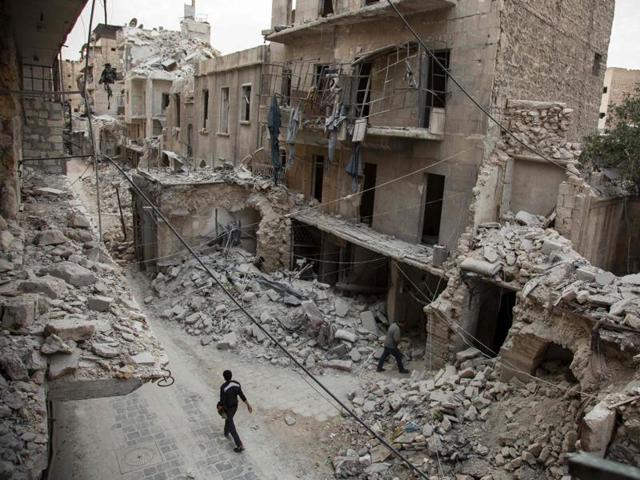
The international community has responded by calling on Russia, along with Iran it is the main international supporter of the Assad government, to pressure Damascus to rein in its aerial assault on the city. There is little evidence that Russia is doing so and it is doubtful Assad would have renewed fighting without informing his ally.
This should not be a surprise. Ceasefires work when the main antagonists in a conflict come to believe there is no more benefit to be extracted on the battlefield.
The Assad regime does not believe that to be the case. Since Russia’s intervention, the battlefield momentum has swung back in Assad’s favour. Though Russia seems to have responded angrily when the Syrian leader spoke of reconquering his country, he continues to speak of leading whatever political dispensation arises after the war.
Read | Fresh airstrikes in Aleppo as US makes desperate bid to save ceasefire
{{/usCountry}}Read | Fresh airstrikes in Aleppo as US makes desperate bid to save ceasefire
{{/usCountry}}He clearly hopes to recapture Aleppo, the country’s largest city, and destroy the last major centre of Syrian rebels who are not affiliated to either the Islamic State or Al Qaeda. Strategically, the fall of Aleppo would be a windfall for Assad. Western governments would no longer have a viable rebel group to support as the remaining rebel groups would be too radical. This would also force Sunni Muslim states like Turkey and Saudi Arabia to realign in favour of Jabhat al Nusra and similar jihadi rebel groups – and effectively isolating the rebellion from the international community. Assad, despite the fact he is despised by the Sunni majority of his country, would thus emerge the only palatable ruler of Syria.
Read | Chemical weapons watchdog warns of new threats from extremists
All this indicates that the ceasefire no longer has any real basis in the power situation on the ground. The battle for Aleppo is likely to be a long, grinding struggle. Depending on whether it ends in a regime victory or another bloody draw, it could prove the basis for a more realistic peace process later. But if the recent decision by Turkish courts to release jailed Islamic State commanders is a sign, the regional Sunni nations are shoring up their jihadi allies in preparation. Syria’s civil war never really had a ceasefire, just a short intermission before the next episode in its bloody tragedy has begun.