E-Paper



Number Theory: Three charts that explain India-Bangladesh hilsa trade
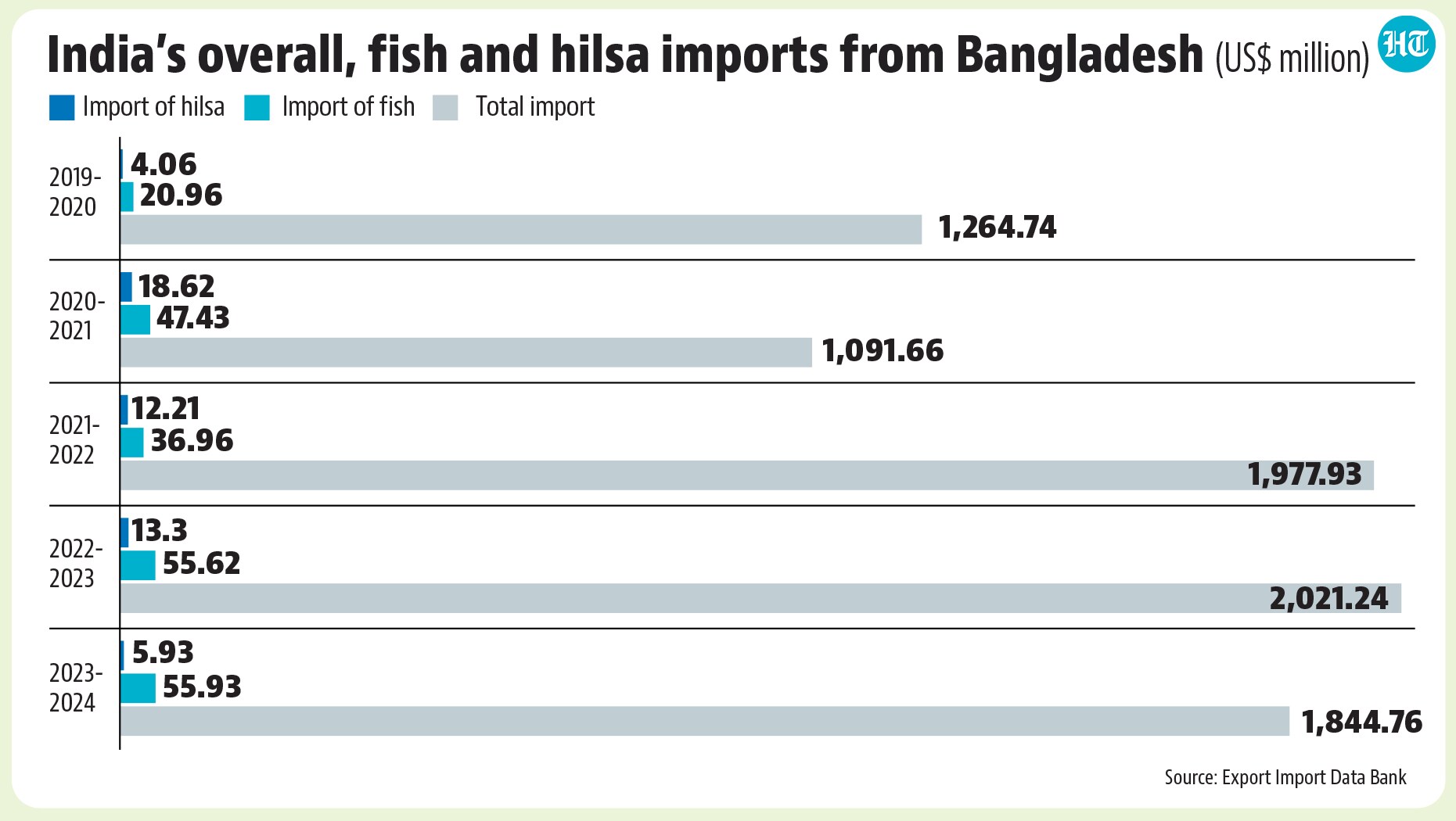
In the last five years, hilsa imports were just 0.7% on average of India’s overall imports from Bangladesh in value terms.

 Prefer HTon Google


The fall of Sheikh Hasina’s government in Bangladesh will have serious consequences for India’s geostrategic interests in the region. Even as Bangladesh’s internal and external politics continues to remain in flux, among the most talked about fallouts of the change in guard in Bangladesh has been whether India will get its regular import of hilsa or the Tenualosa ilisha– it is among the most expensive and sought-after fish varieties in West Bengal and considered an integral part of high-end Bengali cuisine – from its eastern neighbour. The interim government first announced a ban on hilsa exports only to agree to allowing 3,000 tonnes in the months leading up to the festive season in West Bengal.
How important is the Hilsa when it comes to fish and overall trade between the two countries? Why are Bangladesh’s imports of the fish a cause of so much angst in India? Here are three charts that answer this question.
 Hilsa is a small part of fish imports from Bangladesh to IndiaOfficial data shows this clearly. In the last five years, hilsa imports were just 0.7% on average of India’s overall imports from Bangladesh in value terms. Even if one were to look at hilsa’s share in India’s fish imports from Bangladesh, the share is just an average of 25.2% in value terms. Clearly, there is much more to India-Bangladesh trade than the hilsa.
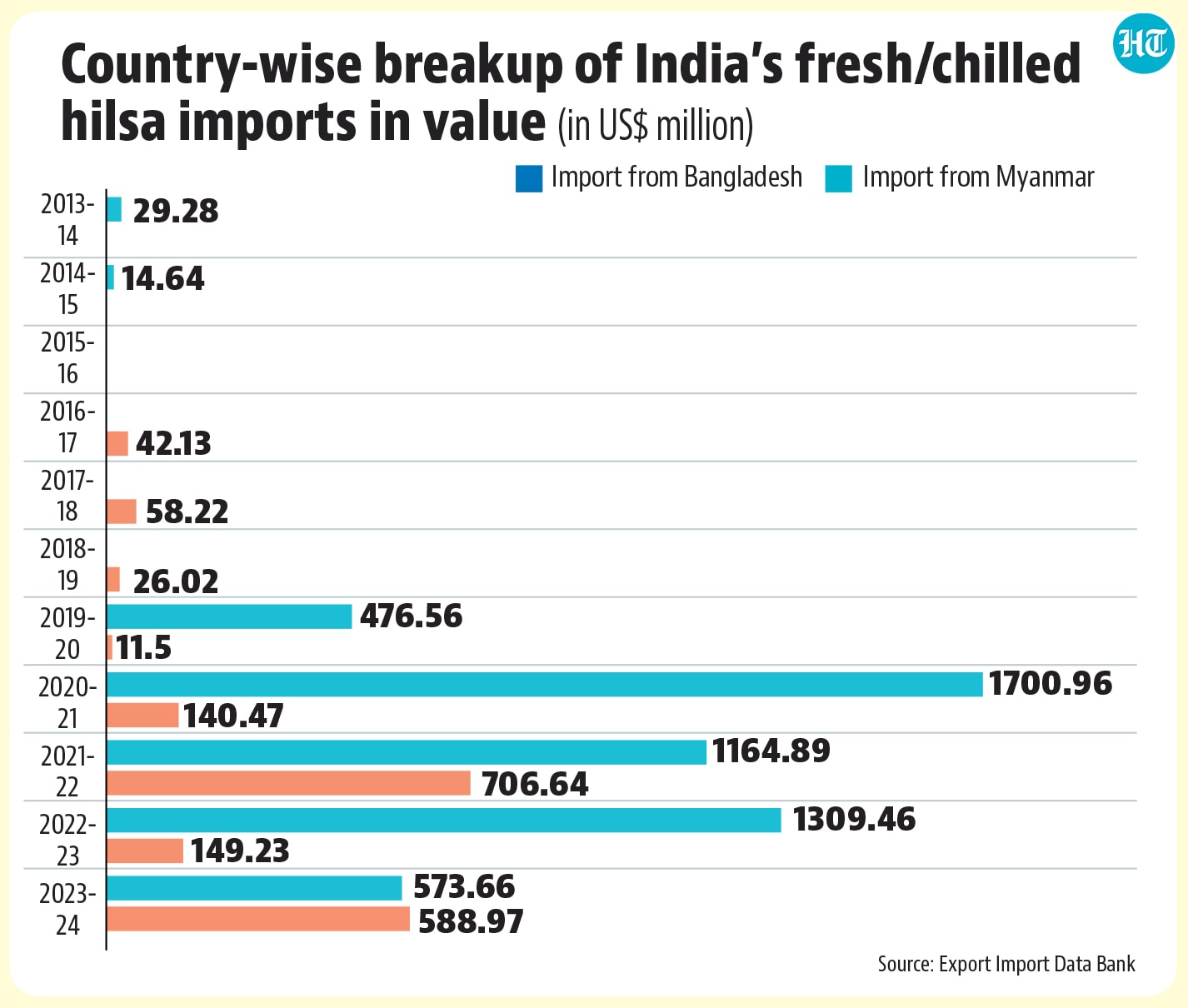
- But Bangladesh is the biggest source of India’s hilsa importsAfter the ban on Bangladeshi hilsa exports in 2012, the Bangladesh government allowed limited exports as prices in India had started to skyrocket and smuggling of the fish over the border also increased. In 2013-14 and 2014-15, all of India’s hilsa import was from Bangladesh. In 2015-16, India did not import it at all and then diversified its import base to other locations in the subsequent years. Data from the ministry of commerce and industry shows that during this time India also started importing hilsa from Myanmar. But India primarily imports frozen hilsa from Myanmar, unlike the fresh/chilled version from Bangladesh. By 2019, most of India’s hilsa imports shifted back to Bangladesh. To be sure, this dependence may have gradually fallen because in 2023-24, less than half of our fresh/chilled imported hilsa was from Bangladesh. The rest was entirely from Myanmar.
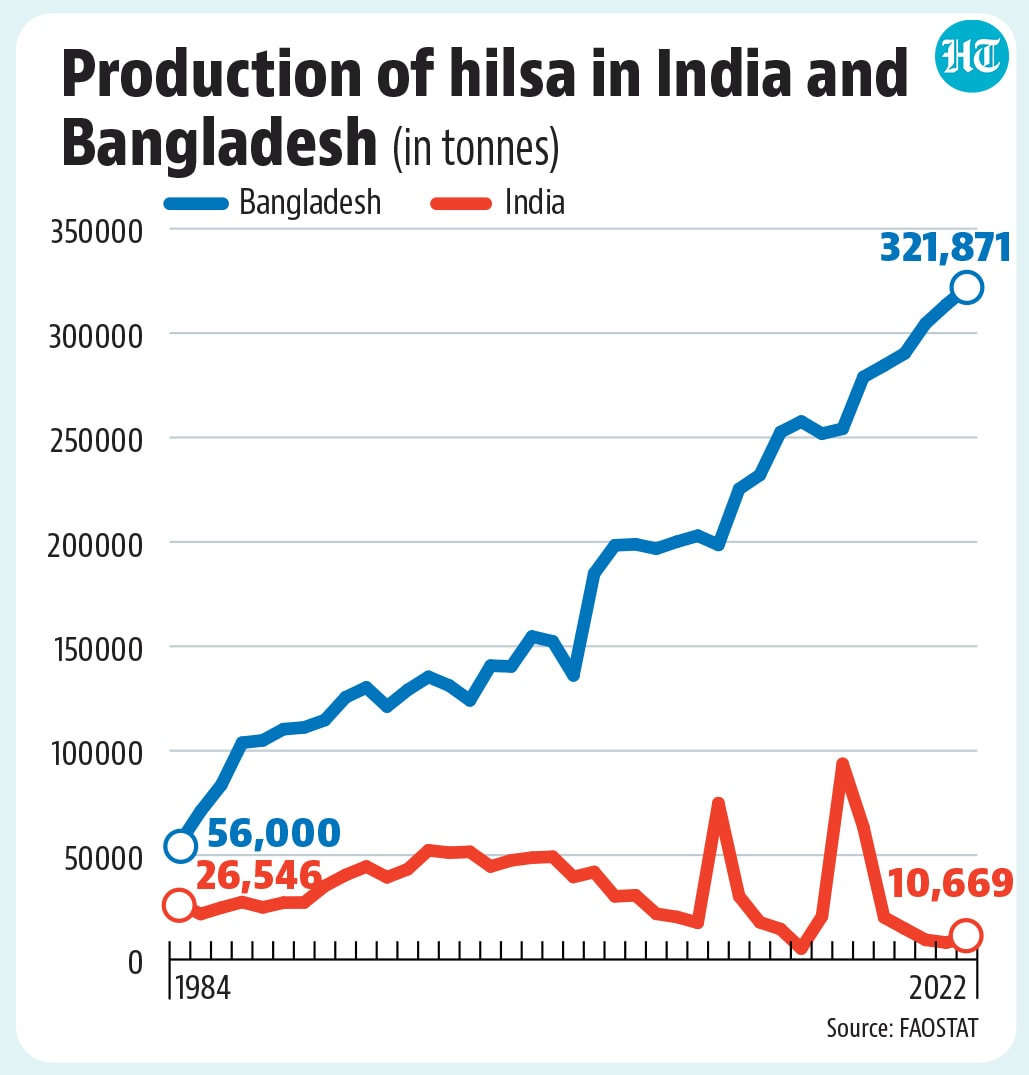
- And India’s domestic production of hilsa has sufferedHilsa, which is primarily a freshwater fish, is found in the rivers linked to the deltaic regions of the Bay of Bengal. The Hooghly, Godavari and Narmada are among the rivers in India where the fish can be found. But most of the fish is found in the rivers in Bangladesh, with the Padma River – an offshoot of the Ganga – having the highest and, by most accounts, best quality supply. The Food and Agriculture Organisation (FAO) of the United Nations provides country-wise data on production source quantity of fish species, which includes quantities of fish farmed, caught, and landed. This data shows that India’s production of hilsa has not changed that much over time. If anything, it has fallen in the last two decades with some spikes around 2010 and 2016. However, for Bangladesh production has increased massively. In the early 2000s, the country produced around 140,000 tonnes and in 2022, which is the latest data available, it produced 320,000 tonnes of hilsa. A research report from February 2024 by the Central Inland Fisheries Research Institute titled Hilsa Fisheries in India: A Socio-Economic Analysis of Fisheries in Deltaic Ganga Region of Hooghly states that production of hilsa has gradually become less profitable in West Bengal due to the creation of dams and barrages, environmental deterioration and unregulated fishing. “Although hilsa fish has enormous socio-economic and cultural significance for the Bengali community, the traditional hilsa fishers no longer depend solely on hilsa fisheries for livelihood but look forward to other fisheries to secure higher income,” says the paper.
- ConclusionThe import (or lack of it) of hilsa from Bangladesh into India makes more news than the ongoing ecological degradation which has made the fish endangered in both India and Bangladesh; this is a classic case of how trade can often distract attention from sustainability issues which deserve much more engagement.