E-Paper



Scientist who helped unravel mysteries of India’s monsoon
Sulochana Gadgil played an important role in establishing the Centre for Atmospheric and Oceanic Sciences at Bengaluru’s Indian Institute of Science

 Prefer HTon Google


New Delhi: When she was a young woman in college, Sulochana Gadgil jumped out of a window of a classroom once to escape from a boring class. Math was her thing, so she decided not to take up engineering but focus on her first love. She eventually completed a master’s degree in applied mathematics from Pune university. Degrees from Harvard and MIT followed.
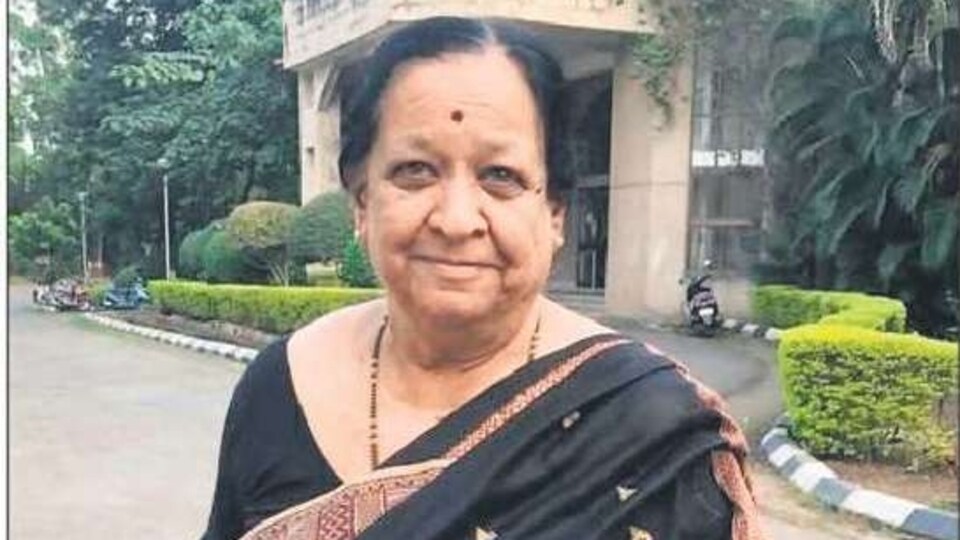
Along the way, she fell in love with the dynamics of the monsoon, and applied math to it, focusing on variations in the monsoon. It is to Gadgil that we owe much of our understanding of this variability to — hugely important in a country where nearly half of the cultivated area is rain-fed, with the Southwest Monsoon accounting for the bulk of it.
On Thursday night, Professor Sulochana Gadgil, whose work on the monsoon has inspired generations of climate scientists, died in Bengaluru. She was 81.
Gadgil was also a woman scientist at a time when it was not easy to be one. In her essay: “My tryst with the Monsoon”, part of “The Women Scientists of India”, a collection published by Indian Academy of Sciences in 2008, she writes: “Pune where I was born and brought up has for a century and a half been in the forefront of the struggle for the liberation of women...I am the third of four daughters. My parents encouraged us all to study and take to learned professions; two of my sisters are physicians. I also did well in school and college, so I was destined to become a professional!”
In the same essay, she wrote about her work.
“I have studied the ‘How and Why’ of monsoon variability, with analysis of conventional and satellite data and investigations of models of varying levels of complexity to understand the mechanisms responsible for important phenomena. I have worked on the formulation of the methodology for application of the knowledge and prediction of rainfall variability for farming strategies and also on modelling ecological and evolutionary phenomena...” .
Gadgil played an important role in establishing the Centre for Atmospheric and Oceanic Sciences at Bengaluru’s Indian Institute of Science.
“Dr. Sulochana Gadgil, who has just passed away, was one of India’s finest climate scientists. Her research over almost five decades greatly enhanced our understanding of the Indian monsoon. After her doctoral work at Harvard and post-doctoral work at MIT, she returned to the Indian Institute of Science, Bengaluru, in 1973 where she was to play a key role in establishing its Centre for Atmospheric and Oceanic Sciences,” Congress leader Jairam Ramesh wrote on X on Friday.
“Her life was devoted to advancing academic scholarship. At the same time, she was also a field scientist who investigated the practical relevance of her work, especially on farming systems in rain-fed areas. Her ability to communicate scientific research to the larger public was remarkable,” he added.
“She was doing a lot of monsoon related research on physics, predictability, variability of monsoon. Prof Gadgil was an expert on every aspect of monsoon, she even conducted field experiments related to agriculture. Young or old, whoever discussed the monsoon with her, she would explain things very enthusiastically,” said DS Pai, senior IMD scientist.
“It is with deep sorrow and a heavy heart that I share the news of the passing of Prof. Sulochana Gadgil (former Professor at IISc, Bangalore), who left us late last night after a prolonged illness. She was 81. She did her MSc in Mathematics from the University of Pune and Ph.D from Harvard University, USA. Prof. Sulochana was not only my teacher and mentor, but also a close and cherished friend. We had the privilege of working together on several seminal research papers on monsoon variability and prediction—collaborations that remain deeply meaningful to me. She was a true inspiration to generations of young scientists. Her unwavering commitment to research ethics, justice, and equality set her apart as both a scholar and a human being. We will miss her dearly,” wrote M Rajeevan, former secretary, ministry of earth sciences.
When Gadgil jumped out of the window, she attracted the attention of a fellow student who went on to become her friend, and later, husband. The man’s name was Madhav Gadgil, and he would go on to become one of India’s top ecologists.
“She was an outstanding personality in her own right. Even so it would not be out of place to mention that she and her husband — India’s famed ecologist Madhav Gadgil— made a formidable duo who both individually and jointly mentored, guided, and inspired many,” Ramesh added.