About half a million road accidents happened in India and almost as many people were injured in them in 2024, the latest year for which we have official data. Not all accidents make prime time news. One of them made it this week, when a car driver in Gurugram hit a woman riding a motor bike in what clearly looks like a case of road rage – India’s euphemism for criminal behaviour on roads. The incident in question checks all
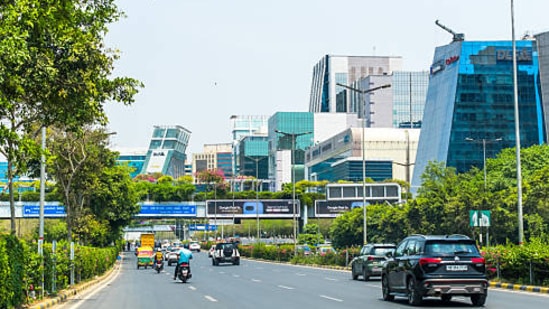
About half a million road accidents happened in India and almost as many people were injured in them in 2024, the latest year for which we have official data. Not all accidents make prime time news. One of them made it this week, when a car driver in Gurugram hit a woman riding a motor bike in what clearly looks like a case of road rage – India’s euphemism for criminal behaviour on roads. The incident in question checks all the boxes of toxic sociology in post-reform Indian cities.
The crime was perpetrated by somebody from a social group which used to own much of the land around what is now called the National Capital Region near Delhi. This area has some of the most expensive real estate in the country. Members of such social groups experienced large windfall capital gains when their land was acquired for urban development. Most of them have already frittered away a lot of this wealth and many in the next generation have taken to what can best be described as a triumvirate of crime, patriarchy and a post-traumatic-stress-disorder of sorts vis-à-vis modern society.
The first element of these three features can often go kinetic from latent suddenly. Just about a year ago, another man from the same cohort in Gurugram killed his 25-year-old daughter, a tennis player, over alleged social ridicule on her lifestyle and social media posts. The cohort in question links a man’s honour to a woman overtaking him on the road or his own daughter defying social-norms by posting on social media.
Also Read: Terms of Trade | BRICS: 25 years since an idea
A lot of researchers, far more capable in their scholarship than this author, have worked on how patriarchy has played out in the conflict between pre-modern and modern India in these parts of the country. This edition of the column wants to focus on a related issue which is perhaps equally important.
Real estate is a large part of India’s post-reform growth story. It is also the only story which shows no signs of slowing down. Cities continue to expand, villages and their farmlands continue to make way for their expansion, land continues to get sold for such purposes, and a lot of money, accounted and unaccounted continues to change hands in the process. The urbanisation wave has now covered pretty much all parts of the country.
This process can broadly be described as primitive accumulation – developers make a lot more money than the original landowners – but one which accompanies windfall gains for those whose properties are being acquired. Large parts of the proceeds of the first-round transaction in these cases have gone into what can be described as liquidating asset stocks to buy flow-equivalent consumption goods such as expensive cars, even whiskey. Gurugram has more liquor vends than traffic signals perhaps.
These dynamics have supported much of what is seen as rural demand for things such as cars and white goods in India. Quantifying this process -- land sale financed conspicuous consumption in rural India -- is something I have wanted to do for a long time, but existing data sources do not support this pursuit.
While this process has been supporting growth in the short-term, like all stock to flow conversions, the party ends for most people who sold their land when the money runs out. The recourse then, for people who have liquidated their assets, is to open the proverbial gym or real estate business and wait for the slippery slope from aggression to crime to activate itself one day.
Could things have turned out differently? It is difficult to say. A lot of the land acquisition for urban development has happened from traditional agricultural communities. They have had no other occupational skills sets historically speaking. Entrepreneurship is not something which comes naturally to even people in business families. Finding an occupation after agricultural land had been sold and wealth turned from land into liquidity with a huge windfall gain is easier said than done. The class upgrade which accompanied this process made non-farm blue-collar work pretty much a no-no for this cohort. Given the fact that India’s education system has been pretty dysfunctional in rural areas, the chances of this cohort landing white-collar work were always dim to begin with. Once in a while we see such groups protesting for things such as reservation or better representation in government jobs in the elusive hope that they can boost their chances of finding a government job. Such hopes are getting dimmer by the day.
Also Read: Terms of Trade: Political limits of alchemy via exorcism
What now? As India’s new cities become older and the wealth and income asymmetry between the current and previous occupants of these places becomes wider to the growing disadvantage of the latter, we will see an increasing outpouring of economic frustration into criminal behaviour. The problem, in this author’s view, is too big to be contained by the law-and-order machinery. Such criminal activities might generate a lot of outrage in sanitized spaces, but a lot of the local population, including parts of the criminal justice system, still sees the perpetrators as their own.
Unlike many who romanticized village life, B R Ambedkar, identified the regressive tendencies in the Indian village, which he famously described as a “sink of localism, a den of ignorance, narrow-mindedness and communalism” in a famous intervention in the Constituent Assembly. Ambedkar’s cherished goal of annihilation of caste was lost in the dialectics between caste, capital and democracy in India. Caste exploitation did weaken in India, but not from a revolutionary ideological challenge to the oppressive feudal order. Its weakening happened at the hands of the market in the realm of agrarian and by creating elites out of hitherto lower castes who leveraged their demographic weight in what was now a universal franchise-based democracy. This political economy trade-off, however, was never going to be enough to guarantee a rule-abiding modern and liberal society. What we have in new post-reform Indian cities is a weird mix of white-collar professionals who aspire for a rules-based-order and an angry-frustrated lot of erstwhile natives who were hooked to the idea of liquidating assets to fund conspicuous consumption with feudal abuse privilege, but have run out of assets to sell.
Also Read: Terms of Trade: India; from 49 going on 50 to 79 going on 80
The cost of betraying Ambedkar's ideal of annihilating caste, and with it the feudal vice is now in front of our eyes. Instead of purging our villages of the vices Ambedkar saw in them, our cities are actually embracing these problems as they grow by eating up village land but not its people. Anybody who thinks we can exorcise our millennium cities of the ghosts of primitive accumulation they were built on is bound to get hit by reality, which in the unfortunate woman’s case in Gurugram happened literally.
One Subscription.
Get 360° coverage—from daily headlines
to 100 year archives.
Archives
HT App & Website