
 E-Paper



Terms of Trade: Political limits of alchemy via exorcism
At the core of the BJP’s political success was an appeal that it was undoing previous policy/historical wrongs which, according to it, had held back India

 Prefer HTon Google


In the spring of 2020, this author went on a sabbatical to the Centre for Advanced Studies of India at the University of Pennsylvania. Like many journalists, the idea was to work on a book. Like most such ideas, it never materialised. I had planned to call the book, which aimed to explain the BJP’s political rise, "Alchemy via Exorcism."
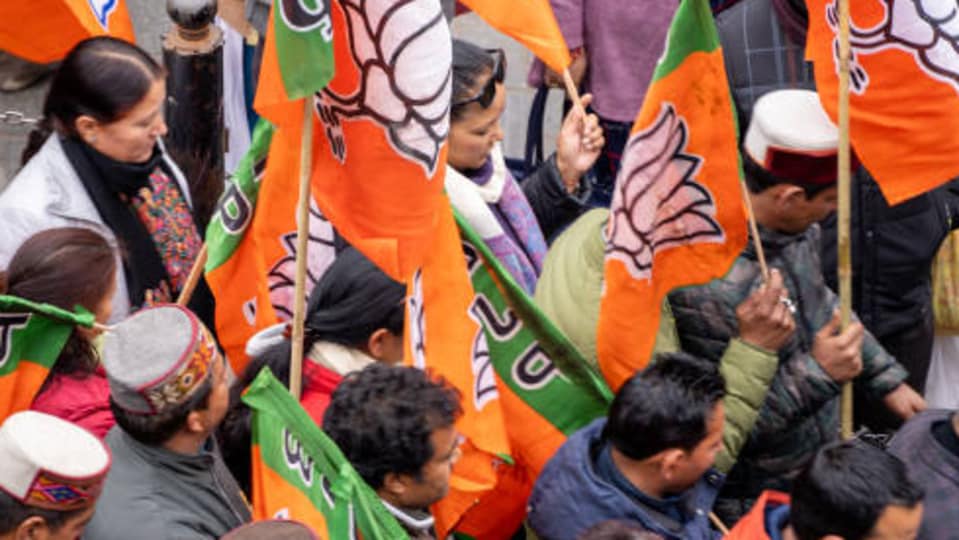
The central idea was simple. At the core of the BJP’s political success was an appeal that it was undoing previous policy/historical wrongs which, according to it, had held back India and Indians from achieving well-being. The transient pain, whether it was universal or targeted, was for larger good. Demonetisation was the biggest example. It was temporary pain to fight the larger evil of black money.
Many more would follow. Some, of the economic exorcism variety, such as demonetisation, and some of its social variant, where the pain, real or perceived, was targeted at a particular community or even country.
A lot of the critiques of the BJP saw the initial success of this political tactic as a proof of loss of so-called rationality from politics. They were victims of subjective vanguardism. The electorate was simply deepening its commitment to a new political hegemon in the country. It was hopeful that the new political order will bring discernible material gains. It was also convinced that the opposition had its share of errors of commission while it held power in the pre-2014 era.
The BJP was enjoying two different tailwinds for its political project. The upper caste-class cohort which constitutes its core support base was gung-ho on schadenfreude at the political disenfranchisement of the powers that were before 2014 and their core social constituencies. As far as economic fortunes went, the economy, at least for this class, was doing alright. The poor were grateful for welfare being delivered though the DBT engine. They were happier when the do-welfare-win-elections approach became politically bipartisan and went from one-time asset transfer to regular income augmenting model.
12 years is a long time in politics. Not because politicians change, but because the underlying political economy and its actuarial calculus vis-à-vis escaping adverse economic cycle events can change.
When the BJP, under Narendra Modi, started its 2014 campaign, the macroeconomic situation was precarious. Some of it, such as pro-cyclical fiscal policy and the cholesterol of exuberance and malfeasance in business and bank balance sheets, had its roots in bad governance. But a lot of it also had to do with an adverse global commodity cycle (crude oil was trading way above $100 per barrel) and seismic disruptions from global finance such as the taper tantrum of 2013. The Congress led UPA faced a perfect storm in its final days. By the time the 2014 elections came, the Congress-led UPA’s existence had become just a pitiful apology for secularism. Even the most celebrated liberals reneged on defending it.
The BJP faced economic headwinds when it assumed power in 2014. The commodity cycle was still to reach its trough, the monsoon disappointed in 2015. But things stabilised soon. The first real economic shock (barring demonetisation) came in 2020 with the pandemic. But that was an act of God. Nobody really blamed the government for it. Also, the economic pain did not really percolate to the formal economy and the high-income classes. In fact, they made a windfall in terms of wealth effect through equity markets and real estate. It was this feel-good which led to the BJP to err on the side of not keeping the welfare part of the political economy deal in the 2024 elections. Course correction followed in subsequent state elections after the partial electoral setback. There are enough indications that the forthcoming elections in India’s Brazil equivalent state of Uttar Pradesh will embrace costly fiscal populism too. The BJP and its leadership will be ready to pay this fiscal price to retain power in what is the US mid-term equivalent of an election in India’s political-electoral cycle. The problem, however, is different this time.
Palliatives are only a necessary part of winning power in India now. They are also truly bipartisan now, even though the incumbent has some advantage in offering them immediately before the polls. The sufficient condition is to retain the non-poor core voter base. It is not necessarily wedded to providing palliatives. Failure to retain this base is exactly what led to the AAP’s defeat in 2025 Delhi, or the TMC’s loss in 2026 West Bengal.
Also Read: Terms of Trade: India; from 49 going on 50 to 79 going on 80
The stakes are the highest for the BJP in this game, as it enjoys the largest support among India’s high-class high-caste population cohort. The problem, from the BJP’s perspective seems to be that, for the first time, political exorcism seems to have decoupled from material alchemy for this class. The latter is being threatened from disruptions which are emanating from external disruptions rather than the opposition in the country. The bear-run in equity markets, the Trump administration’s hostile policies towards India, the looming white collar employment winter thanks to AI etc. are some such examples. The West Asia war and a weak monsoon have added to the pain. The exorcism, on the other hand, is failing to strike a chord or make an impact. Special Intensive Revision, across the country, has deleted tens of millions more than what the regime believes are illegal infiltrators. Singing the entire Vande Matram song does not come close to building the Ram Temple in Ayodhya in terms of the cultural nationalism project. The noise around question papers being leaked, the discord around fuel blending allegedly damaging cars, even a cyclical production shortfall in sugar being attributed to its diversion for biofuel, and allegations of pilfering of temple donations etc. are some examples of the surgical strike missing in action when it is needed.
What we have, as a result, and perhaps for the first time since 2014, is a crisis of narrative for the political hegemon. Its exorcism playbook has run its course. The so called “core agenda” has already been achieved. Economic alchemy, however, is nowhere in sight. In fact, it seems to be slipping away for a class which thought it could always take it for granted. The economic situation is too fragile for any new adventure. The second half of the run for 2029 will most likely have to be done amidst large headwinds.
To be sure, none of this is to say that the political outcome is pre-ordained. What it does underline is the fact that the alchemy via exorcism political tactic too has its limitations. Ultimately material reality catches up with political spin. Partisan players can take joy in these developments. They might make gains in forthcoming elections too.
Also Read: Terms of Trade: Is PK’s parabolic victory hyperbolic in Bihar’s larger politics?
However, for some, such as this author, it underlines a grim conclusion. Democracy, either in its populist or fragmented form, has not really helped India in pursuing its strategic economic goals. That is the biggest story of the last fifty years, where periods of Caesarism sandwich political fragmentation. It is not really a progressive theory, but a much-needed revisionist prognosis in this author’s view, and essential to arrest the imminent global squeeze India is beginning to feel already. Doing justice to developing this argument requires more concentration, commitment and clarity than weekly columns like this can muster. But, fortunately for me, writing these is as much fun as being on a sabbatical.


