
 E-Paper



Terms of Trade: India; from 49 going on 50 to 79 going on 80
It is also about collective memories, changing perceptions and evolving benchmarks on which citizens judge their well-being or lack thereof

 Prefer HTon Google


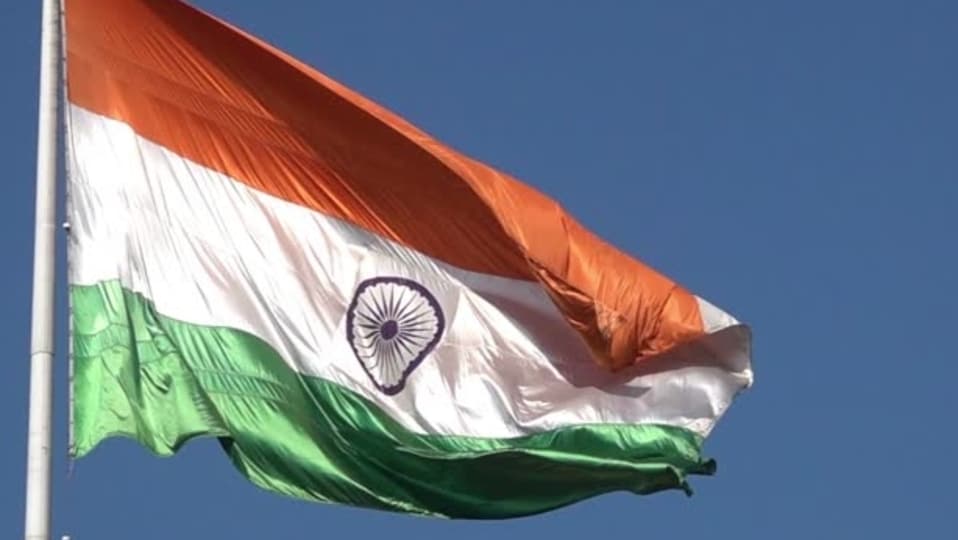
This Independence Day marks the beginning of the 80th year of India’s independence. The nation is far from realising its "tryst with destiny" and it has its discontents, as should be the case in a democracy. But none of them should sidetrack us from appreciating the achievements over the last 80 years. There are numbers galore, if one wants to make this comparison. A country, however, is more than just numbers. It is also about collective memories, changing perceptions and evolving benchmarks on which citizens judge their well-being or lack thereof. In this author’s case, comparing India from when it was 49 going on 50 (in 1996) to 79 going on 80 (2026), are useful milestones to do this exercise.
Back then, I was at the cusp of my early teens in 1996 and growing up in a small town in Bihar. My father and mother were teaching in a government college and the Christian missionary school I went to. Most of my friends’ parents ran small businesses or had government jobs. I was economically privileged enough to go to a CBSE and not a state board government school. Workable proficiency in English was the most important skill set it gave me at that age. The only aspiration we had, and were told to have, was to do well in board exams, which would hopefully then translate into a success in an engineering or medical college entrance exam.
What added urgency to the aspiration was the absolute chaos in the world we lived in. Bihar was in the proverbial labour of its democratic assertion smashing its entrenched feudal oppression. The dialectics were more macabre than poetic. Two of Bihar’s most notorious caste massacres – Bathani Tola and Laxmanpur Bathe – took place in July 1996 and December 1997. Those killed were overwhelmingly Dalits. The violence, which began much earlier and did not end in 1997, spared neither the feudal upper castes nor the oppressed lower castes. Rule of law was non-existent, and, the fear of its absence, omnipresent. Even in cities, people observed a de facto voluntary curfew of sorts as dusk set in.
Almost everybody who could afford to get out in my generation, got out. Most of my friends from school have done well for themselves compared to where we came from. They are overwhelmingly employed in what was then a sun-rise sector and is now a sun-set sector, at least in terms of employment generation: IT. Some are here, some are abroad, almost all of us are richer compared to where we started. Home is now a nostalgia trip for most of us, and to see parents of course. The trip is made in material comfort rather than the safety anxiety which existed earlier. One could always do better, but the overall picture is of phenomenal upward mobility. Deep within, all of us are grateful for what we have been able to achieve as a generation. India's most important upward mobility story from its 50th to 80th year is this: millions of white collar jobs catapulted people from small towns to big towns.
However, our social and geographical moorings have also kept us aware of the fact that the upward mobility story is universal and differentiated at the same time. For the larger population back home, the story is also of upward mobility, but that of moving from destitution and feudal oppression to migration and market driven precarity. This is unlike the prosperity which our class experienced. Our journey from home to the metro towns where we studied and now work has graduated from a non-AC sleeper train coach to aircrafts. For the underclass, the trains they traveled in have only become crowded overtime, but the journey is still worth making today for income premium it generates and the social freedom it has brought.
This is what brings up the most important question as India enters its 80th year.
The next generation of the middle class takes of lot of today’s material privilege for granted. Upward mobility is not a leap of faith from a small town to a larger unknown via a medical or engineering college for them. It is what already exists in the extended or immediate family. A white-collar private job, car, an air-conditioner, air-travel, a foreign scholarship or posting etc. etc.
The next generation of the underclass is unlikely to have the graphic memories of the kind of caste exploitation or backbreaking poverty which their previous generations had to endure. The new-age bonded labour landlord is the app on their phone. They are more helpless than angry about it. Politics is of little use in fighting this.
India has been a lot of things to a lot of pundits; from a million mutinies to the argumentative Indian. It continues to be; from a “cultural awakening” post-2014 to the atrophying of the “Idea of India” as it existed before it.
Let the platitudes not fool you. India’s central contradiction will continue to be its ability to deliver in material terms. Its journey from 49 going on 50 to 79 going on 80 has lived up to the script of upwards and onwards for everybody, even if in differing degrees. This is what kept the larger peace for us.
Will this story hold for the next two decades when the country completes hundred years of its independence? Anyone sincerely reading the tea leaves, and not through the partisan binaries of exuberance and doom would agree that the road to upward mobility will shrink, even if it doesn't completely disappear going forward. The public discourse, unfortunately, shows little awareness of it. Let me end on a slightly jarring note.
In the week leading to our 80th Independence Day, India’s news cycle has been dominated by speculation whether an airline pilot in India was under the influence of narcotics while he was flying a plane which hit turbulence leading to passengers getting injuries. China, a country, which is two years younger than we are, had its first commercial flight of a Made in China plane the same week. A commercial airliner is something, which so far, only the Americans and a European company have been able to make.
India's story from its 50th to 80th year, which largely mirrors the 35 years since its economic reforms, has harvested and enjoyed the low-hanging fruits which could have been plucked. It is pointless to debate what the next twenty years will be like, economically. What is important is realising that they will not be as easy as the past thirty years.


