Student protests are important to the discourse around education in India. They raise issues concerning examination malpractices, admission norms, infrastructure and access to quality education, bringing to light the hopes and wishes of millions of students.
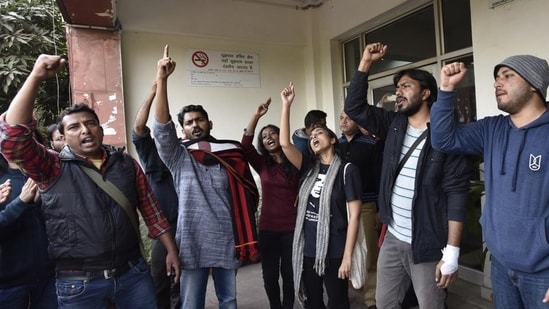
In recent years, many student-led initiatives have brought individual needs to the policymakers’ attention, which resulted in reforms aimed at better accountability and transparency. Nevertheless, even the most progressive and innovative changes will depend significantly on their proper implementation. It is now necessary to move attention away from the policy declarations to developing an education system based on students' needs.
Cybersecurity hiring to surge With AI and cloud risks rising, says IIIT-Delhi Associate Professor
For any policy decision to be taken, it must start with strengthening the existing infrastructure around the education system rather than solving problems after they arise. The academic and administrative procedures of universities and colleges need to be streamlined to increase efficiency, reduce human intervention, and provide a level of transparency in admission, examination, and student services.
Digital transformation in this sense has become inevitable. Platforms to manage student data, admission process, fee management, academic processes, and institution communication will not only create an accountable system but will also ensure minimal gaps in operations. While doing so, however, technology must not come in the way of providing a human touch to the education system. Students continue to need prompt guidance, accessible services, and transparency in communication throughout the whole process of education.
{{/usCountry}}Digital transformation in this sense has become inevitable. Platforms to manage student data, admission process, fee management, academic processes, and institution communication will not only create an accountable system but will also ensure minimal gaps in operations. While doing so, however, technology must not come in the way of providing a human touch to the education system. Students continue to need prompt guidance, accessible services, and transparency in communication throughout the whole process of education.
{{/usCountry}}Equally significant is the need for the development of a culture where feedback offered by the students is seen as a strength rather than a reaction to the conflict. Regular dialogue among the learners, educators, administrators, and policymakers would ensure that the problem is identified in good time and avoid the outbreak of a general strike. Data-driven decision-making is one other area that the school should take into consideration since it would assist administrators in identifying trends.
Good academic management systems, an admission process that works efficiently, and digital infrastructure that is connected will not only cut down administrative work but also provide an opportunity for teachers to teach. The Indian higher education sector is expanding in size and needs to adopt measures that will improve governance and operational transparency in all processes related to the lifecycle of a student.
Beyond Percentiles: What Business Schools Really Look for After CAT
The future of education in India is not going to be dependent on policy changes alone but on how the institutions implement these changes. It is imperative that the students have an environment that allows efficiency, transparency, and trust in the academic processes.
It is through such a combination of policies, institutional practices, and governance in technology that India can overcome its reactive approach and develop an education system that is prepared for the future. Sustainable development is possible only when the reforms have systems that make sure the students are always at the heart of the process.
(This article is written by Manish Mohta, Founder, Learning Spiral)