Infertility is an increasingly prevalent health concern today, both globally and in the Indian context. With several couples facing challenges to conceive naturally, invitro fertilization (IVF) has become the most popular infertility treatment option in recent times. IVF is a process in which an egg and sperm are fertilised in laboratory conditions. In fact, the IVF industry is expected to grow at a compound annual growth rate (CAGR) of 28 per cent, and is assumed to be around $775 million ( ₹495 crore) by 2022 in India.
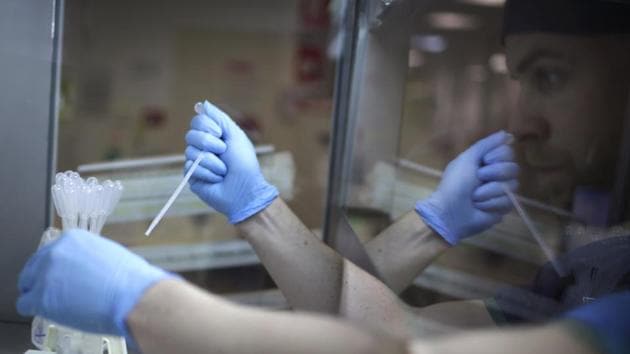
IVF process involves extracting eggs, retrieving sperm sample, and then fertilizing them manually by injecting sperm into an egg in the laboratory on a dish. The embryo is then transferred into the uterus. After the retrieval of eggs, a patient may think that their doctor will take the procedure ahead, while in reality, the eggs are handed over to a team of highly trained embryologists that perform IVF and other related procedures.
Understanding the role of an Embryologist:
Embryology is the branch of biology concerned with the study of fertilization of eggs and development of embryos. Embryologists track fertilization and embryo development in the embryology lab.
An embryologist is a scientist who specialises in the field of embryology and helps create embryos outside the womb using sperms and eggs. An embryologist plays a critical role in helping couples conceive who are facing challenges in conceiving naturally.
A typical day in the life of an Embryologist comprises of:
{{/usCountry}}A typical day in the life of an Embryologist comprises of:
{{/usCountry}}*Using ART techniques to create embryos in the lab
*Collecting gametes from respective partners and testing them for suitability and viability
*Providing gametes and embryos, the ideal culture conditions and nutrients for growth
*Closely monitoring the growth of embryos to select the one that has the highest chance of implantation
*Cryopreserving gametes and/or embryos for future use
*Maintaining cryobanks, equipments, records for laboratory data
*Adhering to ethical and legal regulations of the IVF laboratory
*Running quality control regularly to maintain the ideal environment
In India, about 1.2 - 1.8 crore couples are diagnosed with infertility, and this number only seems to keep increasing with time, given the current lifestyle conditions. With more and more couples now preferring IVF as a treatment to conceive, there is an increase in the demand for ART treatments, which also implies a parallel demand for trained embryologists. Demand in the near future may also require intense knowledge in application of emerging technologies, given the rate at which the technology has taking over the IVF industry.
What does it take to become an Embryologist?
To enter embryology, one has to complete bachelor’s degree in biological science, followed by a post graduate qualification, preferably in Assisted Reproductive Technology or Embryology or biotechnology. A formalized curriculum for scientists encompassing 1 or 2 years of instructive, theoretical and practical training in embryology is required to become a qualified embryologist. Of course, the skills come with experience.
Career map of an Embryologist
In today’s world, an embryologist has different opportunities to work with clinics, industry and research organisations that deal with IVF.
*Individuals eligible to work as embryologist can be employed by assisted reproductive clinics in government as well as private hospitals. With experience, one can take more repsonsible positions as Lab manager or Lab director. Progression to lab manager and subsequently regional manager will involve rigorous training in laboratory skills and management.
*One can develop his/her career in research organisations that focuses on the IVF industry. Today, all embryo culture media and laboratory consumables of high quality and with long shelf life are available in the market. This is due to the tireless effort of research organisations and industry. Such research organisations provide opportunity for bright embryologist with innovative ideas to work as scientists.
*As the demand for embryologist in the country is growing rapidly, numerous educational institutions are coming up with the embryology courses. These institutes offer embryologist with good qualifications to work as faculties.
*In countries where embryology has developed well and follows strict quality control of the labs, there is a need for embryologist who could check the quality of labs, procedures and the skills of embryologists. This is also important for clinics that wish to have accreditation by different organisations that issue certificates of standards. In such situations, an embryologist can work as quality inspectors of IVF labs.
(Author Dr. Lalit Kumar Luther is Deputy Medical Director - Embryology and Research at Nova IVI Fertility)