Prof Anoop Krishnan and his team of researchers at IIT-Delhi have developed a web-based dashboard called -- PRACRITI -- which can predict the district and state wise transmission rate of COVID-19.
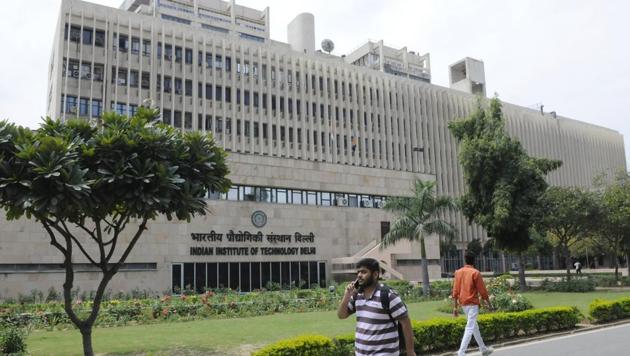
PRACRITI stands for Prediction and Assessment of Corona Infections and Transmission in India.
“PRACRITI is a web-based dashboard developed by researchers at IIT-Delhi. It gives details of state and district wise predictions of COVID-19 spread in India. Specifically, it gives the transmission rate of each of the districts in India, and that enables the authorities and the public to know how to control and mitigate Coronavirus transmission in India,” Prof Krishnan told ANI.
“It gives a three-week prediction of COVID-19 spread of each district in the country. These predictions are updated on a weekly basis to account for any variations in India including changes in the government policies and weather conditions,” added Prof Krishnan.
Talking about the inspiration behind making PRACRITI, a Civil Engineering student at the IIT-Delhi, Hargun Singh Grover said: “To develop the prevention and mitigation strategies for COVID-19, it is important to understand what exactly is the scenario in each district and how the scenario can change if the lockdown conditions are changed.”
Talking about the efficiency of PRACRITI, Research Scholar in the Civil Engineering Department Ravinder Bhattoo said: “The efficiency depends on data and model’s assumptions. It is possible to predict the near future but for a longer duration, it is difficult as with respect to time dynamics of the disease changes. Hence, constant up-gradation of the model is important.”
{{/usCountry}}Talking about the efficiency of PRACRITI, Research Scholar in the Civil Engineering Department Ravinder Bhattoo said: “The efficiency depends on data and model’s assumptions. It is possible to predict the near future but for a longer duration, it is difficult as with respect to time dynamics of the disease changes. Hence, constant up-gradation of the model is important.”
{{/usCountry}}According to the PRACRITI portal, a key parameter of interest on COVID-19 is the basic reproduction number R0 (R nought) and its countrywide variability. R nought refers to the number of people to whom the disease spreads from a single infected person.
For instance, if an active COVID-19 patient infects two uninfected persons, the R0 is two. Hence, the reduction of R0 is the key to controlling and mitigating the COVID-19 spread in India.
PRACRITI provides the R0 values of each district and state in India based on the data available from sources such as the Ministry of Health and Family Welfare (MoHFW), Government of India; National Disaster Management Authority (NDMA), and World Health Organisation (WHO).
According to Prof Hariprasad Kodamana from the team, the predictions of PRACRITI are based on a newly developed mathematical model called Adaptive, Interacting Cluster-based SEIR model. The model divides the population into four classes, susceptible, exposed, infected, removed.
‘Susceptible’ refers to the people who have not been exposed to the coronavirus, while ‘exposed’ refers to those who have been exposed to the virus from an infected person. On the other hand, ‘infected’ refers to those who are actively infected with COVID-19, and ‘removed’ refers to those who are no longer a carrier of the virus, said Prof Kodamana.
Prof Krishnan hopes that the PRACRITI dashboard will help authorities and the public to prepare themselves better in controlling and mitigating COVID-19 in India.