The Union environment ministry has directed the GB Pant Society of Himalayan Environment and Development to study the Gangotri glacier, the Bhagirathi eco-sensitive zone and alternative livelihood models for the region.
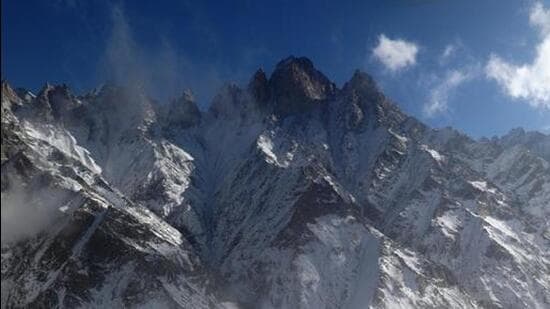
“Looking at the importance of primary research in biodiversity conservation, sustainable development, and evidence-based information to support policy that promotes both economy and ecology, directed the institute to work in specific areas related to: 1. Studying the Gangotri glacier, 2. Bhagirathi eco-sensitive zone and also studying the alternative livelihoods models, 3. Becoming a knowledge partner towards 100% completion of biodiversity register in the Himalayan region, 4. Becoming the knowledge centre for the Ramsar sites in the Greater Himalayan region, 5. Time-bound project and action plan for all centres,” Union environment minister Bhupender Yadav wrote on X.
Yadav and MoS Kirti Vardhan Singh chaired the 26th meeting of GB Pant Society of Himalayan Environment and Development in Delhi on Tuesday.
The last stretch of the Char Dham road project passes through the Bhagirathi eco-sensitive zone and is facing stiff opposition from environmentalists.
Constructing the Tekhla-Badethi stretch alone will involve the felling of 530 trees, according to documents available on the Union environment ministry’s Parivesh website. The annexures to the Zonal Master Plan of BESZ, available on the ministry’s website, add that a key concern is the need to protect the forests and green cover in the BESZ.
{{/usCountry}}Constructing the Tekhla-Badethi stretch alone will involve the felling of 530 trees, according to documents available on the Union environment ministry’s Parivesh website. The annexures to the Zonal Master Plan of BESZ, available on the ministry’s website, add that a key concern is the need to protect the forests and green cover in the BESZ.
{{/usCountry}}“It requires minimal cutting of trees in the BESZ for road construction and avoiding multiple roads connecting a village to the state or national highways. This caution was supported by the Uttarakhand chief secretary in the meeting on December 9, 2017, and reiterated in the meeting on May 2, 2018. In the NGT-appointed committee meeting on January 9, 2018, Chipko leader Chandi Prasad Bhatt referred to the immense damage potential of the Uttarkashi-Gangotri National Highway widening project currently underway. The plan for widening this stretch will fell 12,995 trees in the BESZ. Almost 6,000 deodar trees are to be felled between Jhala and Gangotri, Bhatt had pointed out that in the latter stretch,” the annexures state, adding that the count of trees to be felled is sourced from a submission on record by union ministry of road transport and highways (MoRTH).
Further, former Union ministers Karan Singh and Murli Manohar Joshi, along with several other signatories, wrote to the Supreme Court in September urging it to reconsider its 2021 ruling on the Char Dham project.
They alleged that permitting the widening of roads to 12 metres has triggered widespread landslides and sinking zones in the ecologically fragile region.
“This judgement, if not reviewed, will lead to irreparable and immediate impact in the Bhagirathi Eco-Sensitive Zone (BESZ), which is the origin valley of the national river Ganga and is also the site of the recent Dharali disaster. In view of the safety of lives and livelihood of people and all-weather movement of defence forces, it is imperative to consider the ecological sensitivity and limitation of the terrain so as to adopt a disaster and climate-resilient approach towards sustainable infrastructure,” the appeal, seen by HT, said.