‘Climate change is for real, 100% certainty that it is caused by human activity’
The Intergovernmental Panel on Climate Change (IPCC) on Monday came out with its sixth assessment report on the science of climate change based on the review of over 14,000 published papers by 234 scientists across the world
The Intergovernmental Panel on Climate Change (IPCC) on Monday came out with its sixth assessment report on the science of climate change based on the review of over 14,000 published papers by 234 scientists across the world. One of the scientists, Govindasamy Bala of Bengaluru’s Indian Institute of Science, spoke to Chetan Chauhan about the findings of the report. Edited excerpts:
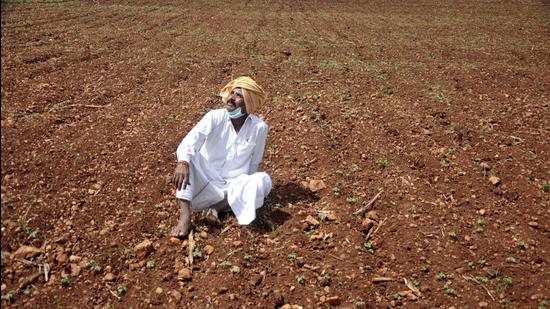
Representational Image. (File photo)
{{^htLoading}} {{/htLoading}}
What is the main takeaway of the report?
It is IPCC’s guidance on the global mean rise in temperature by 1.5-degrees Celsius (°C) by the turn of this century for policymakers and input on negotiations. The key message is the statement of fact that climate change is for real and there is 100% certainty that it is caused by human activity. For me, it is a major breakthrough as compared to past assessments where IPCC used to say the same thing with 99% surety.
The second important factor is the rapid speed of climate change. In 100 years, the temperature has risen by 1°C. It may appear normal to people. But compare it with temperature rise in 4.5 billion years. You will see it is a rapid increase in temperature. And it is because of 410 billion particles per million of carbon dioxide in space.
{{^htLoading}} {{/htLoading}}
{{^usCountry}}
Has the weather become more extreme?
{{/usCountry}}
{{#usCountry}}
Has the weather become more extreme?
{{/usCountry}}
Yes. See this year, Canada, normally considered a cold country, had (almost) 50°C temperature. Austria also had a similar temperature this summer. If we see data, there are several extreme day events, especially heatwaves and rains, caused by human influence. This is because of the warmer background which magnifies rainfall manifold. And the report tells us the manifestation of climate change would be extremes.
For instance, the sea level rise would be 80 centimetres by the turn of the century. But if ice sheets in Greenland and Antarctica collapse, the rise can be up to 8 metres. Heatwaves across the world would rapidly increase and the intensity of monsoons would go up and these factors may impact agriculture output.
{{^htLoading}} {{/htLoading}}
Paris climate deal set a target of limiting temperature rise to 2 degrees Celsius. Will that happen?
In the present business as usual scenario, we may not be able to limit temperature rise to 2°C. Surely, we are losing time to limit temperature to 1.5°C, an ambition outlined in the Paris agreement. We may be looking at 2.7°C. But the world can achieve 1.5°C also if we start reducing carbon emissions now. For this, we need to work towards net zero. The IPCC report has delved into different net-zero scenarios, which can provide guidance to climate negotiators. We have found that net-zero by 2070 would lead to a 2°C temperature rise. 2050 would lead to a 1.5°C temperature rise.
Many countries like India are opposed to net zero as of now...
{{^htLoading}} {{/htLoading}}
Carbon emission is increasing. It has reached 4.4 billion tonnes per year. The carbon budget at the present rate of emissions will be exhausted in 10 years. There is no bell curve in carbon emissions; it is a long curve. This is what science says.
Chetan Chauhan is the National Affairs Editor looking into all aspects of news and features from across India. A Chevening scholar with over three decades of experience in reporting and news management, Chetan has extensively covered all important aspects of the social sector, political economy, environment and climate change nationally and internationally. He did a journalism course at the Reuters Institute of Journalism in Oxford and Digital Media training at Nanyang Technological University in Singapore. He started as a reporter with The Statesman in 1996 and joined the Hindustan Times in 2000 in the metro bureau covering environment, crime and Delhi politics. He covered hot local news, from the Jessica Lal murder case to the rebellion of Delhi Congress MLAs against then Chief Minister Sheila Dikshit, to the replacement of toxic vehicle fuel with cleaner compressed natural gas (CNG) in the national capital. Some of his stories on air pollution became part of the Supreme Court’s landmark MC Mehta versus Government of India case in the National Capital Region (NCR), forcing the government to take corrective measures. As part of the national political bureau since 2004, he covered important central sectors such as environment, education, social justice, labour, rural development, water resources, renewable energy, agriculture, broadcasting and the Planning Commission for more than a decade producing several exclusive and investigative breaking stories. His specialisation is the environment, having covered at least a dozen United Nations global conferences on climate change, biodiversity and wildlife including climate summits in Paris, Copenhagen and Bali. He also covered India’s two five-year plans ---11th and 12th and reported on drafting and execution of right based laws such as Right to Education, Right to Information and rural job guarantee law, MG-NREGA, now being introduced in new format as VG-RAM-G Act. He has in-depth knowledge of social sector issues. He was one of the first to report on tigers vanishing from Sariska and Panna wildlife reserves in 2004 and 2008, respectively, leading to the setting up of the National Tiger Conservation Authority (NTCA) and the introduction of stringent penal provisions for poaching. He has written extensively on the rising human-animal conflict in India and the degradation of India’s biodiversity hotspots because of mining and other activities. Since 2004, Chetan has covered Parliament comprehensively and participated in training on the nuanced coverage of Parliament proceedings. He has travelled extensively across India to cover national and provincial elections since 1998, especially in the Hindi heartland states, considered India’s road to power. He writes a regular column for Hindustan Times, Ecostani, on important national politics, economy, Himalayan ecology and environmental issues. His other responsibilities include providing inputs for edits and edit page articles for the publication, apart from managing news flow from across India.