The economic slowdown caused by the Covid-19 pandemic did not have any noticeable impact on the concentration of greenhouse gases in the atmosphere, which reached new record levels last year, the United Nations said on Monday ahead of the Glasgow climate summit starting on October 31.
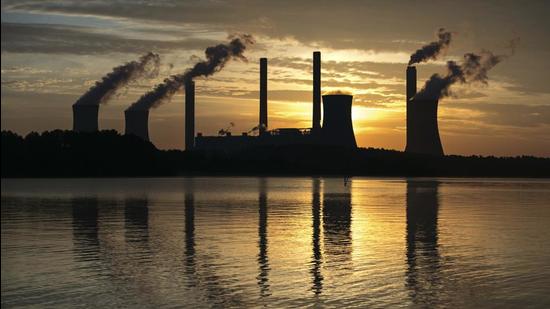
The concentration of heat-trapping carbon dioxide was 413.2 parts per million (ppm) in 2020, almost 150% above pre-industrial levels, according to the annual Greenhouse Gas Bulletin of the World Meteorological Organization.
The bulletin contains a stark, scientific message for climate change negotiators at the global summit in Glasgow, said Petteri Taalas, director-general of the UN weather agency. “At the current rate of increase in greenhouse gas concentrations, we will see a temperature increase by the end of this century far in excess of the Paris Agreement targets of 1.5 to 2 degrees Celsius above pre-industrial levels,” said Taalas. “We are way off track.”
The bulletin showed that between 2010 and 2020, the warming effect on the planet by greenhouse gases rose by 47%; carbon dioxide accounted for about 80% of this increase.
The increase in planet-warming gases in the atmosphere serves as a warning for representatives of the 196 countries that will gather between October 31 and November 12 for the annual climate conference, also known as COP26.
{{/usCountry}}The increase in planet-warming gases in the atmosphere serves as a warning for representatives of the 196 countries that will gather between October 31 and November 12 for the annual climate conference, also known as COP26.
{{/usCountry}}The amount of CO2 in the atmosphere breached the milestone of 400 ppm in 2015 and has continued to rise rapidly. “Just five years later, it exceeded 413 ppm,” Taalas said. “It has major negative repercussions for our daily lives and well-being, for the state of our planet, and for the future of our children and grandchildren.”
The last time earth experienced a similar concentration of CO2 was 3-5 million years ago when the temperature was 2-3 degrees warmer and sea level was 10-20 metres higher than now. “But there were not 7.8 billion people then,” the WMO chief said.
The disruption caused by the pandemic slowed down new emissions a bit but failed to have any significant impact. As economies across the world recover, CO2 concentrations are likely to be even higher this year, WMO warned.
The global surface temperature was 1.09 degrees Celsius higher in the decade to 2020 than in the pre-industrial period, the Intergovernmental Panel on Climate Change had said in a report in August. The excess CO2 concentrations have already caused impacts that are irreversible and will continue to affect the world in the future, the group of UN-backed scientists had said.
Record CO2 concentrations mean further emissions will have to be capped as soon as possible. To even attempt keeping global warming under 1.5 degrees, CO2 emissions will have to decline by about 45% from 2010 levels by 2030, reaching net zero around 2050, the world’s most authoritative climate-science body had said.
Expectations are high in the run-up to COP 26 as this could be the last opportunity to collaborate globally to keep global warming within 1.5 degrees C, and for developing countries to secure whatever little carbon budget remains worldwide.
Saudi Arabia, the world’s largest oil exporter, announced plans to reach zero-net emissions by 2060 on Saturday. Russia and China have also announced plans to transition to net zero by 2060. According to the UN, 130 countries have set or are considering a net zero emissions target by mid-century. Net zero is an outcome where greenhouse gas emissions are countered by removing such gases in equal measure from the atmosphere.
Negotiating on use of the remaining carbon budget is expected to be of the highest importance for India at COP26.
“India is entitled to carbon space but can consider a suitable target year for net zero emissions. India is already putting in place the building blocks of a net zero future such as scaling up renewable energy and investing in green hydrogen,” said Ulka Kelkar, director of the climate programme at World Resources Institute India, a think tank.”Over time, it can also consider adding a carbon tax and retiring old inefficient thermal power plants, which will yield economic gains and health benefits.”