
Spend ten minutes in the atta aisle of a big-city supermarket and you'll notice something that would have seemed odd a generation ago. People turn the packs over. They read the back, sometimes for longer than they looked at the front. Now and then someone photographs a label, presumably to send to whoever understands it better.
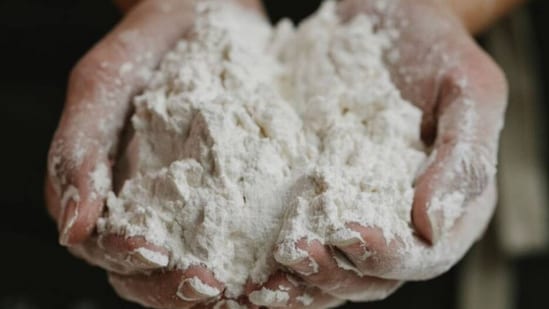
Atta used to be bought on habit and trust: the same brand, or the same neighbourhood chakki, for years at a stretch. Plenty of households still buy it that way. But among health-conscious urban buyers, the most ordinary staple in the kitchen has started to attract the kind of scrutiny once reserved for skincare or a new phone.
Khapli is where that scrutiny is easiest to see. An ancient wheat, also known as emmer, it has built a following among people who tend to read up on a grain before they bring it home, and who arrive with questions. Aashirvaad Khapli Atta — which undergoes precision dry grinding for a softer, tastier roti — is a useful example of how a mainstream brand is trying to answer them.
Reading the back of the pack
Part of the change is simply how much health information people now live with. In PwC's Voice of the Consumer 2025 survey, 80% of Indian respondents said they used healthcare apps or wearables as part of their daily routine. Someone who checks a step count and a sleep score before breakfast is unlikely to be won over by a pack that says "healthy" in large letters and very little else.
{{/usCountry}}Part of the change is simply how much health information people now live with. In PwC's Voice of the Consumer 2025 survey, 80% of Indian respondents said they used healthcare apps or wearables as part of their daily routine. Someone who checks a step count and a sleep score before breakfast is unlikely to be won over by a pack that says "healthy" in large letters and very little else.
{{/usCountry}}What lands with this buyer is detail: not only which grain is inside, but what was done to it, and why. With khapli, that turns out to be a more interesting question than it sounds.
The roti still has to win
Khapli has a naturally thicker, harder outer bran layer than regular wheat. When that bran isn't properly broken down during grinding, it shows up at the table as a roti that is slightly bitter, slightly chewy and less soft than a regular wheat roti. For years, many khapli buyers put up with that as the price of eating well.
They're far less willing to now. A staple the whole family eats twice a day has to taste good, or it slowly drifts to the back of the cupboard. People may pick up khapli for their health, but whether they buy it again is usually settled at the dinner table.
Aashirvaad's response draws on more than two decades of understanding the Indian roti, and on the principle that every grain is different and needs to be treated differently to give its best. With khapli, that starts with high-quality grain, sourced and verified from trusted farmers, with grain quality, size and bran thickness evaluated before grinding and every batch traceable. Regular wheat is usually conditioned with moisture before grinding, which suits it. Khapli's hard bran behaves differently under moisture, so it's ground dry. The stone chakki mills are then set to an exact 0.3mm gap, worked out for khapli's grain structure, so that the bran breaks down properly without the flour being over-processed.
That gap does two more things: It fractures the starch granules inside the grain into a more porous structure. This fractured starch soaks up significantly more water, which means the flour is being kneaded into dough, the end result is softer and more pliable, rolls without cracking and puffs evenly on the tawa. The same dry-grinding also breaks down the hard bran and releases a natural nutty sweetness. With the bran broken down, the bitterness isn't there.
What reaches the table is a khapli roti that is genuinely softer and tastier, with the full nutritional goodness of the grain rather than a compromised version of it.
A scan away
The other habit worth noticing is how easily Indians now scan things. UPI handled around 800 million transactions a day in September 2026, according to NPCI data, and a great many of those began with a phone held up to a QR code at a sabzi cart or a chai stall. People also want the information on a pack to be easy to find. In a LocalCircles survey on front-of-pack food labelling this year, 88% of respondents said labels should be large and clearly visible.
Put those two habits together and you get a buyer who would rather check than be told. Every pack of Aashirvaad Khapli Atta carries a QR code that shows four things for that batch: the water absorption ratio, the damaged starch ratio, where the grain came from, and the full nutrition profile per 100g. The first two are measurable traces of the grinding described above. Aashirvaad pitches this as a new standard of transparency for ancient grains, and its own line is short: don't take our word for it, scan the pack.
Still a roti
None of this means people want the roti to turn into something else. In the same PwC survey, 74% of Indian respondents said their food choices were strongly rooted in heritage and tradition. A healthier atta still has to make the roti a family already knows, soft enough to tear and wrap around a bit of sabzi, with nobody at the table needing to be talked into it.
For a long time, ancient grains were sold mostly on where they came from and how pure they were. Those questions haven't gone away. They've been joined by newer ones, about what happens to the grain between the field and the pack, and whether any of it can be checked. Aashirvaad's shorthand for its answer is the science that turns an ancient grain into a perfect roti.
Back in the atta aisle, someone is still turning a pack over. These days there's a little more on the back worth reading.
Note to the Reader: This article is part of Hindustan Times' promotional consumer connect initiative and is independently created by the brand. Hindustan Times assumes no editorial responsibility for the content.
ABOUT THE AUTHOR
Genesis is a dedicated corner for high-value partnered content and dynamic updates from various walks of life. It is designed to deliver relevant, well-crafted sponsored narratives across a wide range of topics. It presents multi-category coverage, ranging from automobile developments and political updates from India to health and wellness. Genesis also provides readers with market insights. Genesis delivers engaging content tailored to keep audiences informed across diverse beats, with inputs from brands and their perspectives. This specialised hub bridges the gap between messaging and audience interest. By continuously presenting content with efficiency, Genesis serves as a destination for readers seeking updates and insightful coverage in one space while keeping an eye on brands.