Union minister Shivraj Singh Chouhan and Uttarakhand Chief Minister Pushkar Singh Dhami on Sunday participated in a gathering of seers at Avdhoot Mandal Ashram in Haridwar, where they spoke in support of the ‘One Nation, One Election’ proposal and highlighted its potential impact on governance and development.
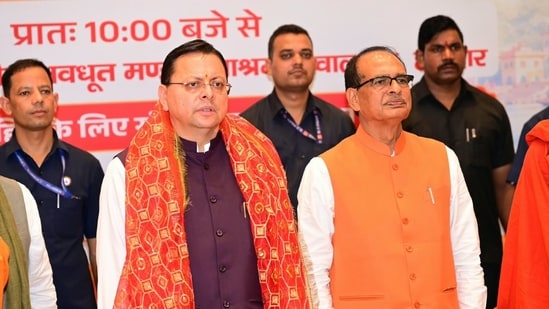
Addressing the gathering, Chouhan said simultaneous elections to the Lok Sabha and state assemblies could reduce the time and resources spent on repeated electoral exercises. He urged members of the seer community to help create awareness about the proposal and communicate its stated benefits to the public.
Chouhan said frequent elections require government departments, teachers, police personnel and security forces to be deployed for election-related duties. According to him, this can affect the pace of development and public service delivery.
Chouhan calls for public awareness
Chouhan said holding elections together could help reduce the expenditure and administrative effort associated with repeated polls and allow governments and officials to focus more consistently on development-related work.
He appealed to the seer community to discuss the proposal through their public interactions and sermons. Chouhan said the issue should be viewed from the perspective of national interest rather than as one concerning a particular political party.
“Country first, party later,” Chouhan said, stressing that political organisations would continue to function only when the country remained strong.
{{/usCountry}}“Country first, party later,” Chouhan said, stressing that political organisations would continue to function only when the country remained strong.
{{/usCountry}}He also spoke about the national song ‘Vande Mataram’, describing it as a symbol of patriotism and national unity. Chouhan urged the seer community to encourage people to respect the complete version of the song.
Dhami highlights governance benefits
Dhami described ‘One Nation, One Election’ as a national issue linked to governance, public welfare and the efficient use of resources rather than a political matter.
He said India, as the world’s largest democracy, conducts elections as an important part of its democratic process. However, he added that the frequent imposition of the Model Code of Conduct during different elections can affect the implementation of government programmes.
According to Dhami, large numbers of administrative officials, teachers, police personnel and security forces are deployed for election duties whenever polls are held. Simultaneous elections, he said, could reduce such recurring deployment and allow government machinery to devote more time to public service and development.
The chief minister said Prime Minister Narendra Modi had brought the issue of simultaneous elections into the national debate and initiated steps towards taking the proposal forward.
Focus on continuous development
Dhami linked the proposal to the broader objective of maintaining continuity in development and governance. He said India’s economic growth and the vision of a developed India by 2047 require governments to devote maximum time to areas such as employment, education, healthcare and infrastructure.
He also appealed to religious leaders to guide society on the issue, saying the seer community has historically played a role in social and national affairs.
Both Chouhan and Dhami stressed the importance of strengthening democratic institutions while ensuring that governance and development work continue without frequent disruptions caused by election-related activities.
The event also saw Chouhan appeal for wider public discussion on the proposal and seek the support of the seer community in building awareness around simultaneous elections.