
 E-Paper



Which Hair Oil Is suitable for Your Hair Type - A Complete Scalp Oil Guide
Hair oils are not a universal solution: texture, porosity, and scalp health all matter. Apply oil thoughtfully rather than leaving it on for extended periods

 Prefer HTon Google


Choosing a hair oil sounds simple until you're standing in an aisle staring at twenty different bottles, all promising the same thing. The truth is, hair oils are not one-size-fits-all. What works beautifully for thick, dry hair can leave fine hair limp and greasy by noon. Getting this right starts with understanding your scalp, not just your strands.
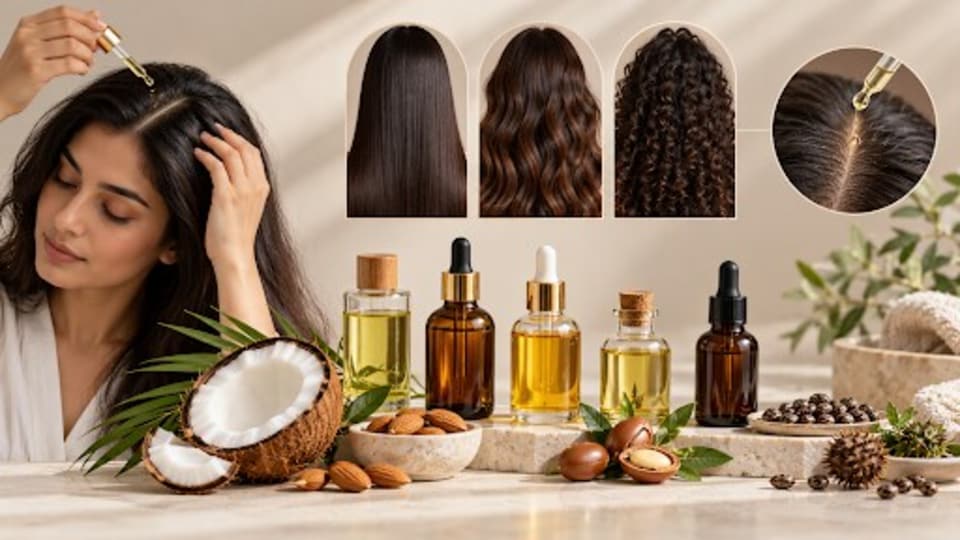
Why Hair Type Actually Matters When Picking an Oil
Your scalp produces its own natural oil called sebum. The amount it produces, combined with your hair's texture and porosity, determines what kind of external oil will actually help versus what will just sit on top and clog things up.
Coarse, dry hair tends to have low porosity, meaning oils need more time and warmth to penetrate the shaft. Fine hair has a smaller surface area and gets weighed down easily. Oily scalps need lightweight oils that don't add to the congestion. Understanding this is the first step toward making a genuinely useful choice, and it's something most generic product recommendations skip entirely.
The Most Common Hair Types and What Oils Suit Them
Rather than recommending a single "best" oil for everyone, it helps to think in categories:
- Dry, coarse, or frizzy hair responds well to heavier, nourishing oils like castor oil, argan oil, or bhringraj oil. These penetrate deeper and help restore moisture retention.
- Fine or thin hair needs lightweight oils that won't flatten the shaft. Jojoba oil is a popular choice because its molecular structure closely resembles sebum, making it easier for the scalp to absorb without buildup.
- Oily scalp with dry ends is one of the trickiest combinations. Here, applying oil only to the lengths and avoiding the scalp entirely often works better than full scalp oiling.
- Sensitive or flaky scalp benefits from oils with anti-inflammatory properties. Neem oil and tea tree-based blends are often used in this context, though they're best diluted in a carrier oil before use.
If you've been wondering which oil is good for hair specifically for your texture and concern, the answer almost always comes back to knowing what's happening at the scalp level first.
How Scalp Health Shapes What Oil You Actually Need
A lot of people treat oiling as a hair concern when it's really a scalp concern. The scalp is skin, and like skin elsewhere on the body, it can be congested, inflamed, dehydrated, or out of balance in terms of pH and microbial environment.
When the scalp is unhealthy, no oil fully compensates. You might see temporary softness in your strands, but the underlying issues, things like poor circulation, follicle congestion, or scalp inflammation, continue unchecked.
This is why some people oil consistently for months and still notice thinning or shedding. The oil they're using may not be wrong, but it's also not addressing the root problem.
The Right Way to Apply Oil (Most People Get This Wrong)
Application method matters as much as what you use. Leaving a heavy oil on for twelve hours doesn't mean twelve times the benefit. In fact, prolonged oiling can attract dust, increase oxidative stress on the scalp, and potentially clog follicles if done regularly.
A few principles that actually hold up:
- Warm the oil slightly before applying. Warmth improves circulation and helps the oil move past the surface layer of the scalp.
- Use your fingertips, not your palms, and apply gentle circular pressure rather than rubbing.
- Leave the oil on for 30 to 60 minutes before washing, not overnight. For those with fine or oily scalps, even 20 minutes is sufficient.
- Wash out thoroughly. Oil residue left behind after washing can itself become a scalp irritant over time.
When to Consider a Formulated Scalp Oil
There's a meaningful difference between pure carrier oils and oils that are formulated with specific scalp concerns in mind. Formulated scalp oils often combine ingredients that work together: something to support circulation, something to manage inflammation, and something to nourish the follicle environment as a whole.
Traya Scalp Oil is one such example, built around the idea that hair fall and thinning often need a more targeted approach than a single ingredient oil can offer. It's worth considering if you've been consistent with regular oiling but haven't seen the scalp-level changes you were hoping for.
Final Thoughts
There's no universally best hair oil. There's only the right oil for your hair type, scalp condition, and the consistency with which you use it. If oiling hasn't been working for you, the answer is probably not a different bottle. It's a closer look at what your scalp actually needs, and whether oiling alone is the right tool for the job.
Note to readers: This article is part of HT's paid consumer connect initiative and is independently created by the brand. HT assumes no editorial responsibility for the content, including its accuracy, completeness, or any errors or omissions. Readers are advised to verify all information independently.


