While a recent survey by the Wildlife Institute of India (WII) has shown an increase in the number of animals in the Aravallis, unchecked deforestation and development activities have led to significant shrinkage in the forest cover.
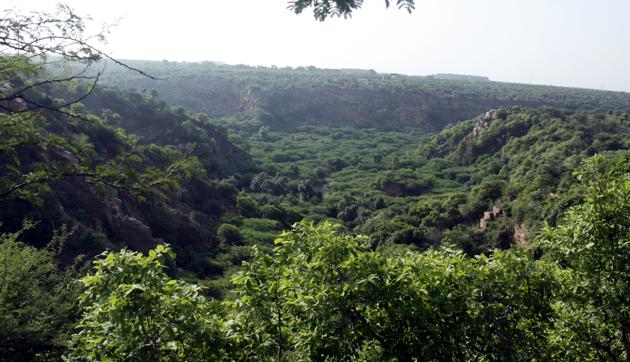
Because of excessive run off and soil erosion, the Aravalli region risks ending up as barren mountains devoid of vegetation, said the survey by the WII, Dehradun.
Apart from assessing the presence of wildlife population in the area, the survey also mapped land cover pattern of the Aravallis in the state. This was important as the state has less than 4% green cover and there is an urgent need to increase the forest area.
Also, the Aravalli ranges in the Gurgaon district in Haryana along with Alwar district of Rajasthan have been notified (May 1992) as ecologically sensitive areas. Therefore in-depth study of the area is essential, the survey said.
According to the survey, the Aravalli ranges are not continuous and the mountains checked the expansion of the desert area till it was densely forested. The denudation of forests along the northern and central Aravalli tracts is causing the advancement of the desert area, particularly in areas between the ranges, with increasing intensity of dust storms, explained the report.
Evaluating the present scenario, the WII officials called for removal of weeds as it will facilitate the process of restoration and preservation of the green landscape. They have advised long-term ecological monitoring on sites crying out for preservation. “We have submitted the report to the state forest department and hope they will undertake necessary measures to save the Aravallis,” Bilal Habib, project head, WII, said.
{{/usCountry}}Evaluating the present scenario, the WII officials called for removal of weeds as it will facilitate the process of restoration and preservation of the green landscape. They have advised long-term ecological monitoring on sites crying out for preservation. “We have submitted the report to the state forest department and hope they will undertake necessary measures to save the Aravallis,” Bilal Habib, project head, WII, said.
{{/usCountry}}One of the major reasons that hamper the forest cover in the region is the salinity of soil. It adversely affects the vegetation by reducing the plant growth and rendering areas unsuitable for normal cultivation. Areas with such soils are left barren because of their non-productive nature.
Read I Thirsty wild animals venture into Gurgaon as Aravallis dry up
“We have been monitoring the area and also preparing ways to increase forest cover in the region. The report establishes the fact that the 3.2 billion-year-old ecosystem still has good number of wildlife left. We need to preserve the Aravallis as it acts as a water recharge system for the area ,” said MD Sinha, conservator of forest, South Haryana.
The change analysis in the report indicates a decrease in the green area from 1980- 2016. There is a need to substantially increase the green cover in order to improve the environmental conditions.
Stay updated with all the Breaking News and Latest News from Mumbai. Click here for comprehensive coverage of top Cities including Bengaluru, Delhi, Hyderabad, and more across India along with Stay informed on the latest happenings in World News.
Stay updated with all the Breaking News and Latest News from Mumbai. Click here for comprehensive coverage of top Cities including Bengaluru, Delhi, Hyderabad, and more across India along with Stay informed on the latest happenings in World News.