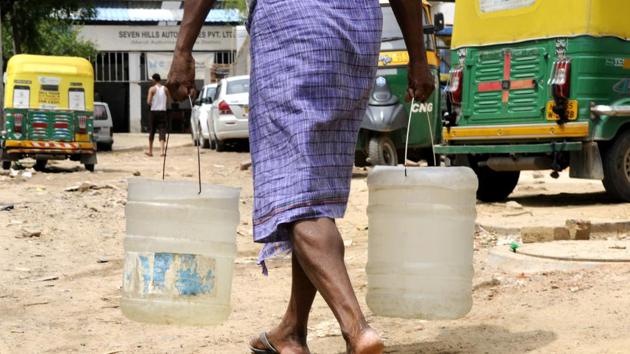
During a discussion held on Thursday to set up a framework for sustainable development, environmentalists at the Gurugram Environment Conclave stressed on the unchecked use of groundwater due to which the water table is falling at an alarming rate of one to three metres every year.
On this occasion, a report was released by Centre for Science and Environment (CSE) and Gurgaon First, a city-based NGO. The report highlighted the challenges faced by Gurgaon and the sustainability action goals which can help in the city’s sustainable growth.
The gap between demand and supply of water is expected to jump from 34% to 57% in the years to come as between 2005 and 2014, a drop of 74% in the water table has been noted, explained the panellists. The CSE report also mentioned that even though there is a ban on use of groundwater and freshwater for construction, it is yet to be implemented in the city.
Even though the situation is grim, the solutions are not far away. The residents of the city can start by saving the Aravallis, which act as groundwater recharge zones.
“The groundwater recharge areas need to be identified as part of the natural conservation zone (NCZ) as directed by the Regional Plan 2021. Traditionally, Gurgaon had over 350 water bodies that served the purpose of water storage, however, things have changed as most of them have dried up or become waste dump yards. These water bodies need to be indentified and steps need to be taken to revive them. Also measures need to be taken to protect the 3.5% of forest cover in south Haryana,” said Chetan Agarwal, environment analyst.
{{/usCountry}}“The groundwater recharge areas need to be identified as part of the natural conservation zone (NCZ) as directed by the Regional Plan 2021. Traditionally, Gurgaon had over 350 water bodies that served the purpose of water storage, however, things have changed as most of them have dried up or become waste dump yards. These water bodies need to be indentified and steps need to be taken to revive them. Also measures need to be taken to protect the 3.5% of forest cover in south Haryana,” said Chetan Agarwal, environment analyst.
{{/usCountry}}In a study conducted by the Central Ground Water Authority (CGWA), it was found that in several blocks of Gurgaon, 300% over-extraction of groundwater takes place.
“The CGWA had warned that once the water table reaches 200 metre below ground level, only rocks will be left,” said Anumita Roychowdhury, executive director - research and advocacy and head of the air pollution and clean transportation programme, CSE.
Stay updated with all the Breaking News and Latest News from Mumbai. Click here for comprehensive coverage of top Cities including Bengaluru, Delhi, Hyderabad, and more across India along with Stay informed on the latest happenings in World News.
Stay updated with all the Breaking News and Latest News from Mumbai. Click here for comprehensive coverage of top Cities including Bengaluru, Delhi, Hyderabad, and more across India along with Stay informed on the latest happenings in World News.