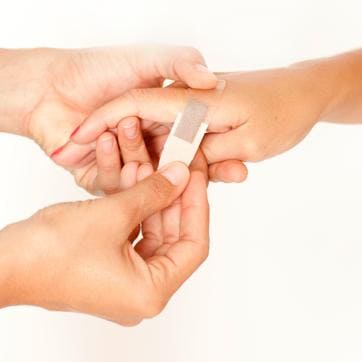
Wounds take longer to heal in older people because of disruption in communication between skin cells and the immune system with age, a new study has found. Researchers explored this physiological puzzle by examining molecular changes in ageing mouse skin.
“Within days of an injury, skin cells migrate in and close the wound, a process that requires coordination with nearby immune cells,” said Elaine Fuchs from the Rockefeller University in the US. “Our experiments have shown that, with ageing, disruptions to communication between skin cells and their immune cells slow down this step,” said Fuchs.
“This discovery suggests new approaches to developing treatments that could speed healing among older people,” Fuchs added. Whenever a wound occurs, the body needs to repair it quickly to restore its protective skin barrier. Both skin cells and immune cells contribute to this elaborate process, which begins with the formation of a scab. New skin cells known as keratinocytes later travel in as a sheet to fill in the wound under the scab. Researchers focused on this latter step in healing in two-month-old versus 24-month-old mice: roughly equivalent to 20- and 70-year-old humans.
They found that among the older mice, keratinocytes were much slower to migrate into the skin gap under the scab and as a result, wounds often took days longer to close. Wound healing is known to require specialised immune cells that reside in the skin. The researchers’ new experiments showed that following an injury, the keratinocytes at the wound edge talk to these immune cells by producing proteins known as Skints that appear to tell the immune cells to stay around and assist in filling the gap.
{{/usCountry}}They found that among the older mice, keratinocytes were much slower to migrate into the skin gap under the scab and as a result, wounds often took days longer to close. Wound healing is known to require specialised immune cells that reside in the skin. The researchers’ new experiments showed that following an injury, the keratinocytes at the wound edge talk to these immune cells by producing proteins known as Skints that appear to tell the immune cells to stay around and assist in filling the gap.
{{/usCountry}}In older mice, the keratinocytes failed to produce these immune signals. To see if they could enhance Skint signalling in older skin, the researchers turned to a protein that resident immune cells normally release after injury. When they applied this protein to young and old mouse skin tissue in a petri dish, they saw an increase in keratinocyte migration, which was most pronounced in the older skin. In effect, the old keratinocytes behaved more youthfully. The scientists hope the same principle could be applied to developing treatments for age-related delays in healing.
“Our work suggests it may be possible to develop drugs to activate pathways that help ageing skin cells to communicate better with their immune cell neighbours, and so boost the signals that normally decline with age,” said Fuchs. The study appears in the journal Cell.
Catch your daily dose of Fashion, Taylor Swift, Health, Festivals, Travel, Relationship, Recipe and all the other Latest Lifestyle News on Hindustan Times Website and APPs.
Catch your daily dose of Fashion, Taylor Swift, Health, Festivals, Travel, Relationship, Recipe and all the other Latest Lifestyle News on Hindustan Times Website and APPs.