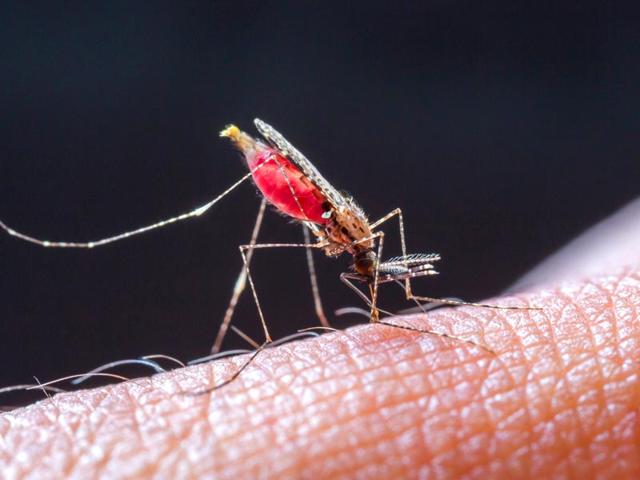
The spread of malaria parasites that are resistant to the drug artemisinin - the frontline treatment against malaria infection - from neighbouring Mynamar into India would pose a serious threat to the global control and eradication of malaria, scientists have warned ,
The collection of samples from across Myanmar and its border regions was led by Dr Kyaw Myo Tun of the Defence Services Medical Research Centre, Napyitaw, Myanmar and coordinated by the Mahidol-Oxford Tropical Medicine Research Unit (MORU) in Bangkok, Thailand. The researchers examined whether parasite samples collected at 55 malaria treatment centres across Myanmar carried mutations in specific regions of the parasite's kelch gene (K13) - a known genetic marker of artemisinin drug resistance. The team confirmed resistant parasites in Homalin, Sagaing Region located only 25km from the Indian border.
"Artemisinin resistance extends across much of Myanmar. We recorded P falciparum parasites carrying K13-propeller mutations at high prevalence next to the northwestern border with India. Appropriate therapeutic regimens should be tested urgently and implemented comprehensively if spread of artemisinin resistance to other regions is to be avoided," the study published online in Lancet Infectious Diseases noted.
"Myanmar is considered the frontline in the battle against artemisinin resistance as it forms a gateway for resistance to spread to the rest of the world," says Dr Charles Woodrow from the Mahidol-Oxford Tropical Medicine Research Unit and senior author of the study at Oxford University. "The more we understand about the current situation in the border regions, the better prepared we are to adapt and implement strategies to overcome the spread of further drug resistance."
{{/usCountry}}"Myanmar is considered the frontline in the battle against artemisinin resistance as it forms a gateway for resistance to spread to the rest of the world," says Dr Charles Woodrow from the Mahidol-Oxford Tropical Medicine Research Unit and senior author of the study at Oxford University. "The more we understand about the current situation in the border regions, the better prepared we are to adapt and implement strategies to overcome the spread of further drug resistance."
{{/usCountry}}The team obtained the DNA sequences of 940 samples of malaria infections (known asPlasmodium falciparum malaria parasites) from across Myanmar and neighbouring border regions in Thailand and Bangladesh between 2013 and 2014. Of those 940 samples, 371 (39%) carried a resistance-conferring K13 mutation.
Using this information, the researchers developed maps to display the predicted extent of artemisinin resistance determined by the prevalence of K13 mutations. The maps suggest that the overall prevalence of K13 mutations was greater than ten per cent in large areas of the East and North of Myanmar, including areas close to the border with India.
Prof Philippe Guerin, Director of the Worldwide Antimalarial Resistance Network (WWARN) and co-author of the study said: "However, this study highlights that the pace at which artemisinin resistance is spreading or emerging is alarming. We need a more vigorous international effort to address this issue in border regions."
Professor Mike Turner, Head of Infection & Immunobiology at the Wellcome Trust, said " The new research shows that history is repeating itself with parasites resistant to artemisinin drugs, the mainstay of modern malaria treatment, now widespread in Myanmar. We are facing the imminent threat of resistance spreading into India, with thousands of lives at risk."
Catch your daily dose of Fashion, Taylor Swift, Health, Festivals, Travel, Relationship, Recipe and all the other Latest Lifestyle News on Hindustan Times Website and APPs.
Catch your daily dose of Fashion, Taylor Swift, Health, Festivals, Travel, Relationship, Recipe and all the other Latest Lifestyle News on Hindustan Times Website and APPs.